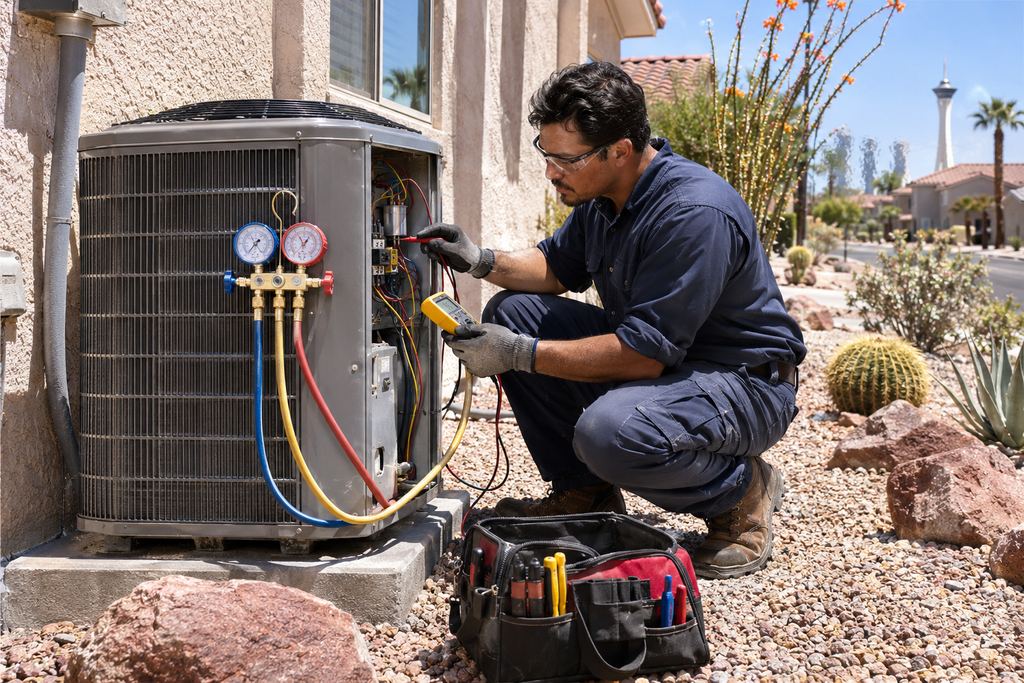
HVAC Repair in Las Vegas
For HVAC repair in Las Vegas, describe what the system is doing, enter your ZIP code and a local contractor who accepts the area can contact you about a diagnosis. Most calls here are cooling failures between May and September, when an outdoor unit may run for most of the day.
Leave the building first
A gas smell is not a repair request. Stop here and do this now:
A carbon monoxide alarm is not a repair request. Stop here and do this now:
- Get everyone out of the house, pets too, and leave the door open behind you.
- Do not switch lights, appliances or the thermostat on or off, and do not use a lighter, a match or a phone inside.
- From outside, call your gas utility's emergency line or 911.
- Stay outside until the utility or the fire department says it is safe to go back in.
After the home is cleared, a licensed technician can check the furnace, boiler or water heater. You can come back to this form then.
Nothing was sent. This form does not handle gas or carbon monoxide emergencies.
Sending your request
Please keep this page open. The form is locked so the request is not sent twice.
Your request was received
We passed it to a contractor in your area. If one accepts, they contact you using the phone number or email you gave. We cannot say how soon, and you are not required to hire anyone.
No reply after a few days? Check your spam folder, then use the contact page.
We could not send your request
Nothing was sent to a contractor. Your answers are still on this page. Try again in a moment.Online requests are not connected yet
The request form is not linked to a contractor network yet. Nothing you typed was sent or saved. Please call instead, or try again later.Short answer
If the house is getting dangerously hot, move people to the coolest room or a cooling center first. Then check the thermostat, breaker and filter, and request a diagnosis with your ZIP code.
What happens with a request in Las Vegas
- You enter a ZIP code and the service you need.
- You add contact details and a short description.
- A contractor who accepts the ZIP code contacts you to arrange a visit. When depends on their schedule.
- You compare what you are told and any written estimate. You do not have to hire anyone.
Heat comes before the repair
Indoor heat can turn dangerous fast in a Las Vegas summer, especially for older adults, babies and anyone with heart or lung problems. Keep them in the coolest room, drink water, and go to a public cooling center or a relative's home if the house will not cool. Call 911 for confusion, fainting, a very high body temperature or hot dry skin. Dial 211 to ask about cooling sites near you.
What desert heat does to a home system
Las Vegas sits in the Mojave Desert, and summer afternoons above 105 degrees are common. A central air conditioner sized for a typical day can run almost without stopping during a long heat stretch, so worn parts tend to fail all at once in July rather than spread across the year. Run capacitors, contactors and condenser fan motors take the brunt of that heat because they sit inside the outdoor cabinet on a hot pad or rooftop.
Dust is the second local factor. Wind storms push fine desert grit into condenser coils and return grilles, which cuts airflow and raises the pressure the compressor works against. A coil that looks gray and matted is a clue worth mentioning in your request.
Many homes built during the valley's growth from the 1990s onward pair a gas furnace or heat pump with an air handler in the attic or a hall closet. Attic air handlers in summer are hard on condensate drains and on the technician, which can affect how long a visit takes. Winters are short, but cold desert nights in December and January still bring furnace and heat pump repair calls. The Las Vegas page lists every service available locally, and the Nevada page covers Henderson, Reno and other cities.
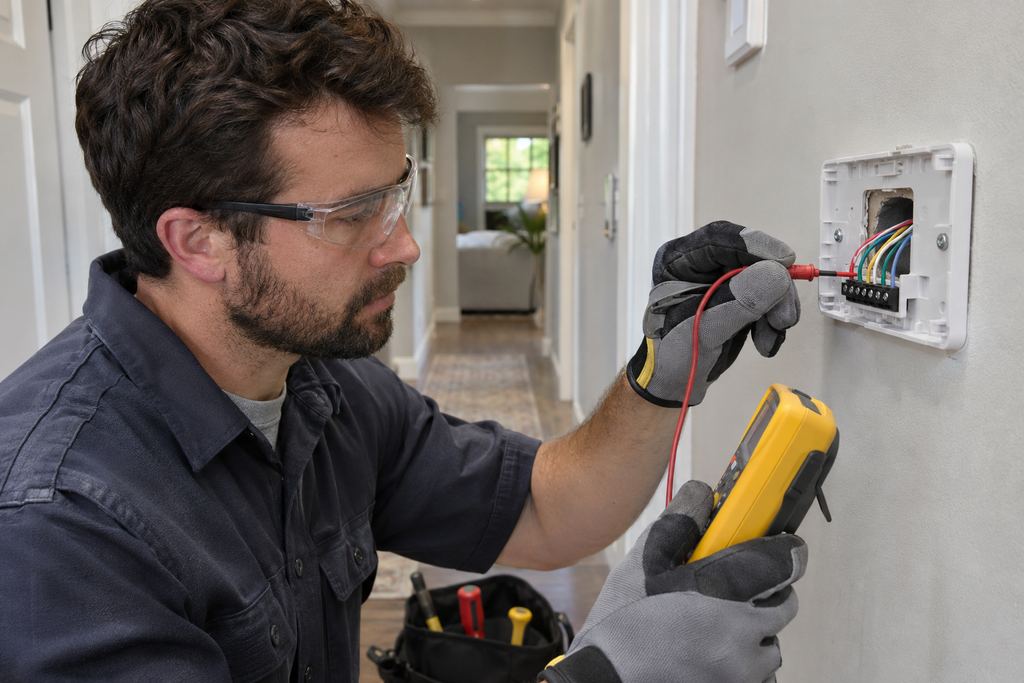
What an HVAC repair visit can include
The technician decides what is needed after testing. These are the jobs most often requested for Las Vegas homes.
- No cooling or weak coolingTesting the outdoor unit, capacitor, contactor, fan motor and refrigerant pressures. See the Las Vegas AC repair page for cooling-only requests.
- Outdoor unit humming but not runningOften electrical parts that wear out in heat. Only a technician should open the panel or touch a capacitor.
- Refrigerant leak searchFinding and fixing the leak before recharging. Refrigerant work needs EPA Section 608 certification.
- Attic air handler and drain problemsClogged condensate lines, tripped float switches and blower motor faults.
- Furnace or heat pump not heatingIgnition, flame sensor, blower or defrost faults on winter nights. The furnace repair page covers gas heat.
- Thermostat and wiring faultsA blank screen, a system that ignores the setpoint, or wiring problems after a thermostat swap.
Checks you can do before the visit
Safe checks you can do
Only checks from the owner's manual that need no tools and no opening of panels.
- Set the thermostat to Cool, lower it a few degrees and replace weak batteries.
- Check the breaker for the outdoor unit and the air handler. Reset a tripped breaker once only.
- Replace a dusty filter. In dusty months it can clog faster than the package suggests.
- Clear tumbleweeds, gravel and stored items from around the outdoor unit.
- If you see ice on the refrigerant lines, switch cooling off and run the fan only so it can thaw.
- Look at the condensate drain outlet and the float switch near the air handler for water.
Leave these to a professional
Gas valves, burners, venting, refrigerant, capacitors and electrical circuits need a qualified, licensed technician.
- Opening the outdoor unit's electrical panel or handling a capacitor, which can hold a charge after power is off.
- Adding or recovering refrigerant.
- Testing the compressor and contactor.
- Gas valve, burner, venting or heat exchanger work on the furnace.
- Bypassing a float switch or limit switch to get the system running.
Why the bill varies
We do not set prices. Ask the company for its diagnostic fee and a written estimate before work begins. The HVAC repair cost guide explains the parts of a typical bill.
Questions to ask before you agree
- 1What is the diagnostic or trip fee, and is it applied to the repair?Get the answer before the technician arrives.
- 2Do you hold a Nevada State Contractors Board license for this work?You can look the license up on the board's website.
- 3If refrigerant is low, will you find the leak first?Adding refrigerant without a leak repair usually buys only a short time.
- 4Is repair still sensible for this system's age?Ask for the repair price and a replacement option in writing so you can compare.
Questions
Does an HVAC company fix air conditioning?
Yes. HVAC covers heating, ventilation and air conditioning, so an HVAC contractor normally repairs central AC, heat pumps and furnaces. In Las Vegas most requests are for cooling. Mention whether you have a heat pump or a gas furnace so the right technician is sent.
Is a landlord in Nevada required to provide air conditioning?
Rules on cooling in rentals change and depend on the lease and the current Nevada landlord-tenant law (NRS Chapter 118A). Tell your landlord in writing when the AC fails and contact a local legal aid office or 211 if it is not repaired. Do not wait in a dangerously hot unit; go somewhere cool.
Why does HVAC repair cost so much in summer?
Part of the bill is the visit itself: travel, testing time and the diagnostic fee. Refrigerant, parts ordered in peak season, attic access and after-hours rates add to it. A written estimate with parts and labor listed separately makes quotes easier to compare.
Can I get HVAC repair at night in Las Vegas?
Some local contractors take evening or weekend calls and some do not. Availability depends on your ZIP code and the time of day. Ask about the after-hours rate when the company calls you back.
Should I replace a unit that fails every summer?
There is no fixed rule. Weigh the system's age, the repair price, whether it uses R-22 and how much it costs to run. Some people use the informal $5,000 rule (age times repair cost) as a rough first check, but it is only a rule of thumb.