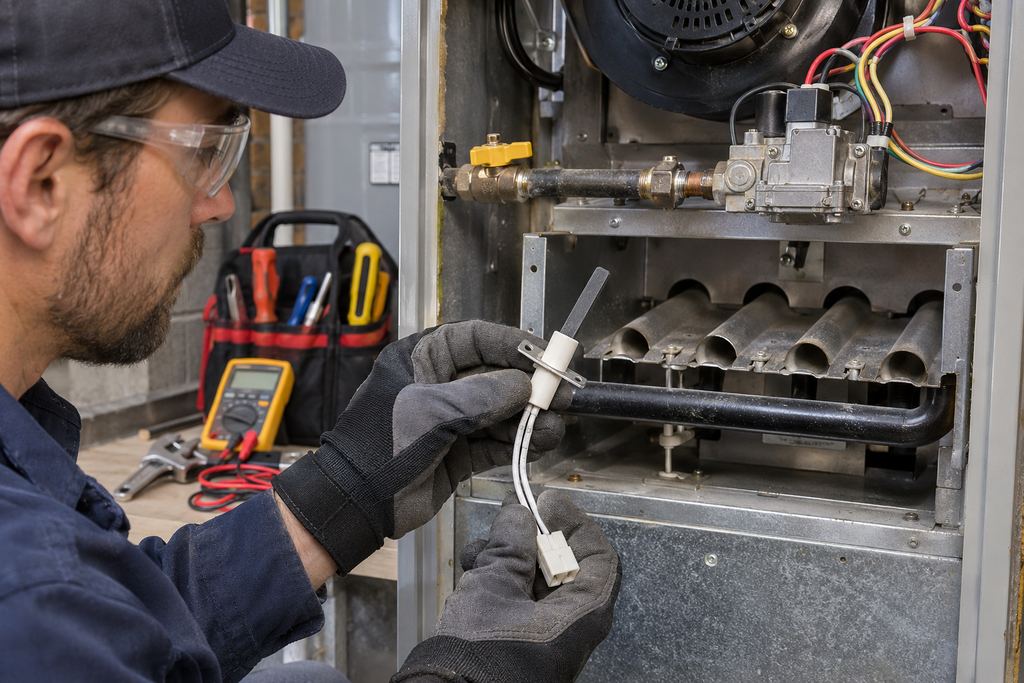
Furnace Ignitor Replacement
Furnace ignitor replacement is needed when the part that lights the gas no longer heats up or sparks. You hear the inducer fan start, wait, and nothing ignites; after a few tries the furnace locks out. A technician tests the ignitor, confirms the right replacement for your model and checks the rest of the start sequence while the furnace is open.
Leave the building first
A gas smell is not a repair request. Stop here and do this now:
A carbon monoxide alarm is not a repair request. Stop here and do this now:
- Get everyone out of the house, pets too, and leave the door open behind you.
- Do not switch lights, appliances or the thermostat on or off, and do not use a lighter, a match or a phone inside.
- From outside, call your gas utility's emergency line or 911.
- Stay outside until the utility or the fire department says it is safe to go back in.
After the home is cleared, a licensed technician can check the furnace, boiler or water heater. You can come back to this form then.
Nothing was sent. This form does not handle gas or carbon monoxide emergencies.
Sending your request
Please keep this page open. The form is locked so the request is not sent twice.
Your request was received
We passed it to a contractor in your area. If one accepts, they contact you using the phone number or email you gave. We cannot say how soon, and you are not required to hire anyone.
No reply after a few days? Check your spam folder, then use the contact page.
We could not send your request
Nothing was sent to a contractor. Your answers are still on this page. Try again in a moment.Online requests are not connected yet
The request form is not linked to a contractor network yet. Nothing you typed was sent or saved. Please call instead, or try again later.Short answer
If the furnace tries to start but never lights, ask for an ignition check. Hot surface ignitors crack easily and must match the furnace, so this is technician work on a gas appliance.
No ignition attempts while gas is in the air
Are all furnace igniters the same?
No. The type and the exact part depend on the furnace.
- Silicon carbide hot surface ignitorA flat, often zigzag element that glows orange. Older design, fragile and sensitive to touch.
- Silicon nitride hot surface ignitorA rounder, tougher element used in many newer furnaces. Not always a direct swap for a carbide part.
- Direct spark ignitionA spark electrode lights the burners, similar to a gas grill. Different parts and testing.
- Intermittent pilotA spark lights a small pilot, which then lights the burners. Found on some furnaces and many boilers.
Signs the ignitor may have failed
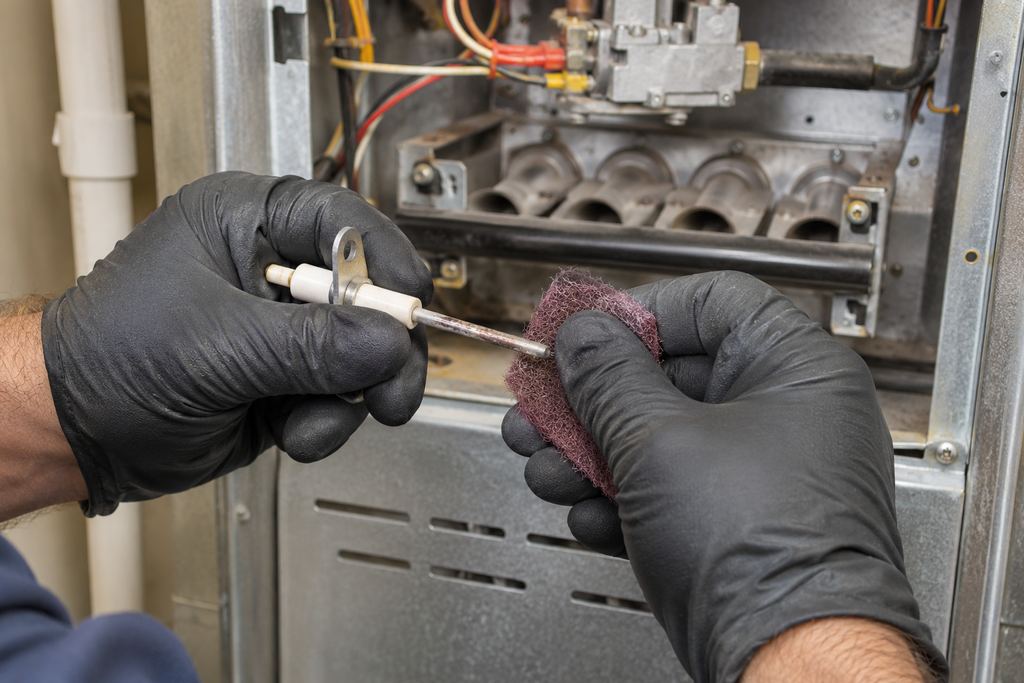
- Inducer runs, no glow and no flameYou may see through the sight window that nothing lights up.
- Furnace tries several times, then locks outA status light usually blinks a code. Write it down.
- Delayed ignition with a soft boomA weak ignitor can light gas late. Turn the furnace off and call.
- Heat stops at the start of the seasonIgnitors often fail the first cold week after sitting all summer.
How the replacement is done
- STEP 1Confirm the sequenceThe technician checks the inducer, pressure switch and control board, since a failed pressure switch can stop the ignitor from ever being powered.
- STEP 2Test the ignitorA resistance reading and a visual check for cracks or white spots.
- STEP 3Install the correct partThe model-specific or approved universal ignitor is fitted without touching the element, since skin oils shorten its life.
- STEP 4Check voltage and flame sensorVoltage at the ignitor is measured, and the flame sensor is often cleaned at the same visit.
- STEP 5Run several heat cyclesIgnition should be quick and smooth each time.
Ignitor or flame sensor?
The two get confused because both stop the heat. A bad ignitor means the burners never light. A dirty flame sensor means they light and then go out a few seconds later. If you can see through the sight glass, that difference is a useful thing to tell the contractor. The flame sensor side is covered on furnace flame sensor replacement.
An ignitor is not a reason to replace a furnace. It is a wear part, and a new one usually puts the furnace back in service. Replacement only becomes a question if the technician finds larger issues during the visit, such as a failing heat exchanger, which only an inspection can confirm. Ignitor prices are on furnace ignitor replacement cost, and other furnace faults on furnace repair.
Checks you can make first
Questions about furnace ignitor replacement
How do you change the ignitor on a gas furnace?
A technician shuts off power and gas, removes the old ignitor from the burner assembly, installs the correct replacement without touching the element and tests several ignition cycles. Because it involves the burner area of a gas appliance and a fragile part, it is not a recommended homeowner job.
How much does it cost to change an igniter on a furnace?
PickHVAC's guide from June 2025 lists ignitor and flame sensor work at about $300 to $425 nationally, plus a possible service call fee. Your price depends on the part your furnace needs and the time of the visit.
Can a furnace ignitor fail?
Yes, ignitors are wear parts. Hot surface ignitors weaken and crack from repeated heating. Short cycling and voltage problems can shorten their life.
Are all furnace igniters the same?
No. Shape, material, voltage and mounting differ by furnace. Some universal ignitors fit many models, but the technician should match the part to the manufacturer's specification.
Can I run my furnace with a weak ignitor?
A weak ignitor can cause delayed ignition, which is unsafe. If you hear a boom at start-up or see the furnace struggling to light, turn it off and call.