AC Not Cooling
If your AC is not cooling, first check that the thermostat is on Cool, the filter is clean, both breakers are on and the outdoor unit is running. Most air conditioner not cooling calls end in one of four places: settings, airflow, the outdoor unit's electrical parts, or refrigerant. The triage below helps you tell them apart.
Leave the building first
A gas smell is not a repair request. Stop here and do this now:
A carbon monoxide alarm is not a repair request. Stop here and do this now:
- Get everyone out of the house, pets too, and leave the door open behind you.
- Do not switch lights, appliances or the thermostat on or off, and do not use a lighter, a match or a phone inside.
- From outside, call your gas utility's emergency line or 911.
- Stay outside until the utility or the fire department says it is safe to go back in.
After the home is cleared, a licensed technician can check the furnace, boiler or water heater. You can come back to this form then.
Nothing was sent. This form does not handle gas or carbon monoxide emergencies.
Sending your request
Please keep this page open. The form is locked so the request is not sent twice.
Your request was received
We passed it to a contractor in your area. If one accepts, they contact you using the phone number or email you gave. We cannot say how soon, and you are not required to hire anyone.
No reply after a few days? Check your spam folder, then use the contact page.
We could not send your request
Nothing was sent to a contractor. Your answers are still on this page. Try again in a moment.Online requests are not connected yet
The request form is not linked to a contractor network yet. Nothing you typed was sent or saved. Please call instead, or try again later.Before any checks
Short answer
Go outside. If the outdoor unit is silent, think power, capacitor or contactor. If it runs but the house stays warm, think airflow, a dirty coil or refrigerant. Ice anywhere means turn cooling off and let it thaw.
Triage by what you see
Match your situation to a row. The right column is where a technician will likely start.
| What you notice | Try first | Likely area |
|---|---|---|
| Indoor fan runs, outdoor unit silent | AC breaker and outdoor disconnect | Power, capacitor, contactor |
| Humming outside, fan blade not moving | Turn it off to protect the compressor | Capacitor or fan motor |
| Both run, air is only slightly cool | Filter, vents, outdoor coil clear of debris | Airflow, dirty coil, low refrigerant |
| Ice on copper lines or indoor coil | Cooling off, fan on to thaw | Airflow or refrigerant charge |
| Nothing runs at all | Thermostat batteries, breakers, float switch | Controls or power. See AC not turning on. |
| Some rooms cool, others hot | Registers open, doors open for return air | Duct leaks, zoning, sizing |
How a central air conditioner cools, in brief
A central system moves heat rather than making cold. Refrigerant absorbs heat from indoor air at the evaporator coil, the compressor outside pumps it to the condenser coil, and the outdoor fan blows that heat away. The indoor blower pushes air across the cold coil and through the ducts. If any link is weak, cooling capacity drops: a clogged filter starves the coil of air, a dirty condenser cannot shed heat, and a refrigerant leak leaves too little to carry it.
Causes a technician checks
- Thermostat and controlsA failing thermostat or a loose low-voltage wire can stop the call for cooling.
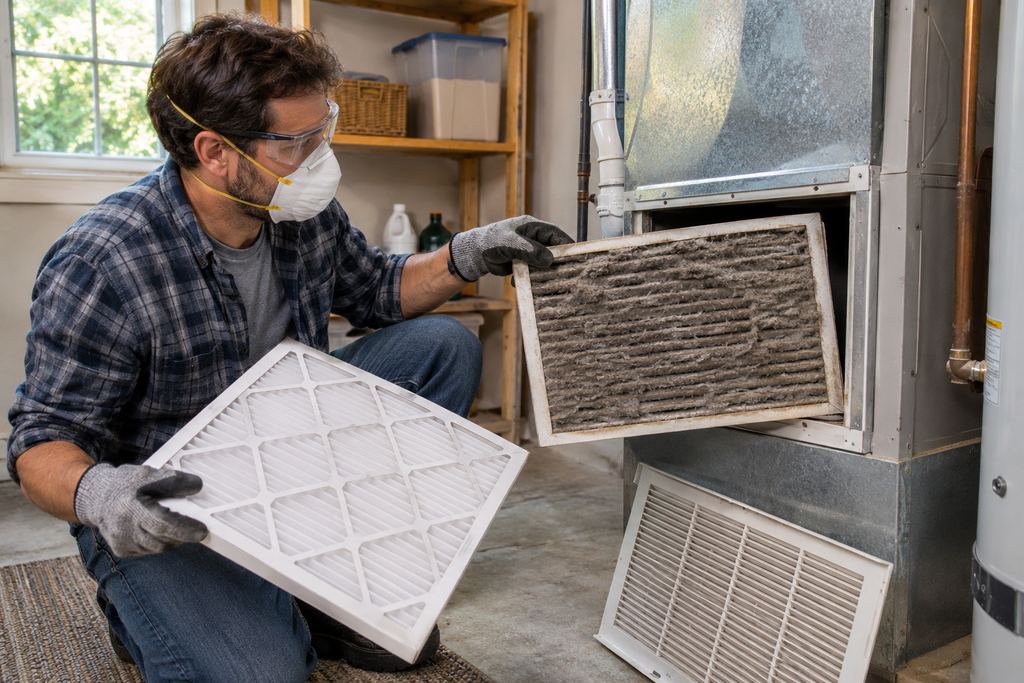
- Restricted airflowDirty filters, closed registers, a collapsed duct or a slow blower all reduce how much air crosses the coil.
- Dirty condenser coilOutdoor coils clog with dirt and plant debris, so the system runs constantly without catching up.
- Weak capacitor or failed contactorThese switch and start the outdoor motors. They are common summer failures and are technician work.
- Refrigerant leakLow charge means a leak. Gauges and leak testing confirm it. A recharge without repair only lasts until the charge leaks out again.
- Compressor wearAn overheated or worn compressor may trip its internal overload. Repair or replacement depends on age and system condition.
- Undersized or aging systemOn the hottest days an older or small unit may not keep up, even when nothing is broken.
Owner checks and technician tasks
Safe checks you can do
Only checks from the owner's manual that need no tools and no opening of panels.
- Thermostat set to Cool, fan on Auto, setpoint below room temperature
- New batteries in the thermostat if it uses them
- Indoor furnace or air handler switch on, both breakers on
- Air filter replaced or cleaned
- Outdoor unit cleared of leaves and grass, with two feet of space around it
- Ice present: cooling off, fan on, wait until it is fully thawed
Leave these to a professional
Gas valves, burners, venting, refrigerant, capacitors and electrical circuits need a qualified, licensed technician.
- Checking refrigerant level with gauges
- Leak search and repair
- Electrical tests on capacitors, contactors and motors
- Deep cleaning of indoor and outdoor coils
- Blower speed and duct airflow measurements
Waiting for repair in a heat wave
If the checks did not help, request AC repair. Cost factors such as refrigerant type and after-hours rates are on the AC repair cost page, and refrigerant work is explained under AC refrigerant service.
Related services and guides
Pages that continue this topic.
Questions
How do I check my AC refrigerant level?
You cannot check it reliably without gauges, and connecting them is work for an EPA certified technician. Signs that point to low refrigerant include ice on the lines, weak cooling and a hissing sound. A technician measures pressures and temperatures to confirm it.
How often should I change my AC filter?
Follow the filter and equipment instructions. Thin filters often need changing every one to three months during heavy use, thicker media filters less often. Check monthly in peak season, and more often with pets.
How do I reset my AC unit?
Turn the thermostat off, switch off the AC breaker for a minute, then turn it back on and wait five minutes before setting Cool. Some thermostats also have a restart option. If the problem returns, a reset will not fix it.
Why is my central AC not cooling below a certain temperature?
A rough rule of thumb is that on very hot days a system may hold the house only about 15 to 20 degrees below the outdoor temperature. If it falls behind on mild days, that suggests a fault.
Can a dirty filter really stop the AC from cooling?
Yes. Restricted airflow lowers cooling and can freeze the coil, which then blocks air almost completely.