HVAC Repair in Colorado
Colorado has city pages for Colorado Springs, Denver and Fort Collins. Pick your city for the repair guides that exist there; if you live elsewhere, the general furnace repair and AC repair guides apply anywhere along the Front Range.
Leave the building first
A gas smell is not a repair request. Stop here and do this now:
A carbon monoxide alarm is not a repair request. Stop here and do this now:
- Get everyone out of the house, pets too, and leave the door open behind you.
- Do not switch lights, appliances or the thermostat on or off, and do not use a lighter, a match or a phone inside.
- From outside, call your gas utility's emergency line or 911.
- Stay outside until the utility or the fire department says it is safe to go back in.
After the home is cleared, a licensed technician can check the furnace, boiler or water heater. You can come back to this form then.
Nothing was sent. This form does not handle gas or carbon monoxide emergencies.
Sending your request
Please keep this page open. The form is locked so the request is not sent twice.
Your request was received
We passed it to a contractor in your area. If one accepts, they contact you using the phone number or email you gave. We cannot say how soon, and you are not required to hire anyone.
No reply after a few days? Check your spam folder, then use the contact page.
We could not send your request
Nothing was sent to a contractor. Your answers are still on this page. Try again in a moment.Online requests are not connected yet
The request form is not linked to a contractor network yet. Nothing you typed was sent or saved. Please call instead, or try again later.General guides that apply in Colorado
Colorado cities
Only cities with a published page are listed. The list grows as pages are approved.
Altitude changes the equipment
Denver sits near 5,280 feet, Fort Collins near 5,000 and Colorado Springs around 6,000. In thinner air, gas furnaces must be set up for altitude according to the manufacturer's instructions, and air conditioners move less heat than their sea-level rating suggests. Ask about the altitude setup if a furnace runs poorly after it was moved or replaced.
Cold snaps, hail and dry air
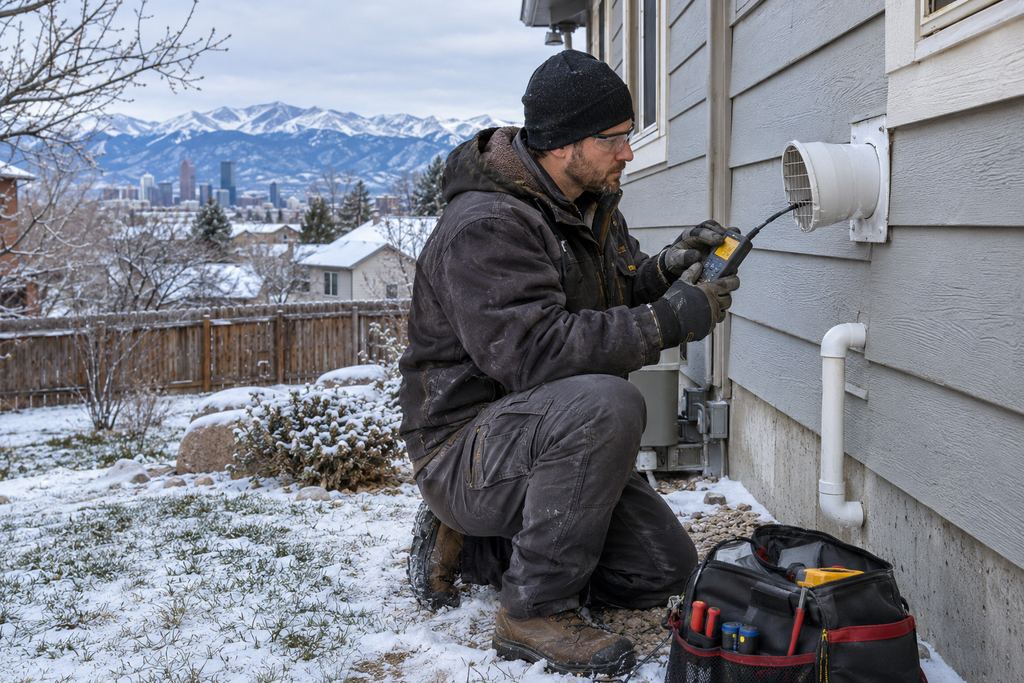
Winter brings subzero cold snaps, often broken by warm chinook winds. High-efficiency furnaces vent through plastic pipes on the side of the house, and drifting snow can block them and shut the furnace off; clearing snow away from the vent is a safe first check.
Summer hail can flatten condenser fins, and the dry climate is why many older homes use evaporative coolers instead of central AC.
No statewide HVAC license
There is no Colorado state license for HVAC contractors. Cities and counties issue them instead, so the license you check depends on where you live. Denver licenses its own contractors, the Pikes Peak Regional Building Department covers Colorado Springs and much of El Paso County, and Fort Collins issues its own contractor licenses. Refrigerant work still requires EPA Section 608 certification.
Know your gas utility
Questions
Does a furnace need adjusting for altitude in Colorado?
Gas furnaces are set up for high elevation according to the maker's instructions, which can involve burner orifice or gas pressure changes. That is technician work, not a homeowner adjustment.
Where can I find heating help in Colorado?
Dial 211 for energy assistance and warming centers. Colorado's LEAP program helps eligible households with winter heating costs.