Furnace Repair
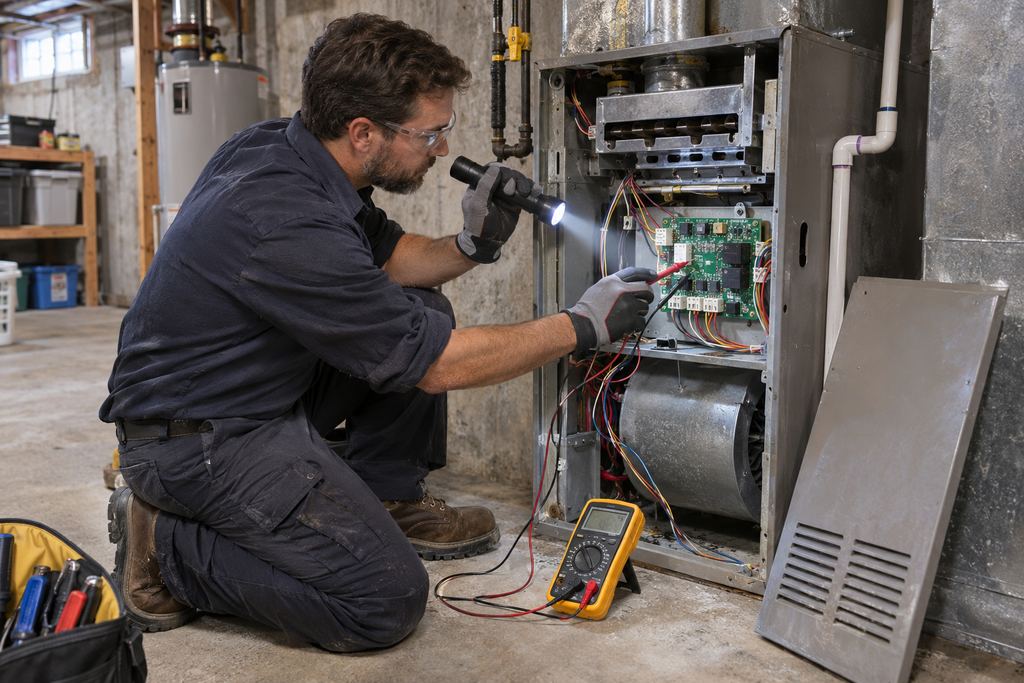
Furnace repair begins with a technician watching the furnace try to start, reading any fault code and testing the part where the sequence stops. Gas and electric furnaces fail in different ways, so tell the contractor which you have. Use the form to reach local heating contractors; ask whether they take after-hours or weekend calls if the house is getting cold.
Leave the building first
A gas smell is not a repair request. Stop here and do this now:
A carbon monoxide alarm is not a repair request. Stop here and do this now:
- Get everyone out of the house, pets too, and leave the door open behind you.
- Do not switch lights, appliances or the thermostat on or off, and do not use a lighter, a match or a phone inside.
- From outside, call your gas utility's emergency line or 911.
- Stay outside until the utility or the fire department says it is safe to go back in.
After the home is cleared, a licensed technician can check the furnace, boiler or water heater. You can come back to this form then.
Nothing was sent. This form does not handle gas or carbon monoxide emergencies.
Sending your request
Please keep this page open. The form is locked so the request is not sent twice.
Your request was received
We passed it to a contractor in your area. If one accepts, they contact you using the phone number or email you gave. We cannot say how soon, and you are not required to hire anyone.
No reply after a few days? Check your spam folder, then use the contact page.
We could not send your request
Nothing was sent to a contractor. Your answers are still on this page. Try again in a moment.Online requests are not connected yet
The request form is not linked to a contractor network yet. Nothing you typed was sent or saved. Please call instead, or try again later.Short answer
If there is a gas odor or a CO alarm, get out and call from outside before anything else. Otherwise check the thermostat, filter, furnace switch, breaker and blower door. If the furnace still will not heat, note the blinking code and request a repair visit.
Gas smell or CO alarm: get out first
What to check if the furnace goes out
- ThermostatHeat mode, setpoint a few degrees above room temperature, fresh batteries.
- FilterA clogged filter can overheat the furnace and trip the high limit switch, which shuts the burners off.
- Furnace switch and breakerThe switch near the furnace is often mistaken for a light switch. Reset a tripped breaker once.
- Blower doorIf the lower panel is not seated, a safety switch keeps the furnace off.
- Vents outsideOn high-efficiency furnaces, make sure the plastic intake and exhaust pipes outside are not blocked by snow, ice or leaves.
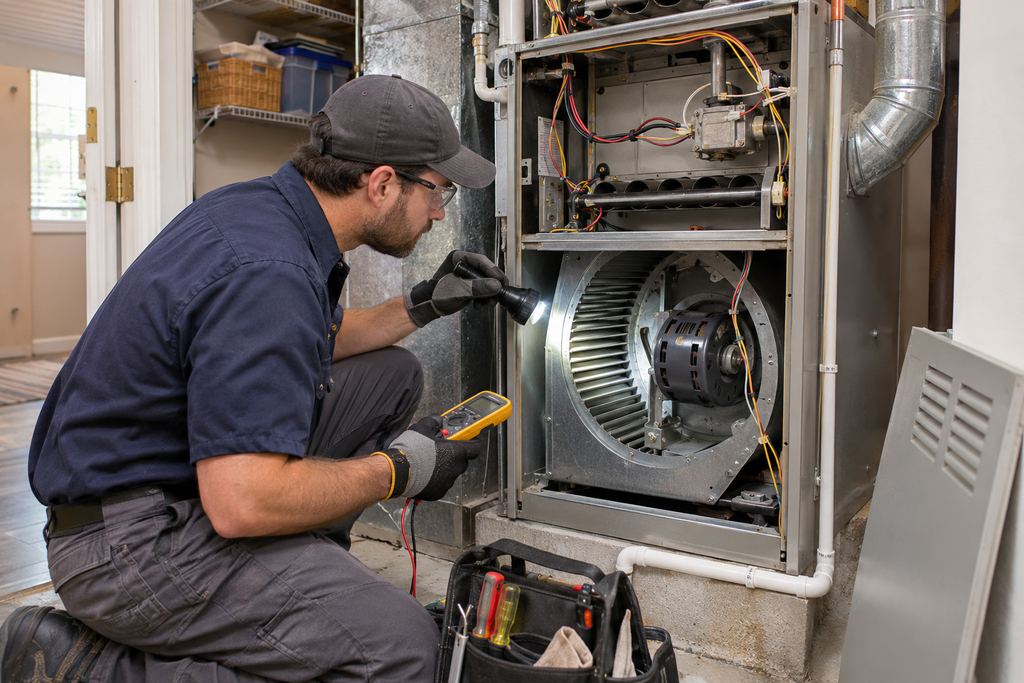
- Status lightCount the blinks through the window on the door and match them to the chart on the panel, if there is one.
Common furnace repairs
- IgnitionHot surface ignitors and spark igniters; see ignitor replacement.
- Flame sensingCleaning or replacing the flame sensor; see flame sensor replacement.
- Inducer and pressure switchThe draft fan and the switch that proves venting is clear.
- Blower motor and capacitorNo airflow, or air only from some registers.
- Control boardFaulty relays or a board that no longer runs the sequence.
- Gas valve and burnersGas pressure, valve operation and burner cleaning, always by the technician.
Gas, propane and electric furnaces
Gas furnace repair centers on the ignition sequence: thermostat call, inducer, pressure switch, ignitor, gas valve, flame sensing and blower. Propane furnaces work the same way but depend on tank level, so check the gauge first. Electric furnace repair deals with heating elements, sequencers, relays and high-amperage wiring; there is no combustion, but voltages are high, so panels stay closed. If heat is missing in only one part of the house, ducts and dampers may be involved rather than the furnace itself.
Symptom guides go deeper: furnace not heating and furnace blowing cold air.
Repair or replace the furnace
Most furnace repairs are parts that wear: ignitors, sensors, motors, switches and boards. They are usually worth fixing. Replacement comes up with an older furnace facing an expensive repair, repeated failures, or a cracked heat exchanger, which only a technician inspection can confirm and which can let combustion gases into the air. Ask for the finding in writing, and get a second opinion on any heat exchanger diagnosis. The informal "$5,000 rule" is sometimes used, but efficiency, age and safety matter more. Typical prices are on furnace repair cost.
Cold house, vulnerable people
Maintenance that prevents breakdowns
A yearly tune-up before winter typically includes cleaning the flame sensor, checking the ignitor, testing safety switches, inspecting the heat exchanger and venting, and measuring gas pressure and temperature rise. Replace the filter on the schedule in your manual, keep the area around the furnace clear and install CO alarms near sleeping areas. Homes with a heat pump instead of a furnace should read heat pump repair.
Furnace repair by city
Only cities that have a published page appear here. Enter your ZIP code to check coverage for your address.
- Akron
- Albany
- Albuquerque
- Alexandria
- Anaheim
- Ann Arbor
- Arlington
- Atlanta
- Augusta
- Austin
- Baltimore
- Bellevue
- Birmingham
- Boise
- Boston
- Bridgeport
- Brownsville
- Burlington
- Cedar Rapids
- Charlotte
- Chesapeake
- Chicago
- Cincinnati
- Cleveland
- Colorado Springs
- Columbia
- Columbus
- Dallas
- Dayton
- Denver
- Des Moines
- Detroit
- Eugene
- Fargo
- Fort Collins
- Fort Lauderdale
- Fort Wayne
- Fort Worth
- Frederick
- Fresno
- Frisco
- Garland
- Gilbert
- Glendale
- Grand Rapids
- Green Bay
- Greensboro
- Greenville
- Henderson
- Houston
- Indianapolis
- Irvine
- Irving
- Jacksonville
- Las Vegas
- Lexington
- Little Rock
- Long Beach
- Los Angeles
- Louisville
- Lubbock
- Madison
- Memphis
- Mesa
- Miami
- Midland
- Milwaukee
- Minneapolis
- Missoula
- Mobile
- Modesto
- Naperville
- Nashville
- New Haven
- New Orleans
- New York City
- Newport News
- Norfolk
- Oakland
- Oklahoma City
- Omaha
- Orlando
- Overland Park
- Pensacola
- Philadelphia
- Phoenix
- Pittsburgh
- Plano
- Portland
- Provo
- Raleigh
- Reno
- Richmond
- Riverside
- Rockford
- Sacramento
- Salem
- Salt Lake City
- San Antonio
- San Bernardino
- San Diego
- San Jose
- Santa Ana
- Santa Rosa
- Sarasota
- Savannah
- Scottsdale
- Seattle
- Shreveport
- Sioux Falls
- Spokane
- St. Louis
- Stockton
- Syracuse
- Tacoma
- Tampa
- Toledo
- Tucson
- Tulsa
- Virginia Beach
- West Palm Beach
- Wichita
- Wilmington
- Winston-Salem
- Worcester
Questions about furnace repair
How much do furnace repairs cost?
It depends on the part. PickHVAC's June 2025 guide lists service calls at $75 to $200, ignitor and flame sensor work at $300 to $425 and control boards at $250 to $600. Get a written quote after diagnosis.
What should I check if my furnace goes out?
Thermostat mode, setpoint and batteries, the filter, the furnace switch, the breaker and the blower door. On high-efficiency furnaces also look at the outside vent pipes for snow or debris. If those are fine, note the blinking code and call.
What do you call someone who fixes furnaces?
An HVAC technician or heating technician. Many states license HVAC or mechanical contractors and some require a gas fitter license for gas work; your state contractor board can confirm what applies.
How often should a furnace be serviced?
Once a year, usually in the fall, is the common recommendation from manufacturers. Filters need attention more often.
Is a furnace that keeps resetting safe to run?
Not if it is tripping a limit, rollout or pressure switch repeatedly. Those switches protect against overheating and venting problems. Leave it off and have it inspected.