HVAC Problems by Symptom
If you smell gas or a carbon monoxide alarm goes off, leave the building and call 911 or the gas utility from outside before reading further. For everything else, find the symptom below: each guide lists the possible causes, the checks that are safe for you to do and the point where a technician should take over.
Leave the building first
A gas smell is not a repair request. Stop here and do this now:
A carbon monoxide alarm is not a repair request. Stop here and do this now:
- Get everyone out of the house, pets too, and leave the door open behind you.
- Do not switch lights, appliances or the thermostat on or off, and do not use a lighter, a match or a phone inside.
- From outside, call your gas utility's emergency line or 911.
- Stay outside until the utility or the fire department says it is safe to go back in.
After the home is cleared, a licensed technician can check the furnace, boiler or water heater. You can come back to this form then.
Nothing was sent. This form does not handle gas or carbon monoxide emergencies.
Sending your request
Please keep this page open. The form is locked so the request is not sent twice.
Your request was received
We passed it to a contractor in your area. If one accepts, they contact you using the phone number or email you gave. We cannot say how soon, and you are not required to hire anyone.
No reply after a few days? Check your spam folder, then use the contact page.
We could not send your request
Nothing was sent to a contractor. Your answers are still on this page. Try again in a moment.Online requests are not connected yet
The request form is not linked to a contractor network yet. Nothing you typed was sent or saved. Please call instead, or try again later.Smells, sparks and safety shutoffs
Read these first if something smells burnt, a breaker will not stay on or a pilot keeps going out.
Air conditioner not cooling or not running
Furnace and heating trouble
Gas, electric and general heating problems. If you are not sure which kind of furnace you have, start with <em>heating not working</em>.
Heat pumps and boilers
Whole system and thermostat
Stop here if any of these is happening
- 1Gas smell or hissing near a gas lineDo not touch light switches, use a phone or strike a flame indoors. Get out, then call the gas utility's emergency number or 911.
- 2Carbon monoxide alarm, or several people feeling sickHeadache, dizziness and nausea that ease outdoors are warning signs. Move every person and pet outdoors, then dial 911 or the fire department. Leave the alarm as it is.
- 3Smoke, sparks or a hot electrical smellSwitch the system off at the thermostat and at the breaker if you can reach it safely. Call the fire department if there is smoke.
- 4Water pooling near the unit's wiringCut power at the breaker before you step in the water or touch the equipment.
Checks that apply to almost every symptom
These are the steps owner's manuals allow. They fix a surprising share of calls and give the technician useful facts if they do not.
- ThermostatCorrect mode (heat or cool), a setpoint that should call for it, working batteries, and the fan set to auto.
- PowerThe breaker for the system and the service switch near the furnace or air handler. Reset a tripped breaker one time only.
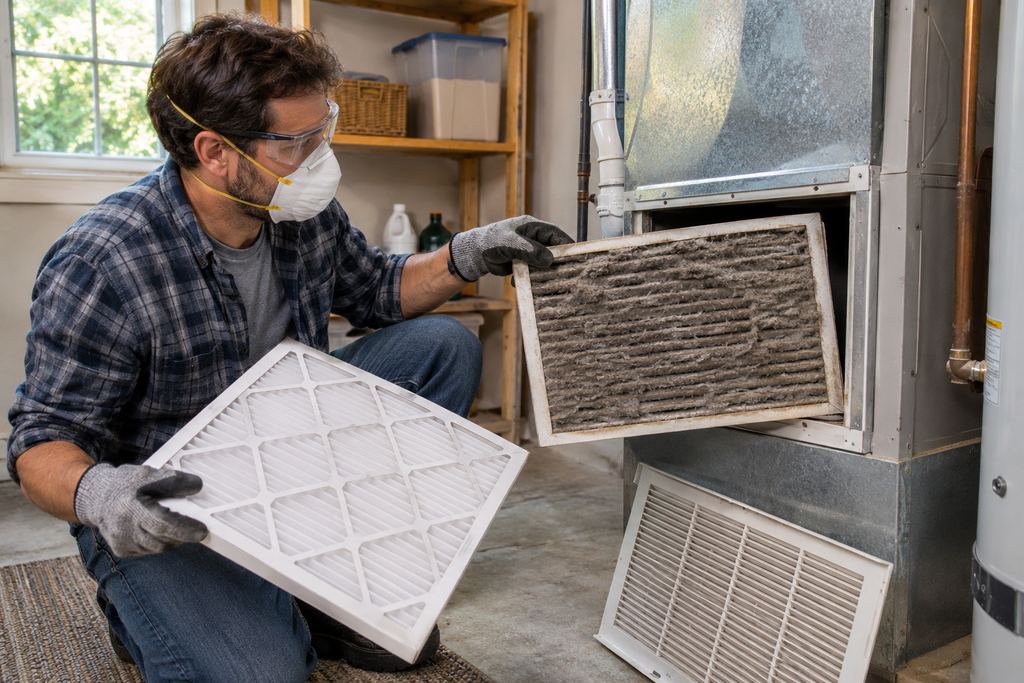
- Air filterA clogged filter can freeze an AC coil or make a furnace overheat and shut itself off.
- Furnace doorThe front panel presses a safety switch. If it is loose, the furnace will not start.
- Outdoor unitClear leaves, snow and clutter from around it. Do not open its electrical cover.
- Ice on lines or coilTurn cooling off and run the fan only until it thaws, then call for a check.
A symptom is a clue, not a diagnosis
Where your part ends
Safe checks you can do
Only checks from the owner's manual that need no tools and no opening of panels.
- Thermostat settings and batteries
- Filter replacement
- Breaker reset, once
- Clearing debris or snow from outdoor units and vent openings
- Checking a condensate float switch or drain line you can see
Leave these to a professional
Gas valves, burners, venting, refrigerant, capacitors and electrical circuits need a qualified, licensed technician.
- Anything inside an electrical cover, including capacitors, which hold a charge with the power off
- Refrigerant work (EPA Section 608 certification required)
- Gas valves, burners, heat exchangers and venting
- Bypassing or replacing safety and limit switches
Questions
What is the most common reason an HVAC system stops working?
There is no single answer, but thermostat settings, a tripped breaker and a clogged filter account for many service calls and are the easiest to rule out. Start with the HVAC not working guide.
How do I know if a problem is urgent?
Any gas smell, CO alarm, smoke or electrical burning smell is an emergency. No heat in freezing weather or no cooling in a heat wave is urgent when infants, older adults or people with medical needs are at home.
Is it safe to keep running a system that is making a strange noise?
Turn it off if you hear grinding, screeching or banging, or if it comes with a burning smell. Note when the noise happens and tell the technician.
Can I find a technician from these pages?
Yes. Each guide has a form that sends your ZIP code and symptom to independent local contractors. Availability varies by area and time of day, and you decide whether to book.
Start with your ZIP code
Describe the problem and we pass the request on. You decide what happens next after you hear from a contractor.