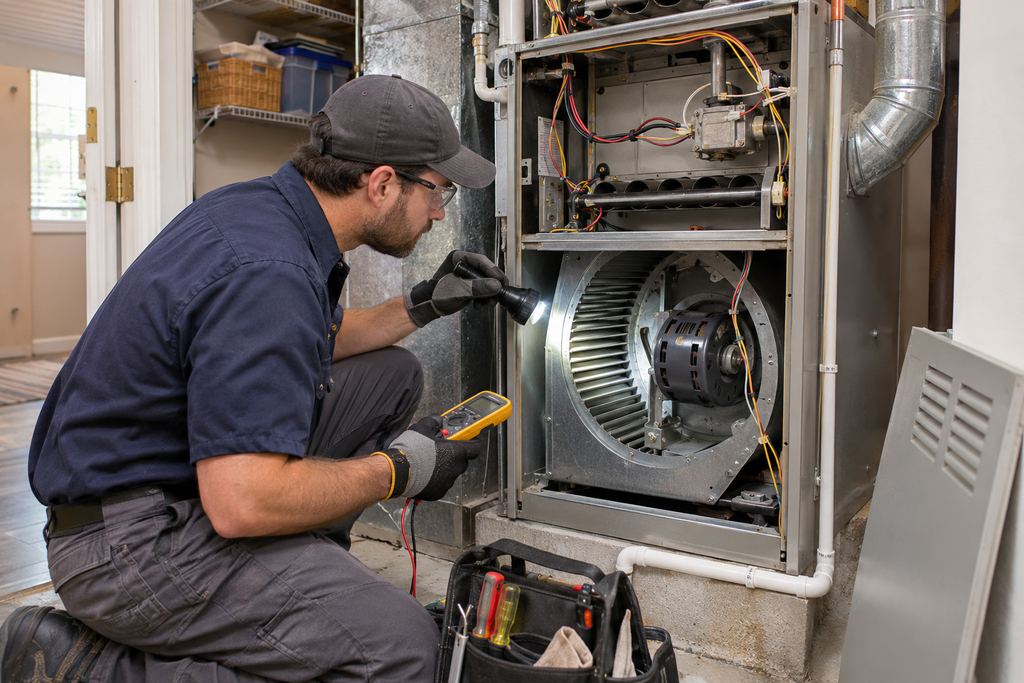
Electric Furnace Not Heating
When an electric furnace is not heating, the most common reasons are a tripped furnace breaker, a thermostat setting, a clogged filter that sets off the high limit, or one or more burned-out heating elements. Check the thermostat and breakers first. Everything inside the cabinet runs on high voltage, so element, sequencer and relay testing is technician work.
Leave the building first
A gas smell is not a repair request. Stop here and do this now:
A carbon monoxide alarm is not a repair request. Stop here and do this now:
- Get everyone out of the house, pets too, and leave the door open behind you.
- Do not switch lights, appliances or the thermostat on or off, and do not use a lighter, a match or a phone inside.
- From outside, call your gas utility's emergency line or 911.
- Stay outside until the utility or the fire department says it is safe to go back in.
After the home is cleared, a licensed technician can check the furnace, boiler or water heater. You can come back to this form then.
Nothing was sent. This form does not handle gas or carbon monoxide emergencies.
Sending your request
Please keep this page open. The form is locked so the request is not sent twice.
Your request was received
We passed it to a contractor in your area. If one accepts, they contact you using the phone number or email you gave. We cannot say how soon, and you are not required to hire anyone.
No reply after a few days? Check your spam folder, then use the contact page.
We could not send your request
Nothing was sent to a contractor. Your answers are still on this page. Try again in a moment.Online requests are not connected yet
The request form is not linked to a contractor network yet. Nothing you typed was sent or saved. Please call instead, or try again later.Electrical warning signs
Short answer
Air that feels lukewarm usually means only some elements are working. No air at all points to power, the blower or controls. Repeated breaker trips mean leave it off.
What you might notice
- Air feels cool or barely warmOften a sign that some heating elements or their relays have stopped working.
- Blower runs, then the air turns coldThe high limit may be cutting the elements off because of low airflow.
- Nothing happens at allPower, thermostat, transformer or door switch problems are more likely.
- Heat comes on and off in short burstsLimit switch trips, a failing sequencer or thermostat issues can cause this.
- Higher electric bill with less comfortThe furnace runs longer to make up for elements that are out.
Is it an electric furnace or something else?
Many homes call any indoor heating unit a furnace. The right diagnosis depends on what you have.
- Electric furnaceA cabinet with a blower and several resistance heating elements. No flue pipe, no gas line, and usually two or more large breakers in the panel.
- Heat pump with electric backupAn outdoor unit does most of the heating, and heat strips in the indoor air handler help in cold weather. See heat pump not heating.
- Gas furnaceHas a gas line and a vent pipe. If that is your system, see gas furnace not heating.
- Baseboard or wall heatersRoom-by-room electric heat without ducts. These are usually electrician work rather than HVAC.
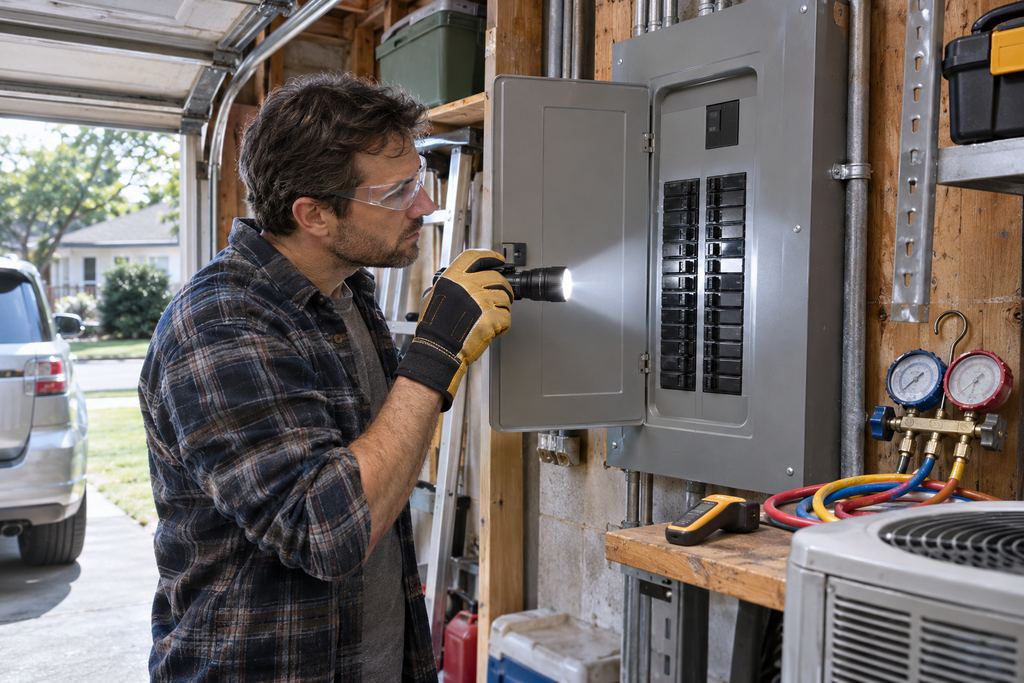
Common causes inside an electric furnace
- Burned-out heating elementsElements wear out like a toaster's coil. Losing one or two drops output noticeably.
- Sequencers or relaysThese switch the elements on in stages. A failed one leaves its elements cold.
- High limit switchIt shuts off the elements if the cabinet gets too hot, often because of a dirty filter or blocked vents. A limit that trips often needs a technician to find out why.
- Blower motor or capacitorWithout airflow, the elements shut off on the limit. Weak motors are a common reason for cool air.
- Transformer or control boardThe low-voltage side that talks to the thermostat can fail and leave the whole system dark.
- Thermostat setupA thermostat configured for a heat pump or gas furnace may not call for the elements correctly.
Safe owner checks versus technician work
Safe checks you can do
Only checks from the owner's manual that need no tools and no opening of panels.
- Thermostat in Heat mode with a setpoint above room temperature, fresh batteries
- Furnace breakers on; reset a tripped one once and leave it off if it trips again
- The furnace's own disconnect or service switch on
- Air filter replaced if dirty
- Supply and return vents open, nothing blocking the return grille
- Blower door seated so its safety switch closes
Leave these to a professional
Gas valves, burners, venting, refrigerant, capacitors and electrical circuits need a qualified, licensed technician.
- Measuring element resistance and current draw
- Replacing elements, sequencers, relays and limits
- Blower motor and capacitor testing
- Control board and transformer diagnosis
- Checking wiring and breaker sizing for heat damage
Maintenance and the repair decision
Electric furnaces have few moving parts, so maintenance is mostly about airflow and connections. Keep filters fresh and the return path clear. A periodic inspection lets a technician tighten connections, check element current and look for heat discoloration before it causes a breaker trip.
Repairs to elements and relays are usually straightforward. The bigger question is operating cost: resistance heat uses more electricity than a heat pump for the same warmth in most climates, according to the U.S. Department of Energy. If the furnace is old, ask for a repair price and a heat pump estimate side by side. Request help through the furnace repair page, and see the furnace repair cost guide for what affects the price.
Cold house while you wait
Related services and guides
Pages that continue this topic.
Questions
Why isn't my electric furnace turning on?
Check the thermostat, the furnace breakers and the service switch, and make sure the blower door is closed. If those are all fine, a transformer, control board or door switch fault is likely, and a technician should test it.
Why is my electric furnace blowing out cold air?
Often the blower is running while some or all elements are off, because of a failed element, sequencer or relay, or a high limit that keeps tripping. A dirty filter can trigger the limit, so change it first.
What is the typical lifespan of an electric furnace?
Electric furnaces often last longer than gas furnaces because there is no combustion, commonly 20 years or more with care. Individual parts such as elements and relays wear out along the way.
Can I put a stronger blower in my furnace?
Not as a do-it-yourself upgrade. The blower must match the furnace's heating capacity and duct system, and the wrong motor can overheat elements or cause noise. A technician can adjust blower speed within the maker's settings.