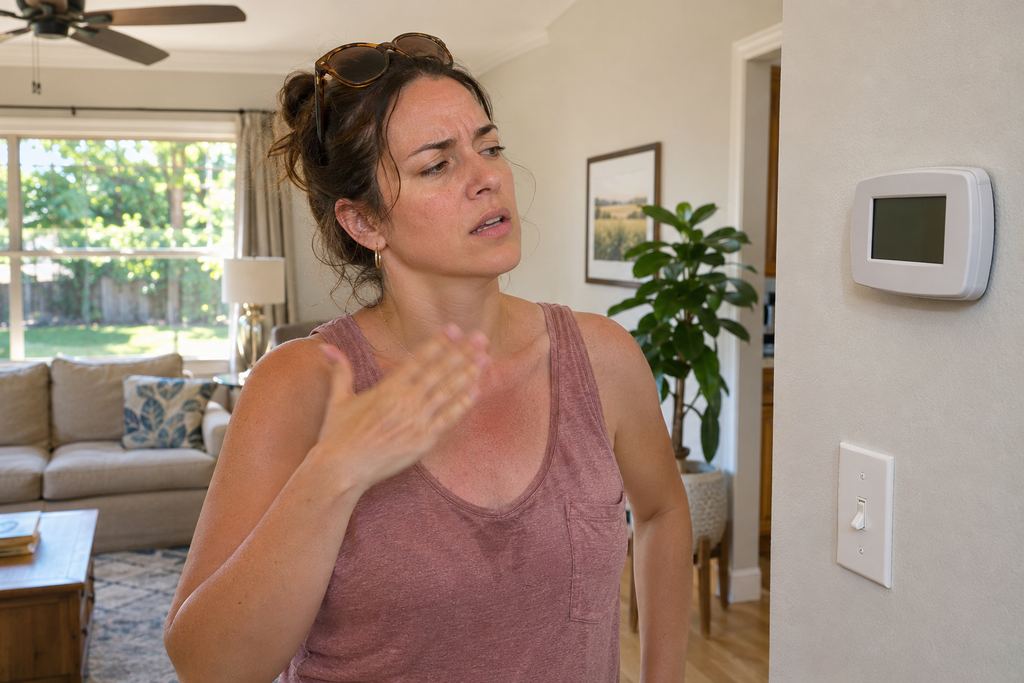
AC Blowing Warm Air
When your AC is blowing warm air, start with the thermostat, the air filter, the breaker and the outdoor unit. If those look right and the air is still warm after 15 minutes, turn cooling off and ask a technician to check the refrigerant circuit, the compressor and the outdoor fan.
Leave the building first
A gas smell is not a repair request. Stop here and do this now:
A carbon monoxide alarm is not a repair request. Stop here and do this now:
- Get everyone out of the house, pets too, and leave the door open behind you.
- Do not switch lights, appliances or the thermostat on or off, and do not use a lighter, a match or a phone inside.
- From outside, call your gas utility's emergency line or 911.
- Stay outside until the utility or the fire department says it is safe to go back in.
After the home is cleared, a licensed technician can check the furnace, boiler or water heater. You can come back to this form then.
Nothing was sent. This form does not handle gas or carbon monoxide emergencies.
Sending your request
Please keep this page open. The form is locked so the request is not sent twice.
Your request was received
We passed it to a contractor in your area. If one accepts, they contact you using the phone number or email you gave. We cannot say how soon, and you are not required to hire anyone.
No reply after a few days? Check your spam folder, then use the contact page.
We could not send your request
Nothing was sent to a contractor. Your answers are still on this page. Try again in a moment.Online requests are not connected yet
The request form is not linked to a contractor network yet. Nothing you typed was sent or saved. Please call instead, or try again later.Stop first if you notice any of these
Short answer
Warm air from an air conditioner usually means the outdoor unit is not removing heat. Settings, a blocked filter or a tripped breaker are things you can check. Ice, low refrigerant, a failed capacitor or a stopped compressor need a technician.
What to do in the first 15 minutes
- STEP 1Confirm the settingThe thermostat should read Cool, not Heat, Auto changeover or Fan. A fan set to On instead of Auto keeps blowing room air even when the compressor rests, which can feel warm.
- STEP 2Go outside and listenWith cooling on, the outdoor fan should spin and you should hear the compressor hum. If the unit is silent while the indoor blower runs, the outdoor side has no power or has stopped.
- STEP 3Look for iceFrost on the copper lines or the indoor coil means airflow or refrigerant trouble. Set the system to off with the fan on to thaw it. See AC not cooling for frozen coil steps.
- STEP 4Give it time, then decideAfter a power outage or a reset, many units wait a few minutes before the compressor restarts. If the air is still warm after about 15 minutes of cooling, stop and arrange service.
Possible causes, from simple to serious
Any of these can make an air conditioner blow warm air. A technician confirms which one with meters and gauges.
- Thermostat setting or failureWrong mode, dead batteries or a thermostat that no longer sends the cooling signal.
- Clogged air filterToo little air across the coil can freeze it, and then almost no cool air comes through.
- Tripped breaker or disconnectThe indoor blower and outdoor unit are often on separate circuits, so the fan can run while the condenser is dead.
- Dirty condenser coilGrass clippings, cottonwood fluff and dirt on the outdoor coil stop it from shedding heat on hot afternoons.
- Capacitor or contactor failureThese electrical parts start the compressor and fan. When one fails, the outdoor unit may hum without running. Capacitors hold a charge, so they are technician work.
- Low refrigerant from a leakRefrigerant does not get used up. If it is low, there is a leak to find. Adding refrigerant without a repair only buys time.
- Compressor problemThe compressor can overheat and shut off on a hot day, or fail outright. Testing it is part of a professional diagnosis.
- Duct leaksA disconnected duct in a hot attic pulls in hot air, so one or two rooms get warm air while others feel fine.
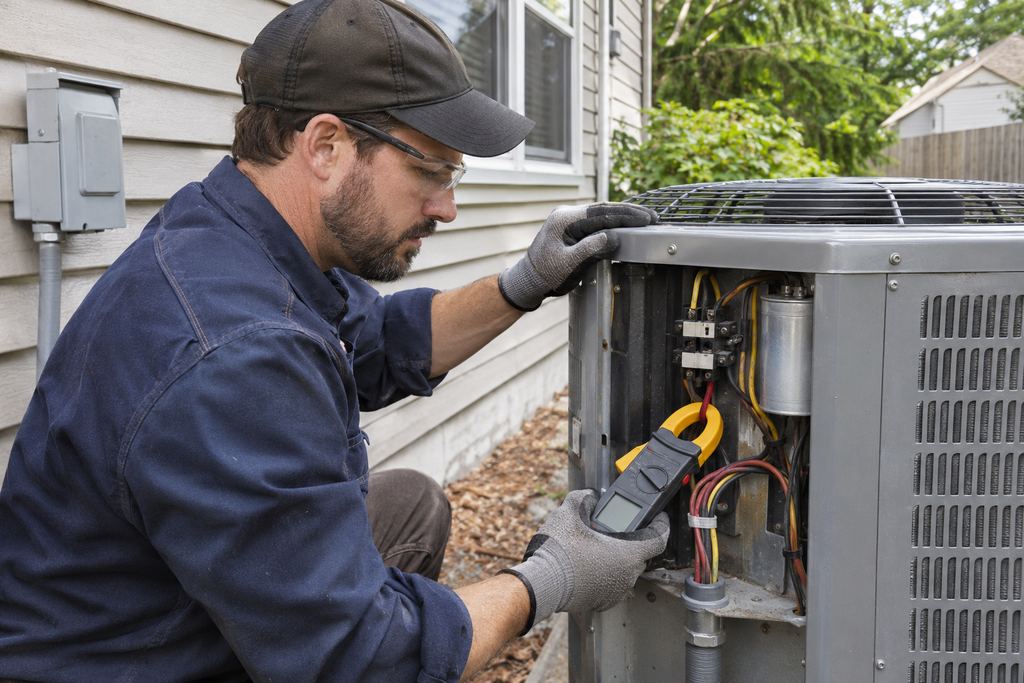
Homeowner checks versus technician work
Safe checks you can do
Only checks from the owner's manual that need no tools and no opening of panels.
- Thermostat mode, setpoint, fan setting and batteries
- Air filter condition and size, replaced if dirty
- The AC breaker in the main panel, reset once only
- Supply and return vents open and not blocked by furniture
- Leaves, weeds and debris cleared two feet back from the outdoor unit
- The condensate float switch: some systems shut cooling off when the drain pan fills
Leave these to a professional
Gas valves, burners, venting, refrigerant, capacitors and electrical circuits need a qualified, licensed technician.
- Opening the outdoor unit's electrical panel
- Testing or replacing capacitors and contactors
- Checking refrigerant pressure, finding and repairing leaks (EPA Section 608 certification required)
- Compressor and fan motor testing
- Cleaning the condenser coil from the inside
- Duct repair in attics and crawl spaces
Refrigerant type and what it means for the repair
Older systems use R-22. Production and import of R-22 ended in the United States in 2020, so recharging one depends on reclaimed supply and usually costs more. Newer equipment uses R-410A, and many units built for 2025 and later use A2L refrigerants such as R-454B or R-32. The type is printed on the outdoor unit's label. Knowing it helps you understand a quote and decide between repair and replacement. For price drivers, see the AC repair cost guide and the refrigerant service page.
Maintenance that prevents a repeat
Most warm air calls in July trace back to something that built up over months. Change or clean filters on the schedule in the owner's manual, more often with pets or construction dust. Rinse loose debris off the outside of the condenser fins with a garden hose at low pressure, with power off at the disconnect, if the manual allows it. Keep plants trimmed back and do not stack items against the unit.
A yearly tune-up before the cooling season gives a technician a chance to test the capacitor, check refrigerant pressures and clean the coils before the first heat wave. Ask what the visit includes, because the word tune-up covers very different checklists.
Still warm air after the checks? Describe what the outdoor unit is doing and request AC repair from a local contractor.
Related services and guides
Pages that continue this topic.
Questions
Why is my AC running but not cooling?
The indoor blower can run while the outdoor unit is off or struggling. Check the breaker and the outdoor fan, look for ice, and replace a dirty filter. If none of those explain it, the cause is usually electrical or refrigerant related and needs a technician.
What is the three minute rule for an AC?
Many systems wait a few minutes after shutting off before the compressor starts again, so pressures can even out. If you switch the AC off and back on, give it at least three to five minutes before deciding it is not cooling.
Is keeping the AC at 72 good?
It is a common comfort setting. On very hot days a system may not hold 72 and will run constantly, which is normal up to a point. If the house never gets close to the setpoint, or the air from the vents feels warm, that points to a problem.
Can low refrigerant cause warm air?
Yes. Low refrigerant means a leak, and it can also freeze the coil. A technician should find and repair the leak, then charge the system to the maker's specification.
Should I keep running the AC while I wait for repair?
No, if it is blowing warm air, frozen, humming loudly or tripping the breaker. Running it in that state can damage the compressor. Use fans and a cool room in the meantime.