Heating Repair
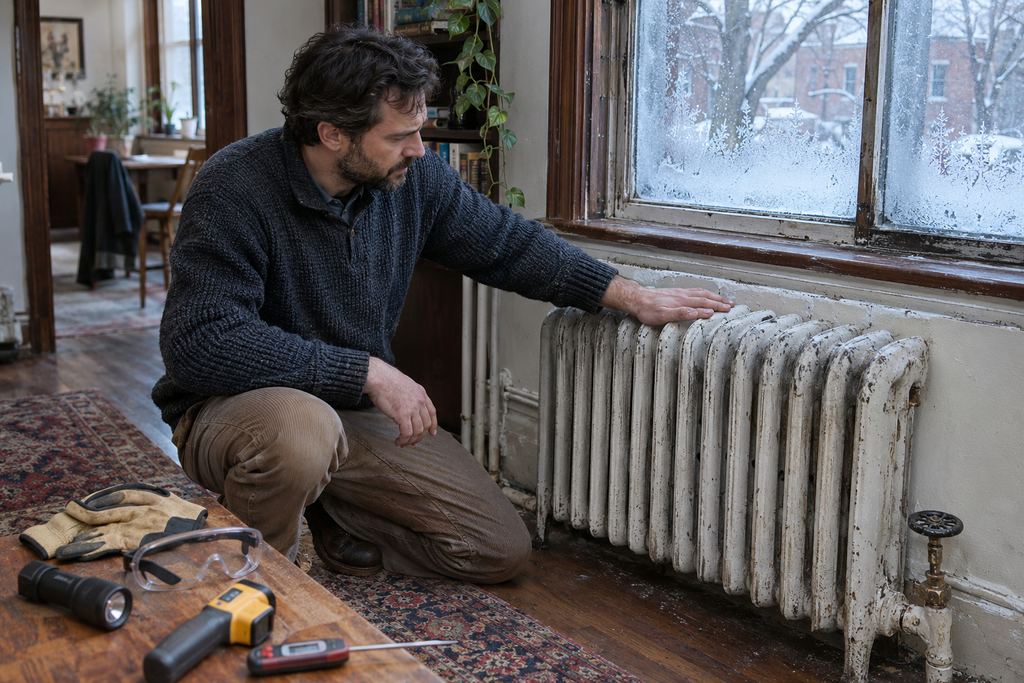
Heating repair depends on what heats your home: a furnace that blows warm air, a boiler that sends hot water or steam to radiators, a heat pump, or electric baseboard. Identify the system first, take the safety steps if anything smells wrong, then request a visit from a local heating contractor. Availability depends on the ZIP code and time of day.
Leave the building first
A gas smell is not a repair request. Stop here and do this now:
A carbon monoxide alarm is not a repair request. Stop here and do this now:
- Get everyone out of the house, pets too, and leave the door open behind you.
- Do not switch lights, appliances or the thermostat on or off, and do not use a lighter, a match or a phone inside.
- From outside, call your gas utility's emergency line or 911.
- Stay outside until the utility or the fire department says it is safe to go back in.
After the home is cleared, a licensed technician can check the furnace, boiler or water heater. You can come back to this form then.
Nothing was sent. This form does not handle gas or carbon monoxide emergencies.
Sending your request
Please keep this page open. The form is locked so the request is not sent twice.
Your request was received
We passed it to a contractor in your area. If one accepts, they contact you using the phone number or email you gave. We cannot say how soon, and you are not required to hire anyone.
No reply after a few days? Check your spam folder, then use the contact page.
We could not send your request
Nothing was sent to a contractor. Your answers are still on this page. Try again in a moment.Online requests are not connected yet
The request form is not linked to a contractor network yet. Nothing you typed was sent or saved. Please call instead, or try again later.Short answer
Heating system repair starts with the same quick checks for every type: thermostat, power switch, breaker and filter. After that, the fault and the right technician depend on whether you have a furnace, boiler or heat pump.
Gas, CO or smoke: safety before service
Which heating repair do you need?
| How the heat reaches you | System | Where to go |
|---|---|---|
| Warm air from floor or ceiling registers, unit in basement, closet or attic, burns gas or propane | Gas furnace | Furnace repair |
| Warm air from registers, outdoor unit runs in winter | Heat pump | Heat pump repair |
| Radiators or baseboard with pipes, no ducts | Boiler | Boiler repair |
| Warm air from registers, no gas line, no outdoor unit | Electric furnace | Electric furnace not heating |
| Not sure, or heat is uneven between rooms | Any | Heating not working |
What heating repair service covers
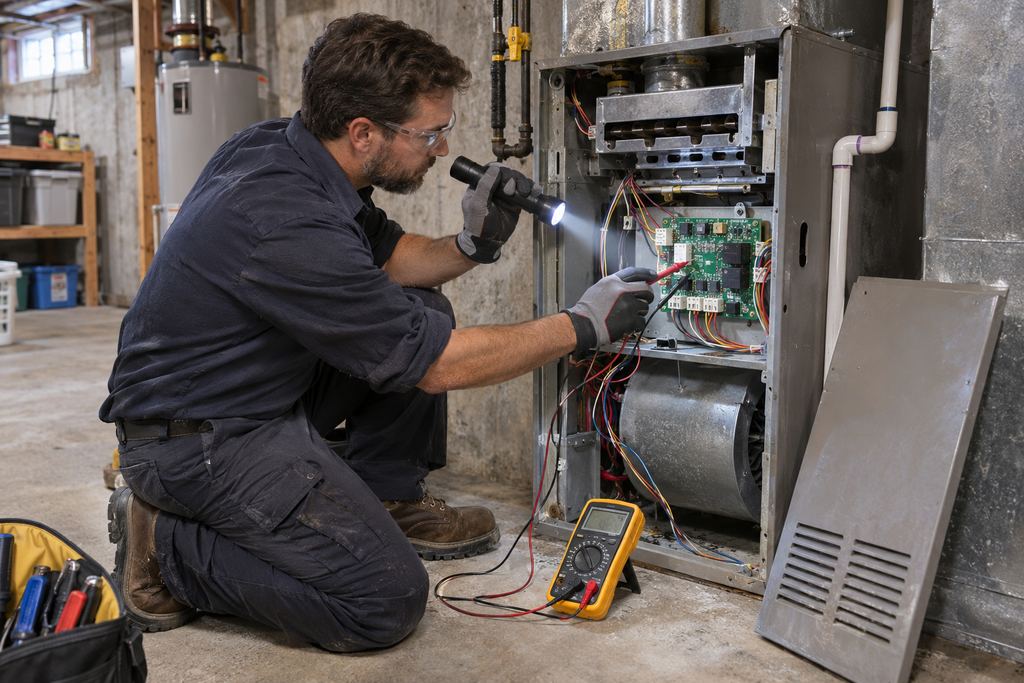
- DiagnosisReading fault codes, watching the start sequence and testing the part where it fails.
- Ignition and flameIgnitors, flame sensors, pilots and gas valves on furnaces and boilers.
- Air and water movementBlower motors on furnaces and air handlers, circulator pumps and zone valves on boilers.
- Controls and thermostatsBoards, relays, limit switches, sequencers and thermostat wiring.
- Heat pump partsReversing valves, defrost controls, backup heat strips and refrigerant work.
- Safety and ventingFlue and vent inspection, combustion checks and CO testing.
Quick checks for any heating system
Set the thermostat to Heat and a few degrees above the room reading, and replace its batteries if the display is faint. Make sure the switch at the furnace or boiler and its breaker are on, and reset a tripped breaker only once. On forced-air systems, replace a dirty filter and confirm the blower door is closed. On a boiler, read the pressure gauge and note the number. Clear snow from heat pump outdoor units and from high-efficiency furnace vent pipes outside. Leave burners, gas valves and electrical compartments to the technician.
How to choose a heating repair company
Ratings and ads do not tell you the things that matter on a cold night. These questions do.
- 1Do you work on my system and fuel type?Steam boilers, oil heat and geothermal heat pumps are specialties.
- 2What is the trip or diagnostic fee, and the after-hours rate?Rates for nights, weekends and holidays are often higher.
- 3Are you licensed for HVAC or gas work in this state?Licensing rules differ by state; the state contractor board can confirm.
- 4Will I get the diagnosis and quote in writing?Especially for heat exchanger or replacement recommendations.
- 5What warranty covers parts and labor?Ask how long each lasts.
Without heat in extreme cold
Maintenance that keeps heat reliable
Every fuel-burning heater benefits from a yearly check before the cold season: burners, ignition, flame sensing, venting, safety controls and a combustion test. Heat pumps need their coils, electrical parts and defrost function checked, and boilers their pumps, expansion tank and low-water controls. Keep CO alarms on every level. Small commercial buildings with rooftop units can request service through the form by choosing commercial HVAC repair. Prices by system type are on heating repair cost.
Heating repair by city
Only cities that have a published page appear here. Enter your ZIP code to check coverage for your address.
Questions about heating repair
Can a furnace be repaired?
Usually, yes. Ignitors, flame sensors, motors, switches and control boards are replaceable parts. A cracked heat exchanger is the main finding that often leads to replacement, and it must be confirmed by inspection.
What do you call someone who fixes heating systems?
A heating technician or HVAC technician. Boilers are also serviced by plumbing and heating contractors in many areas.
Do I call HVAC or a plumber for a water heater?
Water heaters are usually plumbing work, although some HVAC companies service them. A combi boiler, which heats both the home and the tap water, is a job for a boiler or heating technician.
What maintenance does a heating system need?
A yearly professional tune-up before winter, filter changes on forced-air systems, clear outdoor vents and outdoor units, and working CO alarms.
Is heating repair more expensive in winter?
Prices per repair are similar, but emergency, night and weekend visits often carry higher rates, and peak season can mean longer waits. Scheduling a tune-up in early fall avoids some of that.