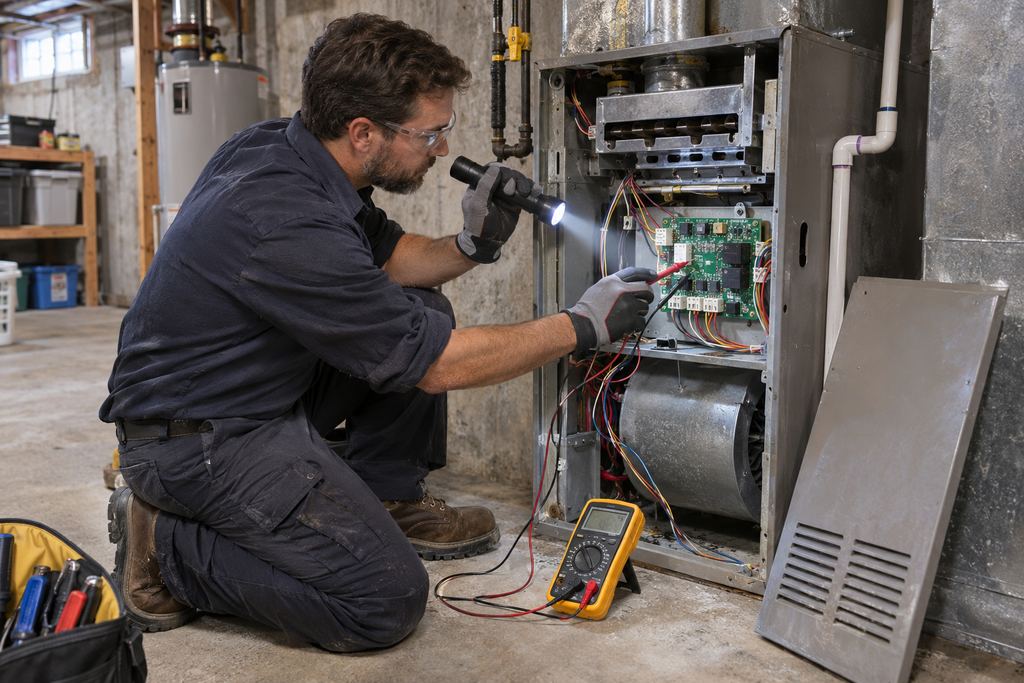
Furnace Not Heating
When a furnace is not heating, the fix depends on what it is doing. A furnace that is silent has a power or control problem. One that runs with cold air is not lighting or is shutting the burners off. One that heats but never reaches the setpoint usually has an airflow, sizing or duct problem. Start with the thermostat, the filter and the furnace switch, then find your symptom below.
Leave the building first
A gas smell is not a repair request. Stop here and do this now:
A carbon monoxide alarm is not a repair request. Stop here and do this now:
- Get everyone out of the house, pets too, and leave the door open behind you.
- Do not switch lights, appliances or the thermostat on or off, and do not use a lighter, a match or a phone inside.
- From outside, call your gas utility's emergency line or 911.
- Stay outside until the utility or the fire department says it is safe to go back in.
After the home is cleared, a licensed technician can check the furnace, boiler or water heater. You can come back to this form then.
Nothing was sent. This form does not handle gas or carbon monoxide emergencies.
Sending your request
Please keep this page open. The form is locked so the request is not sent twice.
Your request was received
We passed it to a contractor in your area. If one accepts, they contact you using the phone number or email you gave. We cannot say how soon, and you are not required to hire anyone.
No reply after a few days? Check your spam folder, then use the contact page.
We could not send your request
Nothing was sent to a contractor. Your answers are still on this page. Try again in a moment.Online requests are not connected yet
The request form is not linked to a contractor network yet. Nothing you typed was sent or saved. Please call instead, or try again later.Gas smell or carbon monoxide alarm
Short answer
Check the thermostat mode and batteries, replace the filter, and make sure the furnace switch, breaker and front panel are set. If the furnace still does not heat, note any status light code and request service.
Pick the symptom that fits
Each guide goes deeper into one pattern. If none fits, keep reading here.
Checks to make before calling
All of these are safe for an owner. Stop at anything that needs a panel opened beyond the filter door.
- ThermostatHeat mode, setpoint a few degrees above the room, fan on Auto, new batteries. Smart thermostats: check that no schedule or eco mode is holding it down.
- FilterHold it up to a light. If you cannot see through it, replace it. A choked filter is one of the most frequent reasons for weak or no heat.
- PowerThe furnace switch on or near the unit and the furnace breaker in the panel. Reset a tripped breaker once.
- Front panelThe blower door must be fully seated or a safety switch keeps the furnace off.
- FuelOther gas appliances working, propane or oil tank not empty. Do not operate gas valves you did not close yourself.
- VentsSupply registers open, return grilles clear. On high-efficiency furnaces, outdoor PVC pipes clear of snow.
- Status lightMost newer furnaces blink a code through a small window. The legend is usually on the inside of the door.
Causes a furnace technician looks for
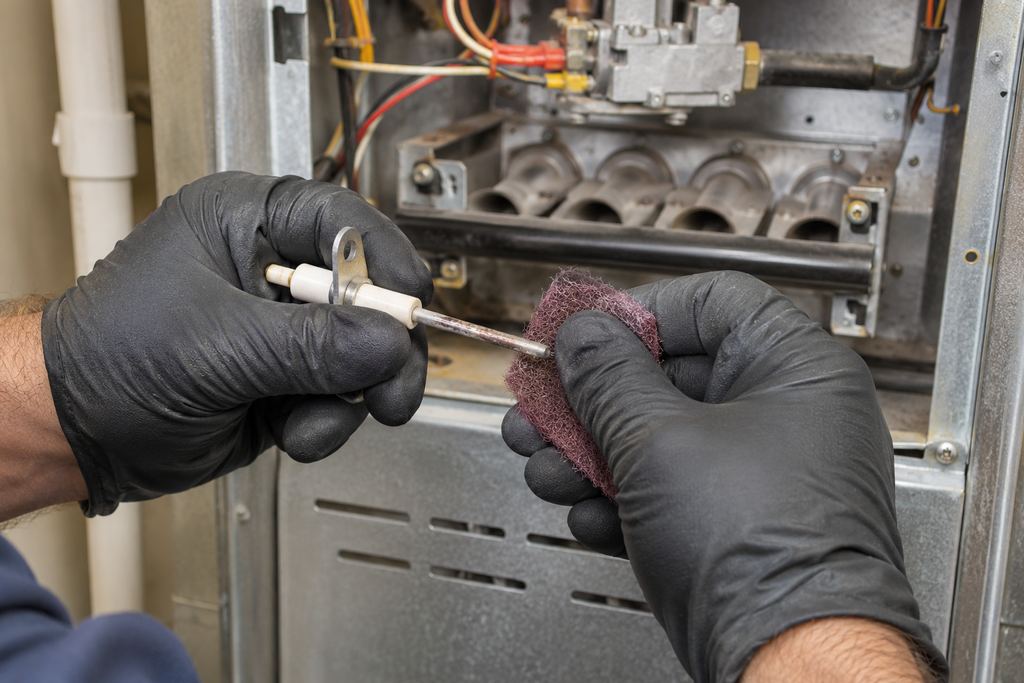
- IgnitionA cracked hot surface ignitor, a failed spark igniter or an out pilot. The burners never light.
- Flame sensingBurners light, then go out in seconds. A dirty flame sensor is the classic cause.
- Safety switchesHigh limit, rollout and pressure switches stop heating when they detect overheating, flame rollout or a venting problem. They must be diagnosed, never bypassed.
- Inducer motorThe small fan that clears the heat exchanger before ignition. If it fails, the furnace will not try to light.
- Control boardThe board runs the sequence and reports codes. Surges and age can kill it.
- BlowerA failed blower motor or capacitor means heat builds up inside and the limit shuts the burners off.
- Gas valve or pressureLow supply pressure or a failed valve gives weak flames or none. Gas valve work is for a technician only.
When the furnace runs but the house stays cool
If warm air comes out but the house never reaches the setpoint, look at the whole system. A dirty filter or closed registers reduce the air the furnace can move. Leaky or uninsulated ducts in an attic, garage or crawl space lose heat before it reaches the rooms. A furnace that was undersized, or one with a blower set too low, may keep up on mild days and fall behind in a cold snap. Two-stage and modulating furnaces also run longer at low output by design, which can feel weaker even when they are working correctly.
A technician can measure temperature rise across the furnace and static pressure in the ducts to tell a furnace problem from a duct problem. Ask for those numbers in the write-up. For request details, see furnace repair; for what affects the bill, the furnace repair cost guide. If your home heats with radiators, boiler not heating is the better guide.
If the house is getting cold
Related services and guides
Pages that continue this topic.
Questions
Why does my furnace keep running but there is no heat?
The blower can run while the burners are off, either because ignition failed, a safety switch tripped or the fan is set to On. Set the fan to Auto, replace the filter and look for a status code. If the air stays cold, a technician should check ignition and the safety controls.
How do you reset a furnace?
Turn off the furnace switch or breaker for about a minute, then back on. That restarts the control board and clears a lockout. If the same fault returns, resetting again will not fix it, and on oil furnaces repeated resets are unsafe.
Why is my furnace not blowing as hot as it should?
Low airflow, a dirty filter, low gas pressure, a staged furnace running on low fire, or duct losses can all make air feel less hot. A technician can measure the temperature rise to see if it is within the maker's range.
Why isn't my furnace heating my house even though I set the temperature?
Confirm the thermostat is really calling for heat: correct mode, no schedule override, fresh batteries. Then check the filter and furnace power. If the furnace responds but cannot keep up, ducts, sizing or a weak blower are possible reasons.
Is it worth repairing an older furnace that will not heat?
Often yes for a single part such as an ignitor or flame sensor. For a cracked heat exchanger, a failed control board on an old unit, or repeated breakdowns, compare the repair price with a replacement quote and the furnace's safety condition.