Furnace Blowing Cold Air
A furnace blowing cold air for a minute at startup is normal while the heat exchanger warms up, and a fan set to On will push room air between heating cycles. If the air stays cold for several minutes in Heat mode, check the thermostat, the filter and the furnace switch, then look for a code light on the furnace. Past that, the usual causes are ignition, gas supply, a tripped limit or a clogged condensate drain.
Leave the building first
A gas smell is not a repair request. Stop here and do this now:
A carbon monoxide alarm is not a repair request. Stop here and do this now:
- Get everyone out of the house, pets too, and leave the door open behind you.
- Do not switch lights, appliances or the thermostat on or off, and do not use a lighter, a match or a phone inside.
- From outside, call your gas utility's emergency line or 911.
- Stay outside until the utility or the fire department says it is safe to go back in.
After the home is cleared, a licensed technician can check the furnace, boiler or water heater. You can come back to this form then.
Nothing was sent. This form does not handle gas or carbon monoxide emergencies.
Sending your request
Please keep this page open. The form is locked so the request is not sent twice.
Your request was received
We passed it to a contractor in your area. If one accepts, they contact you using the phone number or email you gave. We cannot say how soon, and you are not required to hire anyone.
No reply after a few days? Check your spam folder, then use the contact page.
We could not send your request
Nothing was sent to a contractor. Your answers are still on this page. Try again in a moment.Online requests are not connected yet
The request form is not linked to a contractor network yet. Nothing you typed was sent or saved. Please call instead, or try again later.Stop if you smell gas
Short answer
Set the thermostat fan to Auto and the mode to Heat, replace a dirty filter, and confirm the furnace switch is on. Cold air that continues after that usually means the burners are not lighting or are shutting off early.
When cold air is expected
Gas furnaces light the burners first and start the blower a short time later, so the first air out can feel cool for up to a minute or so. When the thermostat is satisfied, the burners stop and the blower runs on briefly to pull leftover heat out, and that air cools down too. With the thermostat fan on On instead of Auto, the blower runs nonstop and you will feel room-temperature air between cycles. None of these is a fault. Heat pumps also blow cooler air than furnaces and run a defrost cycle in winter; if you have one, read heat pump not heating instead.
Causes when the cold air does not stop
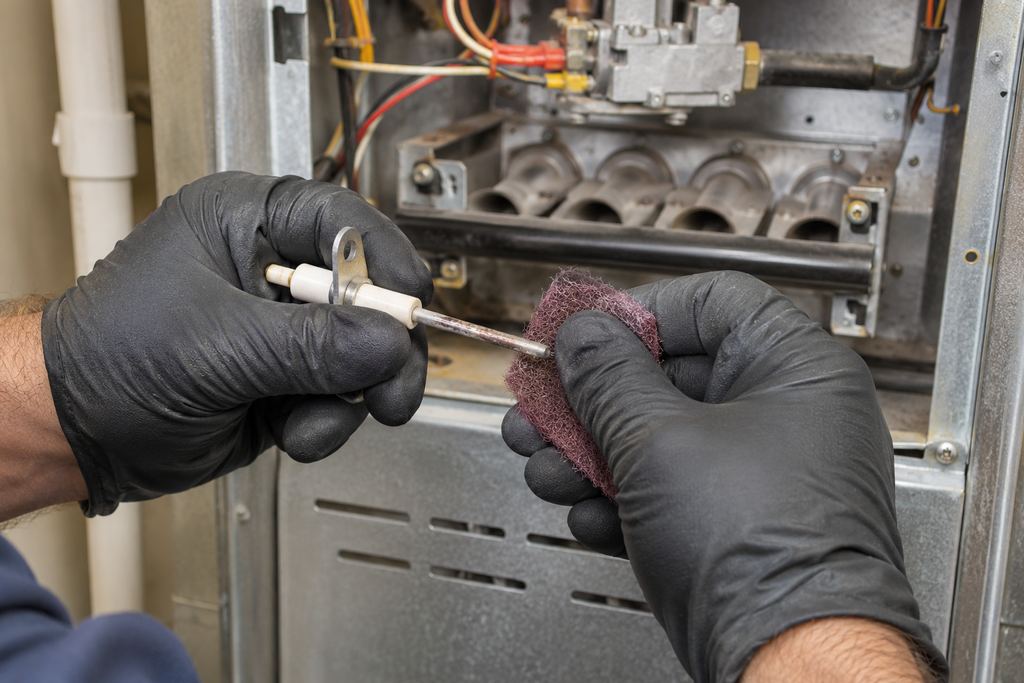
- Dirty flame sensorThe burners light, then shut off within seconds because the sensor cannot prove flame. A common winter repair. See flame sensor replacement.
- Failed hot surface ignitorNo glow, no ignition, and after several tries the furnace locks out while the blower may keep running. See furnace ignitor replacement.
- Overheating and the limit switchA clogged filter or closed vents let the heat exchanger overheat, the limit shuts the burners off, and the blower keeps going to cool it.
- Clogged condensate drainHigh-efficiency furnaces make water. If the drain or trap is blocked, a pressure switch stops the burners.
- Gas supplyA closed valve after other work, an empty propane tank or a utility issue leaves nothing to burn. Do not open gas valves you did not close yourself.
- Pilot light outOlder furnaces have a standing pilot. If it is out, see furnace pilot light out.
- Duct leaksCold air in only one room may be a disconnected duct in an unheated attic or crawl space.
Owner checks, then the technician list
Safe checks you can do
Only checks from the owner's manual that need no tools and no opening of panels.
- Thermostat on Heat, fan on Auto, setpoint a few degrees above room temperature
- Thermostat batteries replaced
- Furnace power switch and breaker on
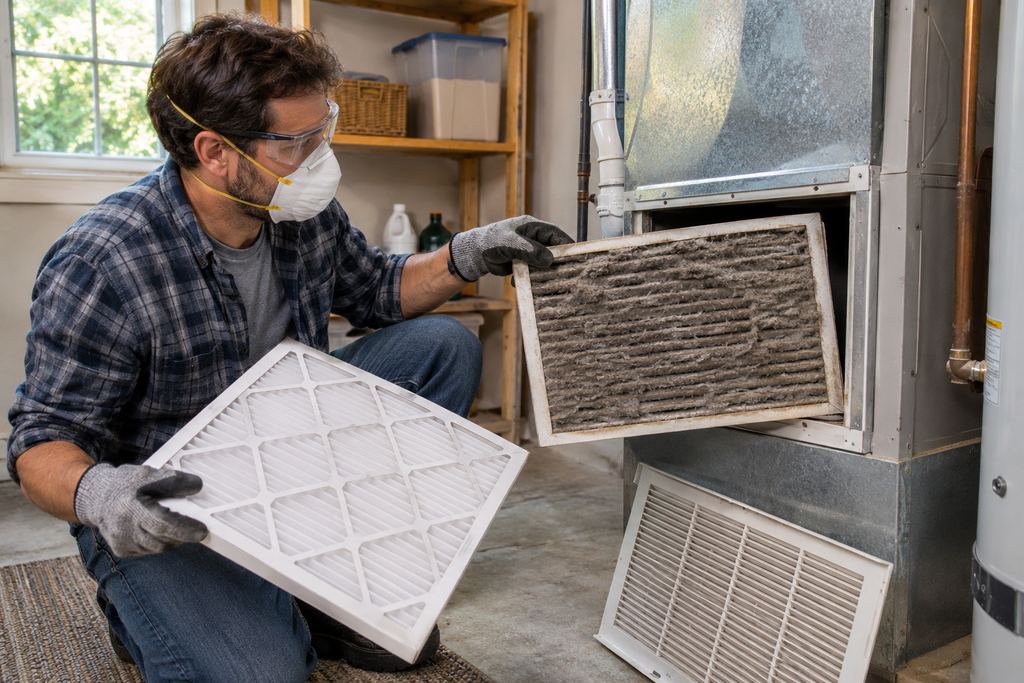
- Air filter replaced
- Furnace front panel fully seated
- Status light on the furnace: count the flashes and match the code on the panel label
- Outdoor intake and exhaust pipes on high-efficiency furnaces clear of snow or leaves
Leave these to a professional
Gas valves, burners, venting, refrigerant, capacitors and electrical circuits need a qualified, licensed technician.
- Cleaning or replacing a flame sensor
- Ignitor testing and replacement
- Gas pressure and gas valve checks
- Limit and pressure switch diagnosis (never bypassed)
- Clearing the internal condensate trap
- Heat exchanger inspection
Older furnaces, newer furnaces
Furnaces with a metal flue pipe and a standing pilot use older ignition and venting. Furnaces with white PVC vent pipes are high-efficiency condensing units with a condensate drain, an inducer fan and pressure switches, which add a few more ways for heating to stop. Mention which kind you have when you request furnace repair. If a repair is quoted on an older furnace, the furnace repair cost guide lists what drives the price and what to weigh before replacing.
Waiting with no heat
Related services and guides
Pages that continue this topic.
Questions
How do I reset my furnace blower?
Most furnaces do not have a separate blower reset. Turn the furnace switch off for a minute and back on to restart the control board. If the blower keeps running with cold air afterward, there is a fault to diagnose.
Which furnace part costs the most to fix?
The heat exchanger is usually the costliest, and a cracked one often leads to replacement. Only a technician inspection can confirm a crack. Control boards, inducer motors and blower motors are other larger repairs.
How long does a home gas furnace usually last?
Many gas furnaces last roughly 15 to 20 years, depending on maintenance, installation and usage. Age alone is not a reason to replace one that is safe and working.
What size furnace do I need?
Size comes from a heat load calculation that accounts for insulation, windows, air leaks and climate, not square footage alone. Ask any installer how they sized the replacement.
Why does my furnace blow cold air then warm air?
A brief cool start is normal. Repeated swings, where heat starts and then fails within a minute, often point to a flame sensor or limit problem.