Furnace Flame Sensor Replacement
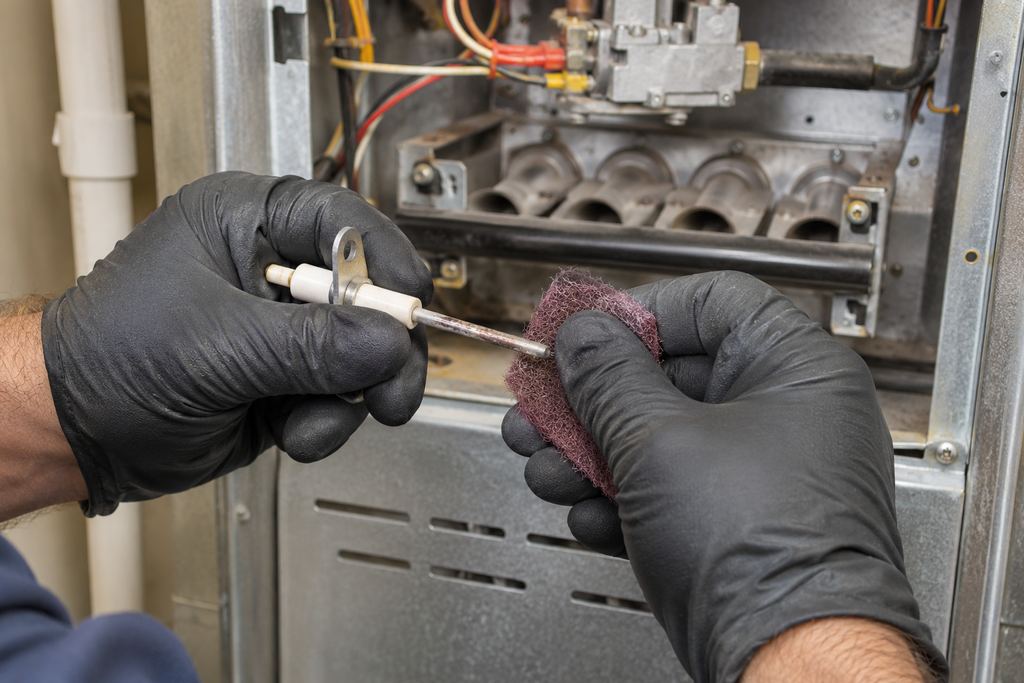
Furnace flame sensor replacement is called for when the sensor can no longer prove to the control board that the burners are lit. The usual sign is a furnace that lights, runs a few seconds, shuts the gas off and tries again, then locks out. Often the sensor only needs cleaning; a cracked insulator or a worn rod means a new one.
Leave the building first
A gas smell is not a repair request. Stop here and do this now:
A carbon monoxide alarm is not a repair request. Stop here and do this now:
- Get everyone out of the house, pets too, and leave the door open behind you.
- Do not switch lights, appliances or the thermostat on or off, and do not use a lighter, a match or a phone inside.
- From outside, call your gas utility's emergency line or 911.
- Stay outside until the utility or the fire department says it is safe to go back in.
After the home is cleared, a licensed technician can check the furnace, boiler or water heater. You can come back to this form then.
Nothing was sent. This form does not handle gas or carbon monoxide emergencies.
Sending your request
Please keep this page open. The form is locked so the request is not sent twice.
Your request was received
We passed it to a contractor in your area. If one accepts, they contact you using the phone number or email you gave. We cannot say how soon, and you are not required to hire anyone.
No reply after a few days? Check your spam folder, then use the contact page.
We could not send your request
Nothing was sent to a contractor. Your answers are still on this page. Try again in a moment.Online requests are not connected yet
The request form is not linked to a contractor network yet. Nothing you typed was sent or saved. Please call instead, or try again later.Short answer
If the burners light and then go out within seconds, ask a technician to test and clean the flame sensor and check the furnace's grounding. The sensor sits in the burner compartment of a gas appliance, so the work belongs to a technician.
If you smell gas, do not restart the furnace
What a flame sensor does and where it is
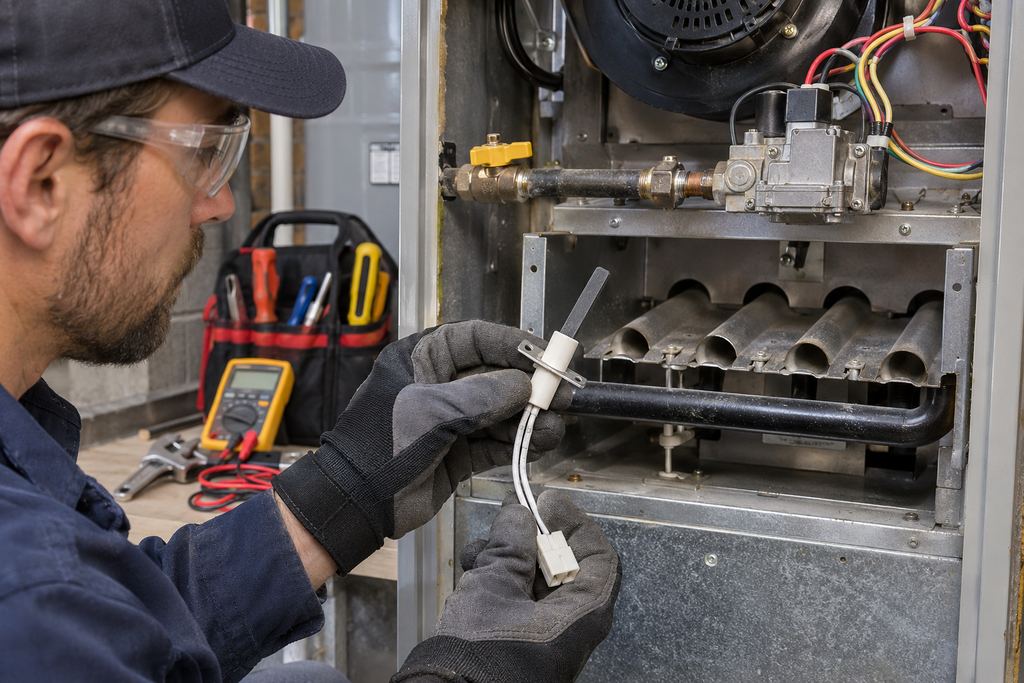
A flame sensor is a thin metal rod with a white ceramic base, mounted so its tip sits in the flame of one burner, usually the burner farthest from the ignitor. When the burners light, a tiny current passes from the rod through the flame to the burner and ground. The control board reads that current as proof of flame. If the signal is weak or missing, the board closes the gas valve within seconds, which is a safety feature that prevents unburned gas from flowing.
Over time the rod picks up a coating from combustion, and the signal weakens. That is why cleaning fixes many cases. Some older furnaces use a pilot with a thermocouple or a different flame-proving setup instead of a separate rod.
Signs that point to the flame sensor
Other faults cause short burner runs too, so these are clues, not proof.
- Burners light, then shut off after 2 to 10 secondsThe textbook pattern, often repeated three times before lockout.
- Furnace locks out and a status light blinks a codeMany boards log a flame sense fault. The code meaning is specific to the model; the chart is usually on the door.
- Heat works after a power reset, then fails againA marginal signal can pass sometimes and fail other times.
- Problem started after a period of heavy useBuildup accumulates with run time.
What the technician checks
- STEP 1Watch the ignition sequenceConfirms the burners light and how long they stay on.
- STEP 2Measure the flame signalA meter in series reads the microamp current. Readings are compared with the manufacturer's specification.
- STEP 3Clean or replaceThe rod is removed and cleaned with a fine abrasive pad. A cracked porcelain base, bent rod or poor reading after cleaning means a new sensor that fits the model.
- STEP 4Check grounding and burner flameA poor ground, a dirty burner or a flame that does not touch the rod can mimic a bad sensor.
- STEP 5Run several cyclesThe furnace should light and stay lit every time.
Cost and the ignitor connection
PickHVAC's gas furnace repair guide, published June 2025, lists ignitor and flame sensor work together at about $300 to $425, with a separate service call of $75 to $200 sometimes added. Cleaning alone often costs less than replacement because no part is needed. Many technicians check the ignitor at the same visit, since a weak hot surface ignitor causes delayed ignition that looks similar; see furnace ignitor replacement and ignitor replacement cost.
If the furnace shuts off for other reasons, such as after running several minutes, read furnace keeps shutting off. For any other furnace fault, see furnace repair.
What you can check safely
Questions about furnace flame sensor replacement
Can a flame sensor go bad on a furnace?
Yes. Most problems come from buildup that weakens the signal, which cleaning fixes. A cracked ceramic insulator, corrosion or a damaged rod means replacement.
Where is the heat sensor located on a furnace?
The flame sensor is in the burner compartment, a thin rod positioned in the flame of one burner, usually opposite the ignitor. Furnaces also have limit switches that sense temperature in other places. Both sit behind panels that should stay closed for homeowners.
What is a flame detector used for?
It proves that burners are lit so the gas valve can stay open. If no flame is sensed, the control shuts the gas off within seconds to prevent unburned gas from building up.
How much is it to replace a flame sensor on a furnace?
PickHVAC's June 2025 guide groups ignitor and flame sensor work at about $300 to $425. The final price depends on the service call fee, the sensor for your model and whether cleaning solves it.
How often should a flame sensor be cleaned?
Many technicians clean it during the yearly furnace tune-up, which keeps signal problems from building up over the season.