Boiler Repair
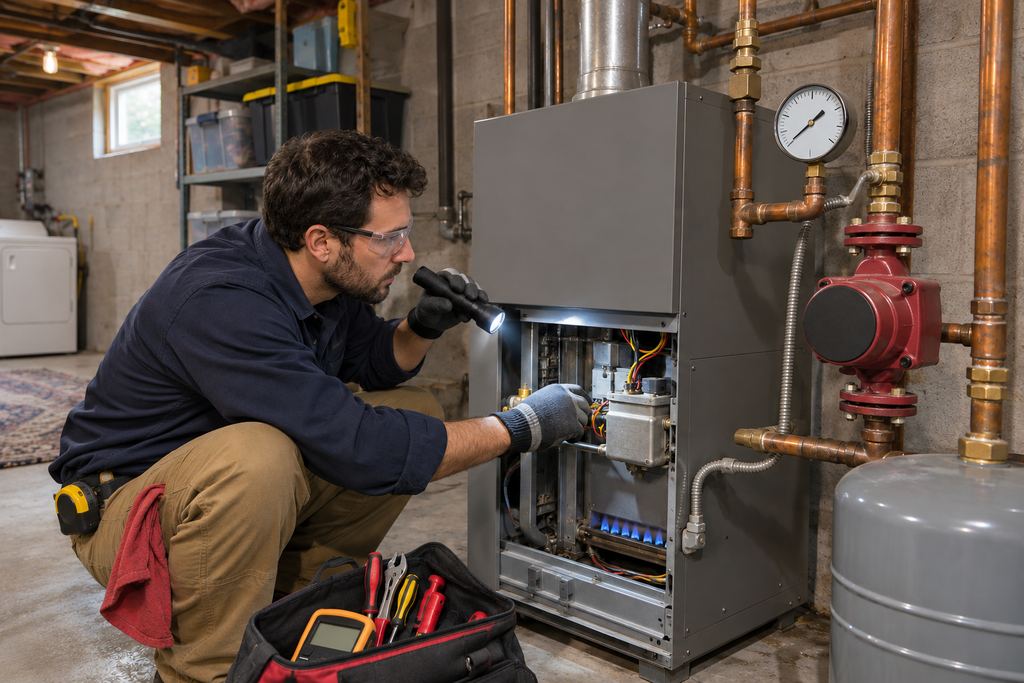
Boiler repair covers hot water and steam boilers that heat a home through radiators, baseboard or in-floor tubing. Common calls are no heat, pressure that climbs or drops, leaks, banging pipes and a boiler that locks out. Use the form to describe the symptom to a local heating contractor; ask about after-hours rates if it is cold and the house is losing heat.
Leave the building first
A gas smell is not a repair request. Stop here and do this now:
A carbon monoxide alarm is not a repair request. Stop here and do this now:
- Get everyone out of the house, pets too, and leave the door open behind you.
- Do not switch lights, appliances or the thermostat on or off, and do not use a lighter, a match or a phone inside.
- From outside, call your gas utility's emergency line or 911.
- Stay outside until the utility or the fire department says it is safe to go back in.
After the home is cleared, a licensed technician can check the furnace, boiler or water heater. You can come back to this form then.
Nothing was sent. This form does not handle gas or carbon monoxide emergencies.
Sending your request
Please keep this page open. The form is locked so the request is not sent twice.
Your request was received
We passed it to a contractor in your area. If one accepts, they contact you using the phone number or email you gave. We cannot say how soon, and you are not required to hire anyone.
No reply after a few days? Check your spam folder, then use the contact page.
We could not send your request
Nothing was sent to a contractor. Your answers are still on this page. Try again in a moment.Online requests are not connected yet
The request form is not linked to a contractor network yet. Nothing you typed was sent or saved. Please call instead, or try again later.Short answer
Gas smell or a CO alarm comes before any repair: leave and call from outside. Otherwise check the thermostat, the boiler's power switch and the pressure gauge reading, then call. Burners, gas valves, relief valves and venting are technician work.
Gas odor or carbon monoxide: leave first
Signs your boiler needs repair
- No heat or only some radiators warmAir in the system, a failed circulator pump, a zone valve stuck closed or an ignition problem are common causes.
- Pressure gauge outside the normal rangeMany residential hot water boilers run around 12 to 15 psi cold; check your manual. Very high pressure or water from the relief valve needs a technician.
- Water on the floorLeaks at valves, pumps, fittings or the boiler itself. Shut power off at the switch if water is near wiring.
- Banging, gurgling or whistlingSteam systems bang from trapped water in pipes; hot water systems gurgle from air or kettle from scale.
- Boiler locks out or short cyclesIgnition, flame sensing, water level or control faults.
- Yellow or lazy flame, soot, or a smellCombustion problems. Turn the boiler off and have it inspected.
What boiler repair service includes
- Ignition and burnerIgnitors, flame sensors, pilot assemblies, gas valves and burner cleaning.
- CirculationCirculator pumps, zone valves, expansion tanks and air removal.
- ControlsAquastats, low-water cutoffs, control boards, thermostats and zone controls.
- Safety devicesPressure relief valves and limit controls, tested and replaced, never bypassed.
- Venting and combustionFlue inspection, combustion analysis and condensate drains on high-efficiency boilers.
- Steam systemsWater level, sight glass, pressure controls, radiator vents and steam traps.
Safe checks and technician work
Safe checks you can do
Only checks from the owner's manual that need no tools and no opening of panels.
- Thermostat on Heat and set above room temperature, fresh batteries
- Boiler power switch on, breaker not tripped
- Read the pressure gauge and write it down
- Radiator valves open and nothing blocking baseboards
- Bleed hot water radiators only if your manual allows it, with the system off and cool
- Press the boiler's reset once if the manual describes it; if it locks out again, stop
Leave these to a professional
Gas valves, burners, venting, refrigerant, capacitors and electrical circuits need a qualified, licensed technician.
- Any gas valve, burner, pilot or venting work
- Adding water or adjusting pressure on systems without an automatic feed, unless the manual covers it
- Replacing relief valves, pumps or expansion tanks
- Repairing leaks at the boiler
- Steam boiler water level and control repairs
- Combustion and carbon monoxide testing
Hot water, steam and combi boilers
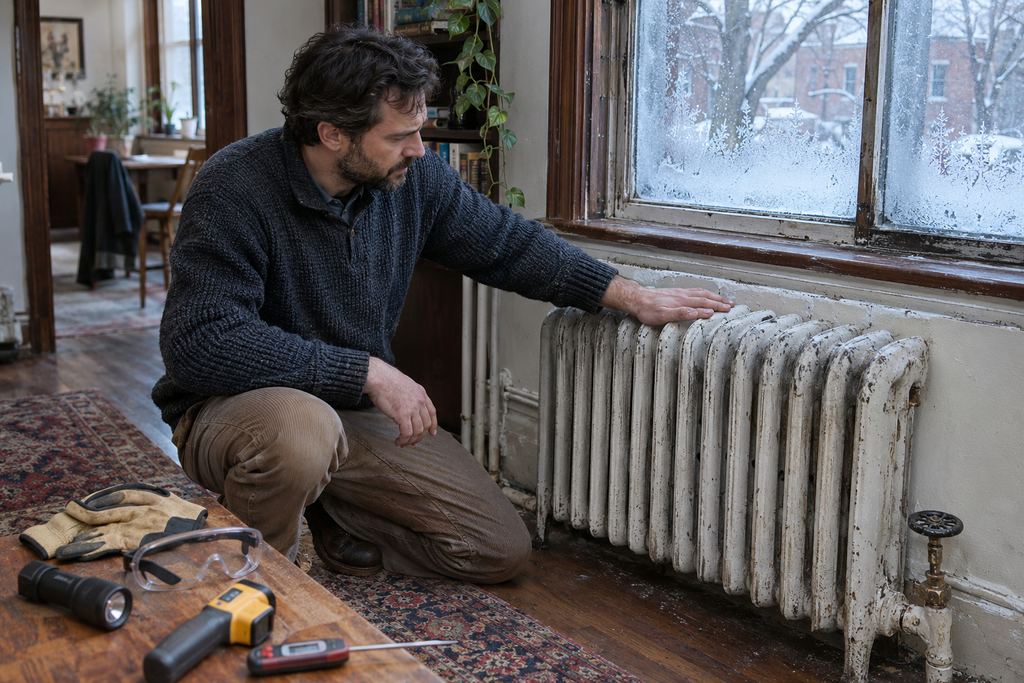
Hot water boilers pump heated water through baseboard, radiators or floor tubing and are found in many Northeast and Midwest homes. Steam boilers, common in older buildings, boil water and send steam to cast iron radiators; they need a different skill set, and not every heating company services them. Combi boilers heat the house and the tap water from one compact wall unit, so a fault can take out both. Most residential boilers burn natural gas, propane or oil; a few are electric. Ask whether the contractor works on your fuel type and on steam if you have it.
Repair or replace the boiler
Ignition parts, pumps, zone valves and controls are routine repairs. A leak in the boiler's heat exchanger or cast iron sections, a cracked section, or repeated failures on an old unit are where replacement comes up. A new boiler can be more efficient and smaller, but replacement is a large project. Fixr's boiler guide, updated January 2026, puts average boiler repair at about $450 and replacement at roughly $3,000 to $8,500. Get repair and replacement quotes in writing and compare them against the boiler's age and condition. More detail is on boiler repair cost.
No heat in freezing weather
Annual boiler maintenance
A yearly service before heating season usually includes a burner inspection and cleaning, a combustion test, a check of the flue and venting, safety control testing, and pump and expansion tank checks. Steam boilers also need their low-water cutoff tested and the water level watched through the season. Keep a working CO alarm on every level of the home and near sleeping areas. If your home has a forced-air furnace instead, see furnace repair; for a whole-home view of heating problems, heating repair. Symptom details are on boiler not heating.
Questions about boiler repair
What are common boiler problems?
No heat, cold radiators in part of the house, pressure that rises or falls, leaks, banging or gurgling pipes, and lockouts from ignition or flame sensing faults. Many trace back to air in the system, a failing pump, a zone valve or controls.
What is a boiler fixer called?
Usually a heating technician, HVAC technician or boiler technician. In some areas plumbing and heating companies handle boilers. Many states require a mechanical, HVAC or plumbing license for gas boiler work; check with your state contractor board.
What are the benefits of a new boiler?
Higher efficiency, especially with a condensing boiler, newer safety controls and fewer breakdowns. Whether it pays off depends on the old boiler's condition, fuel prices and the replacement quote.
How much does it cost to fix a gas water heater?
A water heater is a different appliance, and its repair pricing is not covered here. Many plumbers handle water heaters. If you have a combi boiler, the same unit does both jobs and a boiler technician should look at it.
Is it safe to keep using a boiler that is leaking?
A small drip from a valve can usually wait for a visit if it is not near wiring. Water from the relief valve, a leak from the boiler body or a pressure gauge in the red means turn the boiler off and call.