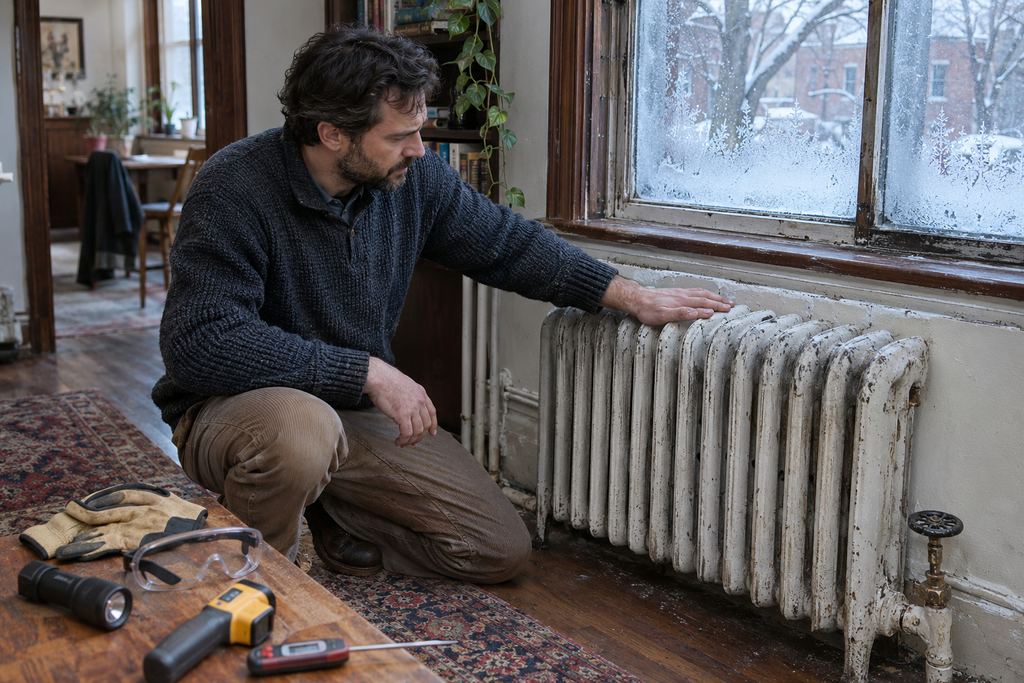
Boiler Not Heating
If your boiler is not heating, first make sure no one smells gas and no CO alarm is sounding. Then check the thermostat, the boiler's power switch, the pressure or water level gauge and the fuel supply. A boiler that will not fire, fires but leaves radiators cold, or heats only some rooms points to different parts, and the sections below sort them out.
Leave the building first
A gas smell is not a repair request. Stop here and do this now:
A carbon monoxide alarm is not a repair request. Stop here and do this now:
- Get everyone out of the house, pets too, and leave the door open behind you.
- Do not switch lights, appliances or the thermostat on or off, and do not use a lighter, a match or a phone inside.
- From outside, call your gas utility's emergency line or 911.
- Stay outside until the utility or the fire department says it is safe to go back in.
After the home is cleared, a licensed technician can check the furnace, boiler or water heater. You can come back to this form then.
Nothing was sent. This form does not handle gas or carbon monoxide emergencies.
Sending your request
Please keep this page open. The form is locked so the request is not sent twice.
Your request was received
We passed it to a contractor in your area. If one accepts, they contact you using the phone number or email you gave. We cannot say how soon, and you are not required to hire anyone.
No reply after a few days? Check your spam folder, then use the contact page.
We could not send your request
Nothing was sent to a contractor. Your answers are still on this page. Try again in a moment.Online requests are not connected yet
The request form is not linked to a contractor network yet. Nothing you typed was sent or saved. Please call instead, or try again later.Gas smell, CO alarm or water spraying from the boiler
- 1Smell of gasDo not touch switches, the thermostat or the boiler. Leave the building and call the gas utility or 911 from outside.
- 2CO alarm or symptomsHeadache, nausea, dizziness or several people feeling ill: get everyone into fresh air and call 911. Leave the alarm sounding and stay outside until responders arrive.
- 3Relief valve dischargingHot water or steam from the pressure relief valve or a burst pipe: stay clear, shut the boiler off at its emergency switch if you can do it from a safe distance, and call for service.
Short answer
Start with power, thermostat and fuel. On hot water systems look at the pressure gauge; on steam systems look at the water level in the sight glass. Beyond that, circulator pumps, zone valves, ignition and controls are technician work.
First checks, in order
- STEP 1ThermostatHeat mode, a setpoint above room temperature, fresh batteries. On zoned systems, check the thermostat for the cold area.
- STEP 2PowerMany basements have a boiler emergency switch at the top of the stairs, often with a red plate. Make sure it and the breaker are on.
- STEP 3FuelOil systems: check the tank gauge. Propane: check the tank level. Gas: are other gas appliances working?
- STEP 4Pressure or water levelHot water boilers have a pressure gauge, and the manual lists the normal cold range. Steam boilers have a glass tube showing the water level. Low readings are worth reporting.
- STEP 5Error codes or lockout lightModern gas boilers show a code. Write it down. Older oil burners have a red reset button; press it once at most. Pressing it repeatedly can pump excess oil into the burner, which is dangerous.
Hot water or steam: why it matters
| Hot water (hydronic) | Steam | |
|---|---|---|
| How heat moves | A pump circulates hot water through radiators, baseboard or floor tubing | Water boils, and steam rises through pipes to radiators |
| Gauge to read | Pressure gauge, often combined with temperature | Sight glass for water level and a low pressure gauge |
| Common no-heat causes | Circulator pump, zone valve, low pressure, air in lines | Low water cutoff, stuck vents, pressure control, clogged pigtail |
| Owner tasks the manual may allow | Bleeding radiators when the system is cool | Checking and in some cases adding water, per the manual |
| Who to call | Hydronic or boiler service company | A company that specifically works on steam |
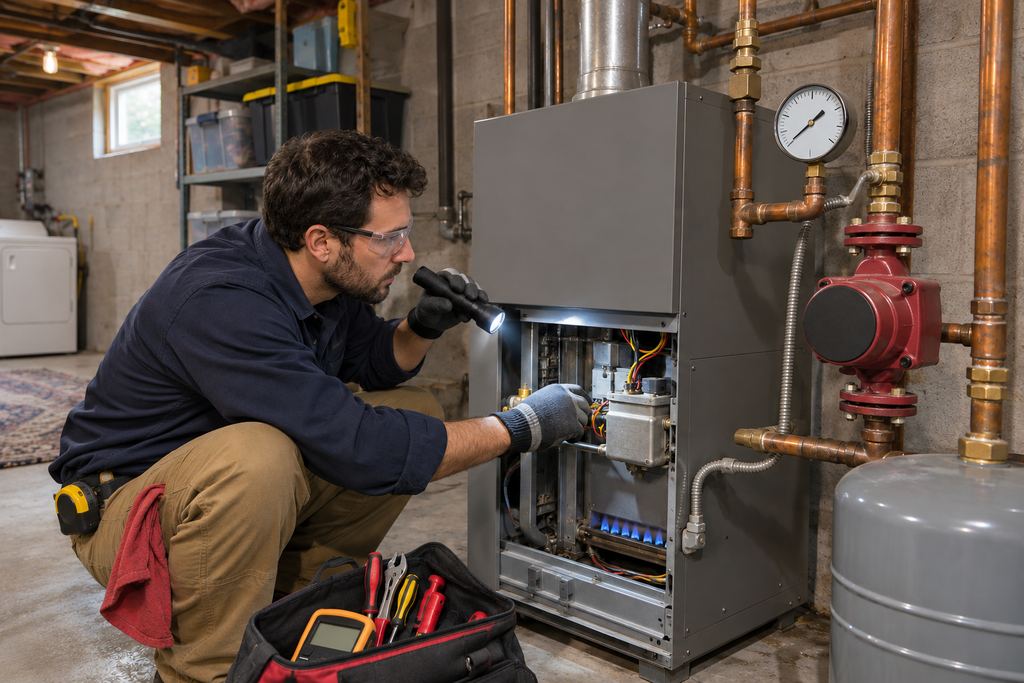
Why a boiler stops heating
Each of these can leave the house cold. The technician confirms which one.
- Ignition or flame failureA failed igniter, flame sensor, thermocouple or oil burner nozzle can lock the boiler out after it tries to light.
- Circulator pumpIf the boiler is hot but radiators are cold on a hot water system, the pump may not be moving water.
- Zone valvesOne cold zone while others heat often points to a stuck zone valve or its thermostat.
- Low water or pressureA leak or a failed fill valve lowers pressure, and safety controls shut the burner off.
- ControlsAquastats, pressure controls, low water cutoffs and control boards decide when the burner fires.
- Venting or draft problemBlocked vents can shut down the boiler on purpose. This needs inspection, and it is not something to bypass.
Some radiators cold, others warm
On hot water systems, air trapped in the top of a radiator stops it from filling. Many manuals let owners bleed radiators with a small key when the system is off and cool; open the bleed valve until water appears, then close it. If several radiators need bleeding often, or the boiler pressure drops afterward, there may be a leak or a fill problem. On steam systems, a cold radiator often has a stuck air vent or a pipe pitched the wrong way so water collects. Steam vent replacement is simple for a technician but varies by system, so ask.
Owner checks and boiler technician work
Safe checks you can do
Only checks from the owner's manual that need no tools and no opening of panels.
- Thermostat settings and batteries
- Boiler emergency switch and breaker
- Fuel tank level or other gas appliances
- Reading the pressure gauge or sight glass and noting it
- Bleeding hot water radiators when cool, if the manual allows
Leave these to a professional
Gas valves, burners, venting, refrigerant, capacitors and electrical circuits need a qualified, licensed technician.
- Burner, ignition and gas valve work
- Circulator pump and zone valve repair
- Adjusting pressure, fill valves and expansion tanks
- Low water cutoff and control testing
- Flue, chimney and venting inspection
No heat in freezing weather
Repair or replace
Many boilers last for decades, and a single failed pump or control rarely justifies replacement. Age, the cost of the repair, the condition of the heat exchanger, efficiency and safety findings all weigh in. Ask for the repair price in writing and, if the boiler is old or has a leaking section, a replacement quote too. Details on the service are on the boiler repair page, and price drivers are in the boiler repair cost guide. If the house has a furnace instead, see furnace not heating, and for any heating system start with heating not working.
Related services and guides
Pages that continue this topic.
Questions
Why is my boiler not turning the heating on?
Check the thermostat, power switch and fuel first. If the boiler shows a lockout code, or an oil burner's reset button has popped, the burner tried and failed to light. Note the code and call for service rather than resetting repeatedly.
What is the most common boiler fault?
It varies by boiler type, but ignition problems, low system pressure and circulator pump failures account for many no-heat calls on hot water systems. On steam, low water and stuck vents are common.
Why is my boiler not heating but I have hot water?
If your domestic hot water comes from the boiler through a coil or an indirect tank, a priority control may be sending heat there. A zone valve, circulator or thermostat fault can also leave the radiators cold while hot water works.
How to reset a heating boiler?
Follow the manual. Many gas boilers have a reset button for lockouts, and oil burners have a red button on the primary control. Press it once. If the boiler locks out again, leave it off and call a technician.
Should I add water to my boiler?
Modern hot water systems usually refill automatically. Some steam boiler manuals tell owners how to add water. If you are not sure, leave it to a technician, because adding cold water to a hot, dry boiler can crack it.