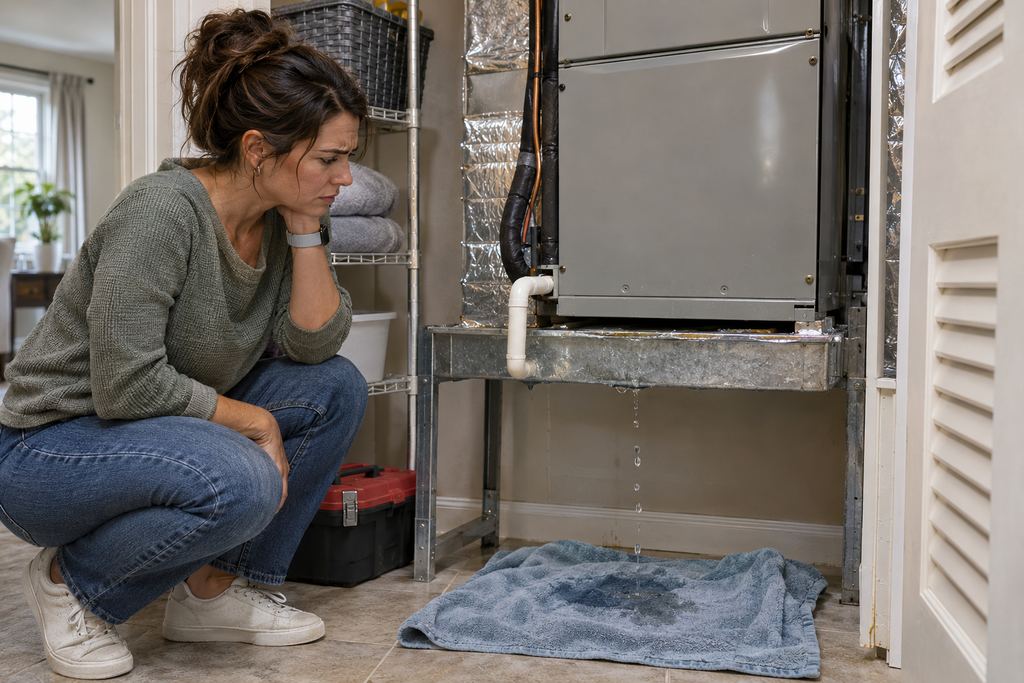
AC Leaking Water
An AC leaking water indoors usually has a drainage problem: the condensate line is clogged, the drain pan is cracked or overflowing, or the coil froze and is now thawing. Turn the system off, shut power at the breaker if water is near the unit or any outlet, and then look at the drain line and filter.
Leave the building first
A gas smell is not a repair request. Stop here and do this now:
A carbon monoxide alarm is not a repair request. Stop here and do this now:
- Get everyone out of the house, pets too, and leave the door open behind you.
- Do not switch lights, appliances or the thermostat on or off, and do not use a lighter, a match or a phone inside.
- From outside, call your gas utility's emergency line or 911.
- Stay outside until the utility or the fire department says it is safe to go back in.
After the home is cleared, a licensed technician can check the furnace, boiler or water heater. You can come back to this form then.
Nothing was sent. This form does not handle gas or carbon monoxide emergencies.
Sending your request
Please keep this page open. The form is locked so the request is not sent twice.
Your request was received
We passed it to a contractor in your area. If one accepts, they contact you using the phone number or email you gave. We cannot say how soon, and you are not required to hire anyone.
No reply after a few days? Check your spam folder, then use the contact page.
We could not send your request
Nothing was sent to a contractor. Your answers are still on this page. Try again in a moment.Online requests are not connected yet
The request form is not linked to a contractor network yet. Nothing you typed was sent or saved. Please call instead, or try again later.Water and electricity
Short answer
Air conditioners pull moisture out of the air and drain it away through a pipe. When that path is blocked or the coil ices over, water ends up on the floor. Some leaks you can clear, others need a technician.
Where the water comes from
As warm air crosses the cold indoor coil, moisture condenses on it, the same way a cold glass sweats. The water drips into a pan and flows out through a drain line, often a white PVC pipe, to a floor drain, a condensate pump or outside. On a humid day a central system can produce several gallons. Any break in that path sends water somewhere it should not go.
Water around the outdoor unit is a different matter. A little condensation on the copper lines outside is normal in cooling mode, and heat pumps make water outdoors when they defrost in winter.
Common causes of an indoor AC leak
- Clogged condensate drain lineAlgae, slime and dust build up in the pipe until water backs into the pan and overflows. This is the most frequent cause.
- Rusted or cracked drain panMetal pans on older units corrode, and plastic pans crack. Water leaks out the bottom even when the line is clear.
- Frozen evaporator coilLow airflow or low refrigerant can ice the coil. When the system cycles off, the ice melts faster than the pan can drain.
- Failed condensate pumpBasement and closet units often pump water up and out. A stuck float or a burnt motor lets the reservoir overflow.
- Disconnected or poorly sloped lineAfter other work, a fitting can pop loose or a line can sag so water pools instead of draining.
- Dirty air filterA clogged filter starves the coil of air, which can lead to freezing and then a leak.
Checks you can do and work to hand off
Safe checks you can do
Only checks from the owner's manual that need no tools and no opening of panels.
- Turn cooling off and shut the breaker if water is near electrical parts
- Look for a float or safety switch on the pan or line; a tripped one may be what stopped the cooling
- Clear the drain line opening with a wet-dry vacuum at the outdoor end, if your manual describes it
- Pour a cup of plain water or a mild vinegar solution into the access tee, if the line has one
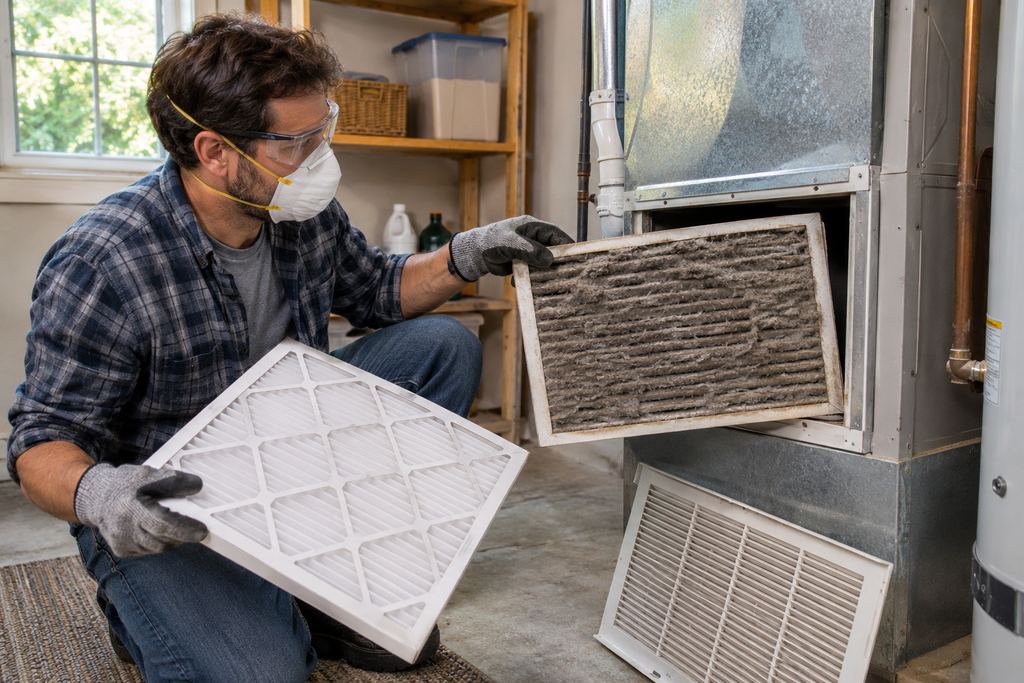
- Replace a dirty air filter
- If you see ice, leave cooling off and run only the fan to thaw it
Leave these to a professional
Gas valves, burners, venting, refrigerant, capacitors and electrical circuits need a qualified, licensed technician.
- Replacing a cracked or rusted drain pan
- Repairing or replacing a condensate pump
- Re-sloping or rerouting the drain line
- Diagnosing why a coil froze, including refrigerant pressure tests
- Repairing a refrigerant leak (EPA certification required)
When a leak points to a larger repair
If the drain is clear and the pan is intact but water keeps showing up, the coil may be freezing. That leads to the same questions as AC not cooling: airflow, refrigerant charge and blower speed. Low refrigerant means a leak somewhere in the system, and adding refrigerant without repairing it is a short-term fix. Older units on R-22 refrigerant cost more to recharge, since production ended in 2020.
The cost of a leak repair depends on what failed: a drain cleaning is a short visit, while a new pan or a coil repair takes longer. The AC repair cost guide covers the factors. If the system also stopped running when the water appeared, read AC not turning on, since a float switch may have shut it down. To request help, use the AC repair form.
Preventing the next clog
Related services and guides
Pages that continue this topic.
Questions
Can I still run my AC if it is leaking water?
Better not. Running it keeps producing water that has nowhere to go, and a frozen coil can damage the compressor. Turn it off, deal with the water and the drain, and turn it back on only if the leak has stopped.
How do I unclog an air conditioner drain line inside the house?
Turn the system off first. Many lines have a capped tee near the indoor unit. Pour water or a mild vinegar solution into it, or use a wet-dry vacuum on the outdoor end of the line. If the line stays blocked, a technician can clear it.
Is water dripping from the AC dangerous?
The water itself is not toxic, but it can damage ceilings and floors, grow mold, and create a shock risk near wiring. Shut power off before you touch anything near the unit.
Can I fix an AC leak myself?
A clogged drain line is often something an owner can clear. Pan replacement, pump repair and anything involving refrigerant or the coil are technician jobs.
How much does it cost to fix an AC leak in a house?
It ranges from a short drain cleaning visit to a coil or refrigerant repair. Ask for a diagnosis and a written price. After-hours visits and attic access can add to it.