Furnace Pilot Light Out
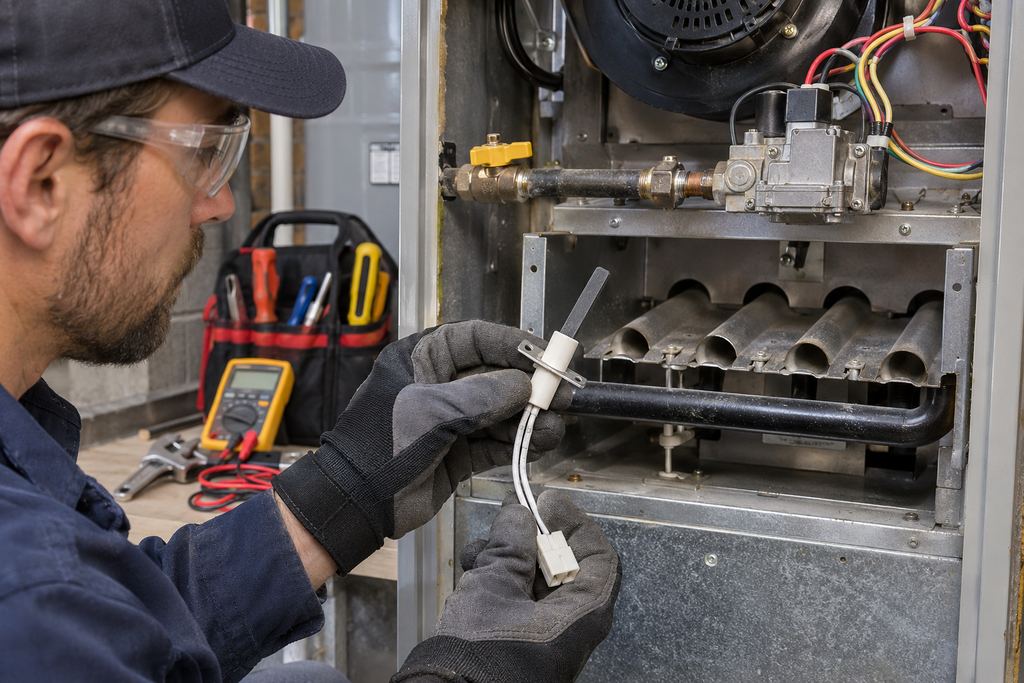
If the furnace pilot light is out, first make sure there is no smell of gas anywhere near the furnace. With no odor, the relighting steps printed on the furnace label are the only ones to follow, and if they are unclear or the pilot will not stay lit, call a technician. A pilot that keeps going out is a symptom of a worn thermocouple, a dirty pilot tube, drafts or a gas valve issue.
Leave the building first
A gas smell is not a repair request. Stop here and do this now:
A carbon monoxide alarm is not a repair request. Stop here and do this now:
- Get everyone out of the house, pets too, and leave the door open behind you.
- Do not switch lights, appliances or the thermostat on or off, and do not use a lighter, a match or a phone inside.
- From outside, call your gas utility's emergency line or 911.
- Stay outside until the utility or the fire department says it is safe to go back in.
After the home is cleared, a licensed technician can check the furnace, boiler or water heater. You can come back to this form then.
Nothing was sent. This form does not handle gas or carbon monoxide emergencies.
Sending your request
Please keep this page open. The form is locked so the request is not sent twice.
Your request was received
We passed it to a contractor in your area. If one accepts, they contact you using the phone number or email you gave. We cannot say how soon, and you are not required to hire anyone.
No reply after a few days? Check your spam folder, then use the contact page.
We could not send your request
Nothing was sent to a contractor. Your answers are still on this page. Try again in a moment.Online requests are not connected yet
The request form is not linked to a contractor network yet. Nothing you typed was sent or saved. Please call instead, or try again later.Any gas odor: do not relight
Short answer
Only older furnaces have a standing pilot. Most furnaces made in the last few decades use electronic ignition instead, so if there is no small flame to find, you probably have an ignitor and should read the ignition guides.
How to tell the pilot is out
- No small flame in the viewing windowA healthy standing pilot is a steady blue flame about the size of a fingertip, visible through a small window or opening near the burners.
- Furnace runs the blower but no burnersOn some models the blower comes on with no heat when the pilot is out.
- Cold house, thermostat callingThe thermostat asks for heat, but nothing lights.
- Yellow or flickering pilotA lazy yellow flame that dances is not a normal pilot and may not heat the thermocouple enough. Report it.
About relighting
Furnaces with a standing pilot carry a label from the maker that lists a relighting procedure. It usually involves turning the gas control to off, waiting several minutes for gas to clear, and then lighting the pilot while holding the control in the pilot position. Follow the label exactly, and only if there is no gas smell before, during or after. If you cannot find the label, the controls are worn or unclear, or you are not comfortable doing it, a technician can relight it and check why it went out.
If the pilot lights but goes out as soon as you release the control, stop trying. That usually means the thermocouple is not proving the flame, and repeated attempts only release more gas. Leave it for a technician.
Why a pilot light keeps going out
- Worn thermocoupleThe thermocouple senses the pilot's heat and keeps the gas valve open. As it wears, it stops holding, and the pilot drops out.
- Dirty pilot orificeDust and soot partly block the tiny gas opening, giving a weak flame that does not heat the thermocouple.
- DraftsAir from an open door, a leaky flue or a nearby fan can blow a small flame out. Furnace doors should be in place.
- Gas supply changesLow supply pressure, a utility interruption or an empty propane tank can put the pilot out.
- Gas valveA failing combination gas valve can drop the pilot. Gas valve work is strictly for a technician.
- Venting problemsPoor draft or backdrafting can starve the pilot of air. This needs an inspection, especially with a CO concern.
Who does what
Safe checks you can do
Only checks from the owner's manual that need no tools and no opening of panels.
- Confirm there is no gas smell
- Check the thermostat and furnace switch
- Follow the maker's relighting label if you are comfortable and there is no odor
- Keep furnace doors closed and the area free of stored items
- Keep CO alarms working on every floor
Leave these to a professional
Gas valves, burners, venting, refrigerant, capacitors and electrical circuits need a qualified, licensed technician.
- Thermocouple testing and replacement
- Pilot orifice and assembly cleaning
- Gas pressure and gas valve testing
- Draft and venting checks
- Discussing ignition upgrades or furnace replacement on very old units
Maintenance and older furnaces
A yearly heating check on a pilot furnace should include cleaning the pilot assembly, testing the thermocouple, checking the flame and inspecting the flue. Furnaces with standing pilots are generally older, so the bigger question may be age and efficiency rather than the pilot itself. Ask the technician for a repair price and, if the furnace is near the end of its life, a replacement estimate to compare. Start with the furnace repair request page; the furnace repair cost guide covers price factors. If the pilot is fine but the burners do not light, see furnace not heating, and for newer furnaces with a glowing ignitor read furnace ignitor replacement.
Related services and guides
Pages that continue this topic.
Questions
How do I tell if the pilot light went out on my furnace?
Look through the viewing window near the burners. A working standing pilot shows a small, steady blue flame. No flame, and a cold house with the thermostat calling for heat, means it is out.
How do you clean a furnace thermocouple?
This is technician work. The thermocouple sits in the gas pilot assembly, and cleaning or replacing it involves gas components. A technician also checks why it failed.
Why does my furnace ignite for a few seconds then shut off?
On a pilot furnace, a weak thermocouple is a common reason. On electronic ignition furnaces, a dirty flame sensor causes the same pattern. Either way, the fix is a technician visit.
Why isn't my furnace pilot light staying on?
Common reasons include a worn thermocouple, a dirty pilot orifice, drafts and gas supply problems. If it goes out repeatedly, stop relighting and request service.