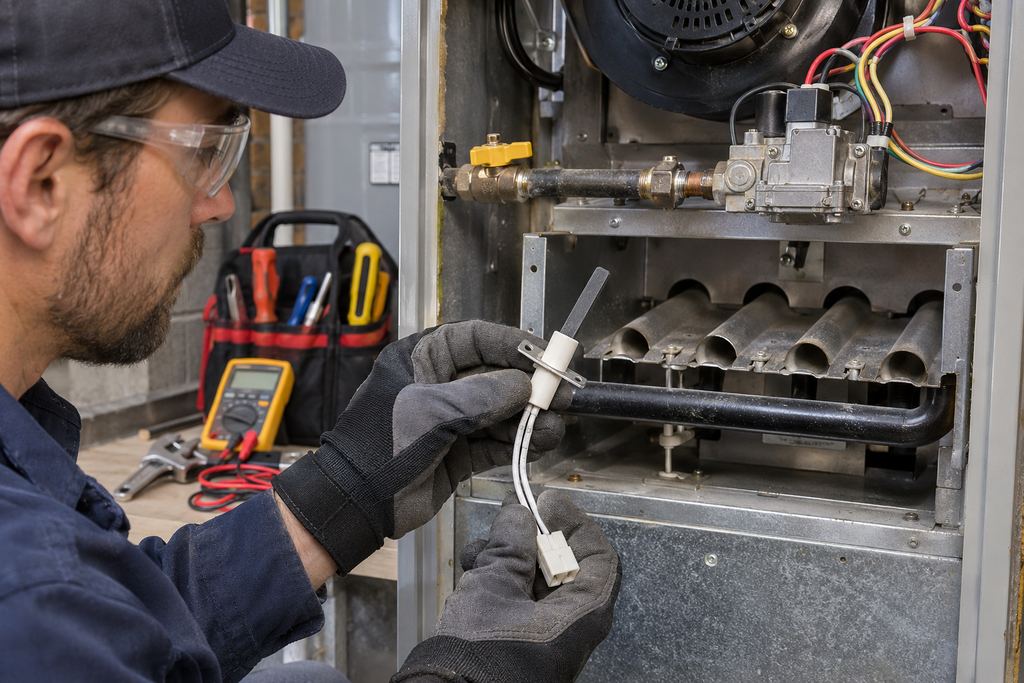
Gas Furnace Not Heating
A gas furnace not heating usually stops at one step of its startup sequence: the thermostat call, the inducer fan, the pressure switch, ignition, flame sensing or the blower. Watching and listening for which step happens last tells you a lot about the cause. Begin with the thermostat, filter and power, make sure there is no gas smell, and then use the sequence below.
Leave the building first
A gas smell is not a repair request. Stop here and do this now:
A carbon monoxide alarm is not a repair request. Stop here and do this now:
- Get everyone out of the house, pets too, and leave the door open behind you.
- Do not switch lights, appliances or the thermostat on or off, and do not use a lighter, a match or a phone inside.
- From outside, call your gas utility's emergency line or 911.
- Stay outside until the utility or the fire department says it is safe to go back in.
After the home is cleared, a licensed technician can check the furnace, boiler or water heater. You can come back to this form then.
Nothing was sent. This form does not handle gas or carbon monoxide emergencies.
Sending your request
Please keep this page open. The form is locked so the request is not sent twice.
Your request was received
We passed it to a contractor in your area. If one accepts, they contact you using the phone number or email you gave. We cannot say how soon, and you are not required to hire anyone.
No reply after a few days? Check your spam folder, then use the contact page.
We could not send your request
Nothing was sent to a contractor. Your answers are still on this page. Try again in a moment.Online requests are not connected yet
The request form is not linked to a contractor network yet. Nothing you typed was sent or saved. Please call instead, or try again later.Gas odor, CO alarm or flames outside the burner area
- 1Gas smellLeave without using switches, the thermostat or phones inside. Call the gas utility or 911 from outdoors.
- 2CO alarm or symptomsGet everyone outside, including pets, and call 911. Watch for several people getting headaches, dizziness or nausea at the same time.
- 3Flame rolling out or scorch marksTurn the furnace switch off if it is safe to reach and keep it off. This needs inspection before the furnace runs again.
Short answer
Normal order: thermostat calls, inducer starts, ignitor glows or sparks, burners light, flame is proven, blower starts. The last step you notice before it stops is the most useful clue you can pass on to a technician.
The normal startup sequence, and what it means if it stops
Stand near the furnace with the blower door on and turn the thermostat up. Most furnaces take one to two minutes to complete this.
- STEP 1Thermostat calls for heatYou may hear a click at the furnace. If nothing happens at all, think thermostat, power, door switch or the control fuse.
- STEP 2Inducer motor startsA small fan hums to clear the heat exchanger. No inducer means a board or motor problem. Loud grinding or rattling means a worn inducer.
- STEP 3Pressure switch closesSilent, but required. If the inducer runs and nothing else follows, a blocked vent, a clogged condensate drain or a failed switch is likely, and the status light often flashes a pressure switch code.
- STEP 4Ignitor glows or sparksA hot surface ignitor glows orange through the sight window. No glow points to the ignitor or the board.
- STEP 5Burners lightA whoosh and blue flames. Ignitor glows but no flame means gas supply, gas valve or pressure.
- STEP 6Flame is provenIf burners light and then go out within a few seconds, the flame sensor is the most common reason.
- STEP 7Blower startsWarm air reaches the vents after a short delay. Burners running with no blower trips the limit switch, and the furnace shuts down.
Safe checks for a gas furnace
- ThermostatHeat mode, setpoint above room temperature, batteries, no schedule hold.
- FilterA clogged filter can trip the limit and stop heating within minutes.
- Furnace switch, breaker and blower doorAll on and closed.
- Gas supplyIs the stove or water heater working? For propane, check the tank gauge. Leave gas valves alone unless you closed one yourself and know which.
- Outdoor ventsOn furnaces with PVC pipes, clear snow, ice, leaves or nests from the intake and exhaust ends.
- Condensate drainOn high-efficiency furnaces, look for kinked tubing or water standing in the trap area.
- CodeCount the status light flashes before you cut power, and compare them with the chart on the door.
What would cause a gas furnace not to kick on
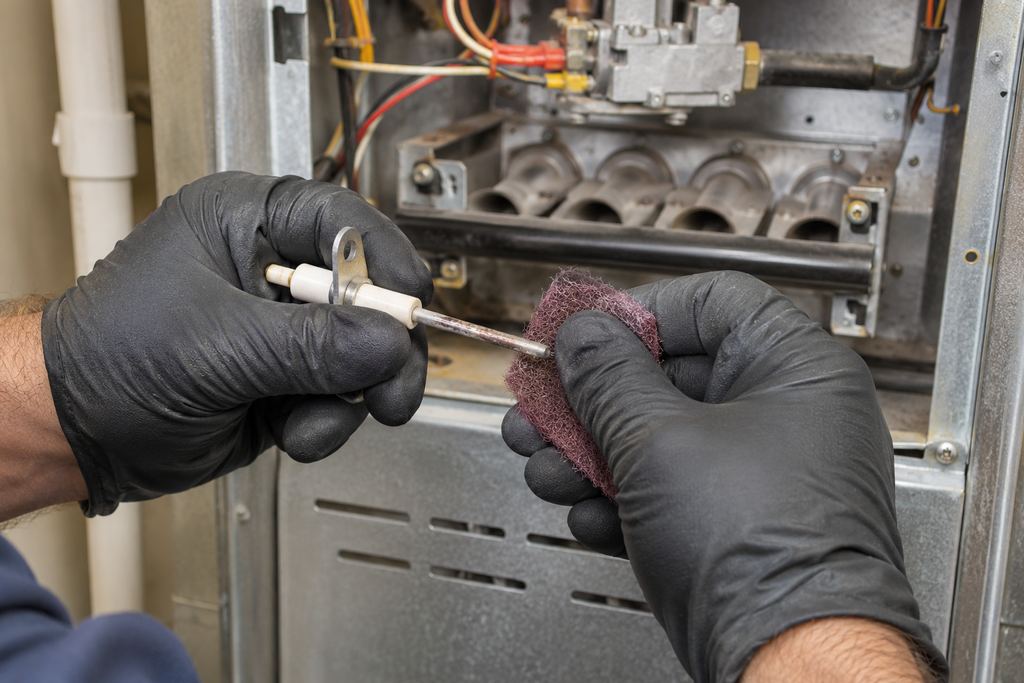
- Flame sensorResidue on the rod stops it from detecting flame. Burners light and quit. Learn more on flame sensor replacement.
- IgnitorHot surface ignitors are brittle and crack with age. See furnace ignitor replacement.
- Pressure switch or ventingA blocked vent, water in the hose, a weak inducer or a failed switch prevents ignition.
- Limit switchOverheating from low airflow shuts the burners off. Repeated trips should be diagnosed, never bypassed.
- Gas valve or gas pressureNo flame with a good ignitor can mean a failed valve or low supply pressure. A technician measures it.
- Control boardBoards fail from age and surges. They are a larger repair and may need ordering.
- Rollout switchTrips when flame escapes the burner area, a sign of a venting or heat exchanger problem. Needs inspection.
Which gas furnace do you have?
It changes what can fail. The label inside the door lists the model.
- Standard efficiency, metal flueOften around 80 percent efficient, vented through a metal pipe to a chimney. No condensate drain. Older ones may use a standing pilot; see furnace pilot light out.
- High efficiency, PVC ventsCondensing furnaces with a drain, a trap and pressure switches. Frozen or blocked vents and drains are common winter causes.
- Single stage, two stage, modulatingStaged and modulating furnaces run at lower output most of the time. Weak-feeling heat can be normal; the technician checks whether it reaches high fire when needed.
- Natural gas or propaneFurnaces are set up for one fuel. Propane systems add the tank level and regulator to the list.
The service visit and the price
A technician typically confirms the complaint, reads the fault history on the board, watches the sequence, and then tests the step where it stops: inducer amperage, pressure switch readings, ignitor resistance, flame sensor current or gas pressure. Before parts are replaced, ask for an explanation and a written price. If the furnace has a cracked heat exchanger, only an inspection can confirm it, so ask what was seen and request photos.
The bill depends on the diagnostic fee, the part, whether the visit is after hours or on a weekend, part availability for your brand, and whether the maker's warranty still covers the part. This site is independent of furnace brands; the brand matters mostly for part availability and warranty. Start a request on furnace repair, compare factors on the furnace repair cost guide, and if your symptom is cold air from the vents, read furnace blowing cold air.
Maintenance that prevents most of these
Waiting in the cold
Related services and guides
Pages that continue this topic.
Questions
How do you reset a gas furnace?
Write down the status code, then turn off the furnace switch or breaker, wait a minute and turn it back on. That clears most lockouts. If the furnace fails at the same step again, a part needs testing rather than another reset.
Why is my furnace blowing out cold air when it is on heat?
Either the burners are not lighting, or they light and shut off while the blower keeps running. Check the fan setting, the filter and the outdoor vents. Then use the sequence above to see where it stops.
What would cause a gas furnace not to kick on?
No power or thermostat call, a door switch, a failed inducer or pressure switch, a cracked ignitor, a dirty flame sensor or a gas supply problem. The step it reaches tells you which group to look at.
Why does my gas furnace work for a while then stop heating?
Overheating from a dirty filter, a weak flame sensor, a condensate drain backing up or a vent icing over in a storm are common reasons. See furnace keeps shutting off.
Can I clean the flame sensor myself?
It sits inside the burner compartment next to gas components, so this guide leaves it to a technician. It is a quick job during a service visit or tune-up.