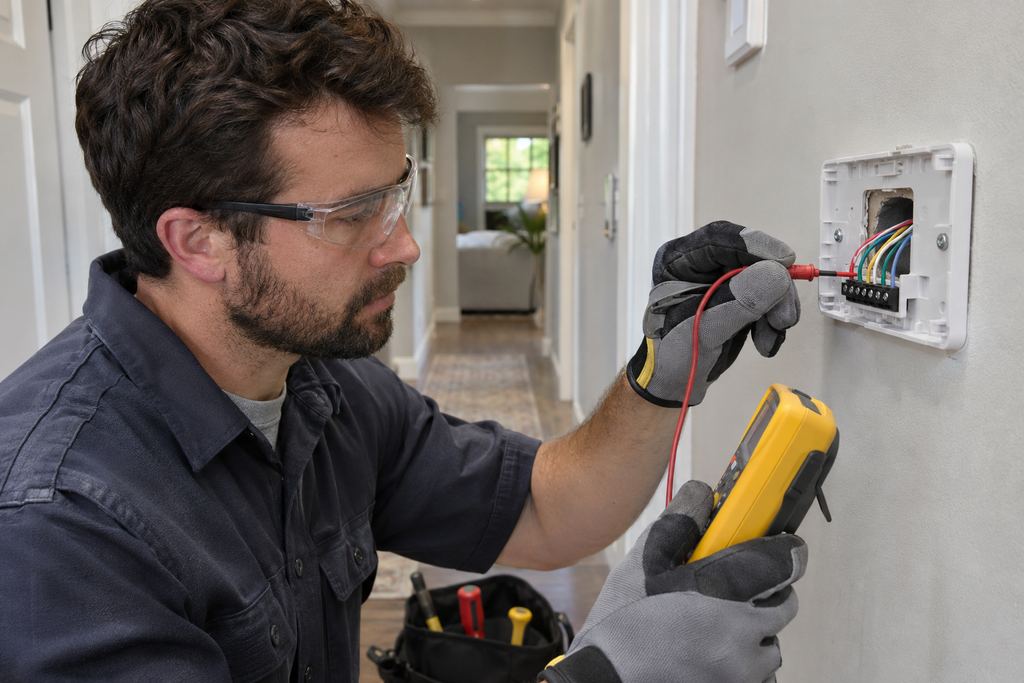
HVAC Thermostat Not Working
An HVAC thermostat not working is either a dead or confused thermostat, or a healthy thermostat that has lost power or signal from the system. A blank screen after a cooling-season shutdown, for example, often traces back to the equipment, not the wall unit.
Leave the building first
A gas smell is not a repair request. Stop here and do this now:
A carbon monoxide alarm is not a repair request. Stop here and do this now:
- Get everyone out of the house, pets too, and leave the door open behind you.
- Do not switch lights, appliances or the thermostat on or off, and do not use a lighter, a match or a phone inside.
- From outside, call your gas utility's emergency line or 911.
- Stay outside until the utility or the fire department says it is safe to go back in.
After the home is cleared, a licensed technician can check the furnace, boiler or water heater. You can come back to this form then.
Nothing was sent. This form does not handle gas or carbon monoxide emergencies.
Sending your request
Please keep this page open. The form is locked so the request is not sent twice.
Your request was received
We passed it to a contractor in your area. If one accepts, they contact you using the phone number or email you gave. We cannot say how soon, and you are not required to hire anyone.
No reply after a few days? Check your spam folder, then use the contact page.
We could not send your request
Nothing was sent to a contractor. Your answers are still on this page. Try again in a moment.Online requests are not connected yet
The request form is not linked to a contractor network yet. Nothing you typed was sent or saved. Please call instead, or try again later.Stop if you smell gas
Short answer
Replace batteries, confirm the mode and setpoint, and check the HVAC breaker and service switch. If a thermostat powered by the system goes blank, suspect a tripped float switch, a blown control fuse or a failed transformer before buying a new thermostat.
First, how is your thermostat powered?
Battery-only thermostats run on AA or AAA cells and go blank when the batteries die. Many digital and most smart thermostats draw 24 volt power from the furnace or air handler through a common wire, often labeled C, and may have batteries only as backup. A third kind, the line-voltage thermostat, runs electric baseboard or wall heaters directly at 120 or 240 volts; it is a different device and should only be replaced with the circuit off by someone qualified.
Knowing which one you have tells you where to look. A battery thermostat with fresh cells that stays blank is probably the thermostat. A system-powered thermostat that goes blank together with the furnace or air handler points to the equipment.
Checks for an unresponsive thermostat
- STEP 1Fresh batteriesUse new alkaline cells of the type in the manual. A low-battery icon often appears days before the screen goes blank.
- STEP 2Mode, setpoint and scheduleConfirm Heat or Cool, a setpoint past room temperature, and no hold, vacation or eco mode. Some smart models also lock settings from an app.
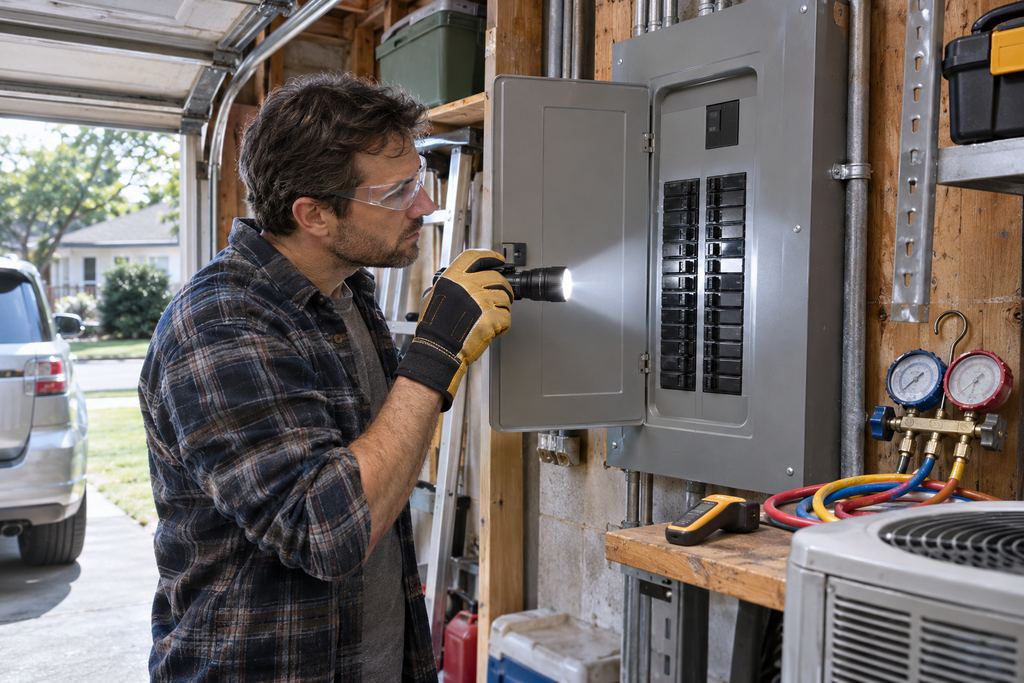
- STEP 3Breaker and service switchSystem-powered thermostats lose power when the furnace or air handler does. Check its breaker and the switch near the unit.
- STEP 4Condensate float switchOn many cooling systems a full drain pan opens the control circuit, which can blank a system-powered thermostat or stop it from calling. Look for water in the pan.
- STEP 5Furnace doorA loose blower door can cut power to the whole control circuit, thermostat included.
- STEP 6PlacementSun on the thermostat, a lamp below it or a draft from a door can make it read wrong and run the system at odd times.
Signs the thermostat itself is bad
- Blank with fresh batteries and the system poweredAfter you confirm the breaker, switch and float switch.
- Reading differs from a reliable thermometer by several degreesAnd moving it out of sun or drafts does not help.
- Clicks but the system does not respondCould be the thermostat or the wiring; a technician can test at the equipment.
- System runs constantly or never stopsA failed relay in the thermostat can do this, as can a wiring short.
- Settings will not stickResets itself after short power blips, a sign of an aging unit or loose backplate.
What you can and should not do
Safe checks you can do
Only checks from the owner's manual that need no tools and no opening of panels.
- Replace batteries
- Correct mode, schedule and setpoint
- Reset the breaker once
- Clean dust from a mechanical thermostat with a soft brush
- Re-seat a battery thermostat on its backplate
Leave these to a professional
Gas valves, burners, venting, refrigerant, capacitors and electrical circuits need a qualified, licensed technician.
- Testing for 24 volt power and continuity at the furnace or air handler
- Replacing a blown control fuse or a failed transformer
- Adding a common wire for a smart thermostat
- Wiring a heat pump thermostat (reversing valve and auxiliary heat terminals)
- Any line-voltage thermostat work
Repair or replace the thermostat
Thermostats are rarely repaired in the sense of fixing a circuit board. The usual outcomes are a correction of settings or wiring, a fix at the HVAC equipment, or a new thermostat. Replacement is a modest job compared with most HVAC repairs, but compatibility matters. Heat pumps, dual-fuel systems, multi-stage equipment and zoned systems need a thermostat that supports them, and a wrong choice can leave auxiliary heat running or the heat pump stuck in one mode.
If the problem turns out to be the HVAC equipment, the HVAC repair page explains the visit. For thermostat-only work, see thermostat repair. If the system will not start at all, read HVAC not turning on.
Related services and guides
Pages that continue this topic.
Questions
How do I fix an unresponsive thermostat?
Replace the batteries, check the mode and schedule, then confirm the HVAC breaker, service switch and condensate float switch. If a system-powered thermostat still shows nothing, the fault is often at the equipment, such as a blown control fuse, and needs a technician.
How do I tell if my HVAC thermostat is bad?
It is likely the thermostat if it stays blank or unresponsive with fresh batteries and the system powered, reads several degrees off a reliable thermometer, or loses its settings. A technician can confirm by checking whether the equipment responds when the thermostat calls.
What is the most common cause of a thermostat failure?
Dead batteries and wrong settings cause more calls than failed thermostats. After that come power problems at the HVAC unit and loose or damaged wiring.
Why did my thermostat suddenly go blank?
Dead batteries, a tripped breaker, an open furnace door, a full condensate pan tripping the float switch, or a blown fuse on the control board. If it happened after a power surge or after someone worked on the wiring, mention that to the technician.
Can a bad thermostat damage the HVAC system?
A thermostat that keeps calling can make the system run nonstop, and a miswired heat pump thermostat can keep expensive backup heat on. Short cycling from a badly placed thermostat adds wear over time.