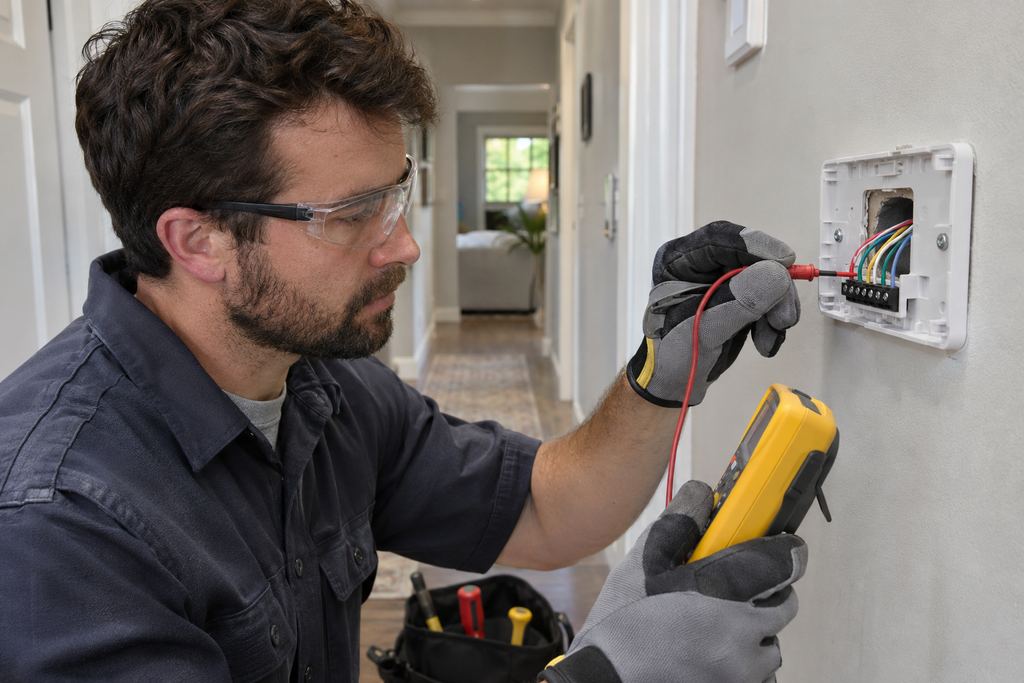
HVAC Not Turning On
When the HVAC is not turning on, something in its power or control path is open: the thermostat, a breaker, a service switch, a door switch or a safety switch. Walk that path in order and you will either find the cause or narrow it enough to give a technician a useful head start.
Leave the building first
A gas smell is not a repair request. Stop here and do this now:
A carbon monoxide alarm is not a repair request. Stop here and do this now:
- Get everyone out of the house, pets too, and leave the door open behind you.
- Do not switch lights, appliances or the thermostat on or off, and do not use a lighter, a match or a phone inside.
- From outside, call your gas utility's emergency line or 911.
- Stay outside until the utility or the fire department says it is safe to go back in.
After the home is cleared, a licensed technician can check the furnace, boiler or water heater. You can come back to this form then.
Nothing was sent. This form does not handle gas or carbon monoxide emergencies.
Sending your request
Please keep this page open. The form is locked so the request is not sent twice.
Your request was received
We passed it to a contractor in your area. If one accepts, they contact you using the phone number or email you gave. We cannot say how soon, and you are not required to hire anyone.
No reply after a few days? Check your spam folder, then use the contact page.
We could not send your request
Nothing was sent to a contractor. Your answers are still on this page. Try again in a moment.Online requests are not connected yet
The request form is not linked to a contractor network yet. Nothing you typed was sent or saved. Please call instead, or try again later.Stop if you smell gas or burning
Short answer
Check the thermostat screen, then the breakers, the switch beside the furnace or air handler, the blower door and the condensate float switch. If all of those are fine, the fault is likely inside the unit: a control fuse, transformer, board or motor, and that needs a technician.
Follow the power path
Each step either restores power or rules out one link in the chain.
- STEP 1Thermostat screenBlank screen: replace the batteries if it uses them. Some thermostats draw power from the HVAC system instead, so a blank screen there points back to the equipment. See HVAC thermostat not working.
- STEP 2Thermostat settingsSystem set to Heat or Cool rather than Off, setpoint past room temperature, no hold or vacation schedule active.
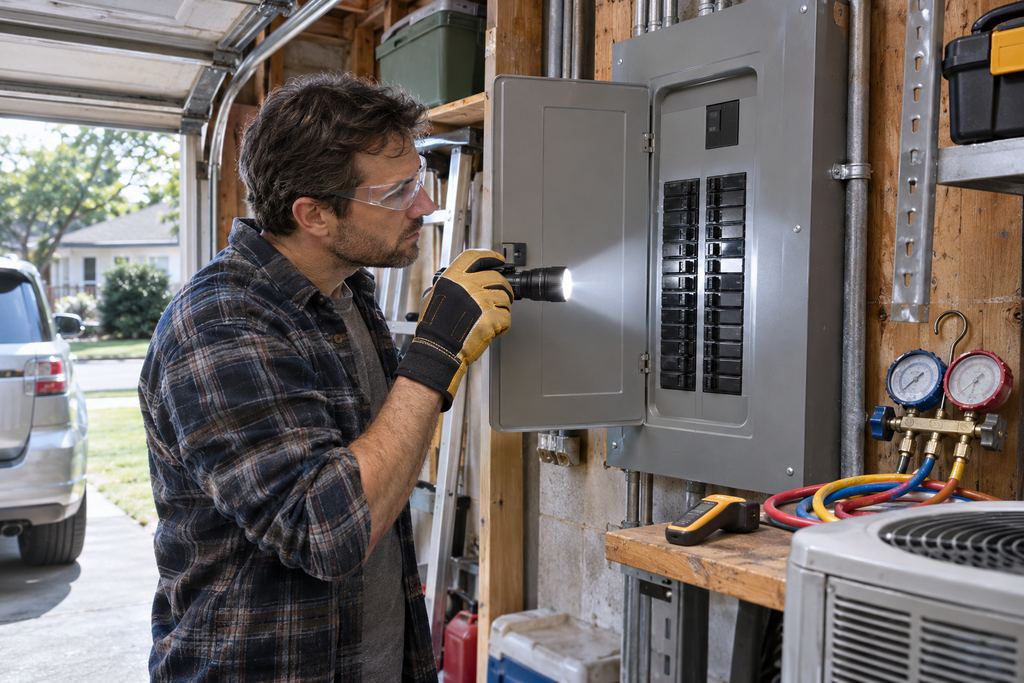
- STEP 3Breaker panelLook for handles in the middle position. The furnace or air handler and the outdoor unit usually have separate breakers. Reset a tripped one once, firmly off then on.
- STEP 4Service switchFurnaces and air handlers usually have a switch nearby that looks like a light switch, often on the wall or the side of the unit. It gets flipped off by accident more than you would expect.
- STEP 5Blower doorA furnace or air handler will not run if its front panel is loose, because a door switch cuts power. Push the panel firmly into place.
- STEP 6Condensate float switchIn cooling season, a full drain pan lifts a float that shuts the system off. Standing water in the pan or a tripped switch on the drain line is the clue to report.
Causes inside the equipment
Once the outside links check out, these are the usual suspects. A technician confirms which one with a meter.
- Blown low-voltage fuseMany control boards carry a small fuse that blows when thermostat wiring shorts, for example after a wire rubs through or a new thermostat is installed.
- Failed transformerNo 24 volt control power means the thermostat and board both go quiet even with the breaker on.
- Control board faultFurnace boards often show a blinking LED code through a small window. Note the pattern before you call; the meaning is model specific.
- Motor or capacitor failureIf you hear a click or hum but no fan, a motor or its capacitor may have failed. Capacitors hold a charge even with power off; leave them to the technician.
- Safety lockoutFurnaces lock out after several failed ignition attempts. Repeated resets hide the real problem and are not a fix.
- Wiring damageRodents in attics and crawl spaces chew thermostat cable. Outdoor wiring can also fail where it enters the unit.
Where your part stops
Safe checks you can do
Only checks from the owner's manual that need no tools and no opening of panels.
- Thermostat batteries, mode and setpoint
- Resetting a tripped breaker one time
- Turning the service switch back on
- Seating the blower door
- Noting any blinking code on the board window without removing panels
- Checking whether the drain pan is full
Leave these to a professional
Gas valves, burners, venting, refrigerant, capacitors and electrical circuits need a qualified, licensed technician.
- Opening the control compartment and testing fuses, transformer and board
- Clearing and repairing a tripped float switch circuit if the drain is clogged inside the unit
- Testing motors and capacitors
- Diagnosing ignition lockouts on gas equipment
- Repairing damaged wiring
If it starts after a reset
A system that runs again after you reset a breaker or close a switch may simply have been switched off. If the breaker trips again within a day or the furnace goes back into lockout, the reset only cleared the symptom. Book a visit and tell the contractor how many times it happened and what you reset.
Write down the age of the unit, the brand from the label, and whether the problem is heating, cooling or both. That shortens the call and helps the contractor bring the right parts. For the repair visit itself, see HVAC repair; for typical fees, HVAC repair cost. AC-only cases are covered on AC not turning on, and furnace-only cases on furnace not turning on.
No heat in freezing weather
Related services and guides
Pages that continue this topic.
Questions
Where is the AC reset button located?
Many central systems do not have a single reset button. Some outdoor units and furnace blower motors have a small reset on the motor, and some control boards reset when power is cycled at the service switch. If you cannot find one in the owner's manual, do not open panels looking for it.
How do I force my AC to turn on?
You should not force it. Set the thermostat to Cool below room temperature, make sure the breakers and switches are on, and wait a few minutes for any built-in delay. If it still will not run, a safety device or a failed part is holding it off for a reason.
Why is my HVAC running but not blowing air?
That points to the blower side: a failed blower motor or capacitor, a frozen indoor coil blocking airflow, or a loose blower belt on older units. If the outdoor unit runs but no air comes from the vents, turn cooling off to avoid icing and call.
Why is my HVAC not turning off?
Common reasons are a thermostat fan set to On, a thermostat set far below what the system can reach, a stuck relay or contactor, or a thermostat wire short. If the outdoor unit keeps running with the thermostat off, shut it off at its breaker and call a technician.
Can a power outage stop the HVAC from coming back?
Yes. A surge can blow a control fuse or damage a board, and some thermostats lose their settings. Check the thermostat first, then the breakers.