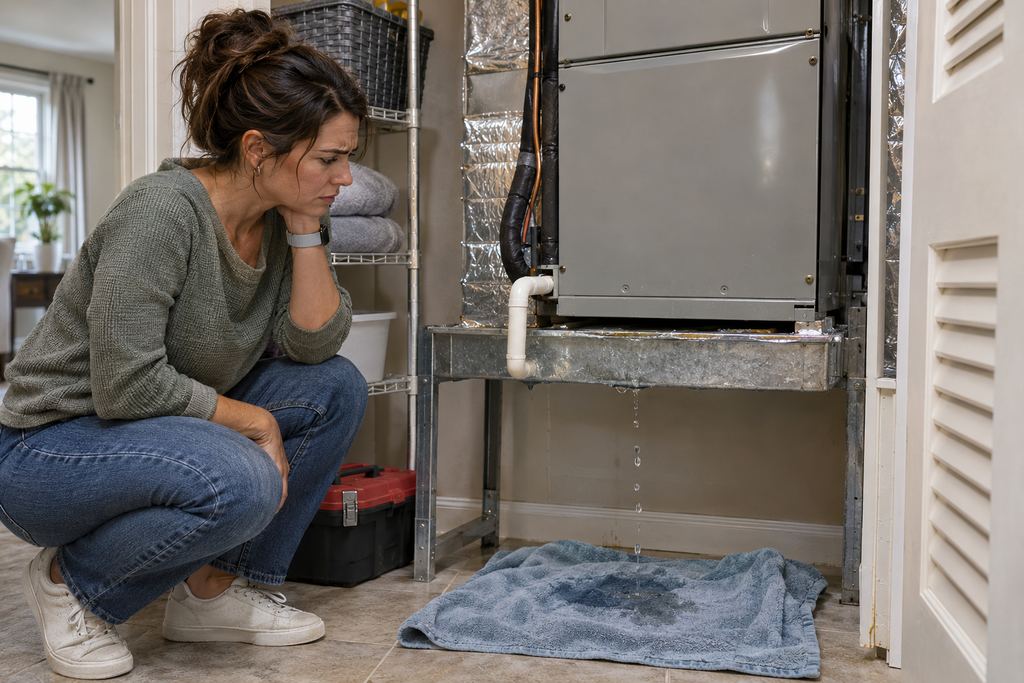
Furnace Leaking Water
A furnace leaking water is most often a high-efficiency furnace with a clogged condensate drain, a failed condensate pump or a cracked hose. In summer the water may come from the AC coil that sits on top of the furnace, and a whole-house humidifier can leak too. Shut off power to the furnace before you touch anything wet, then trace where the water starts.
Leave the building first
A gas smell is not a repair request. Stop here and do this now:
A carbon monoxide alarm is not a repair request. Stop here and do this now:
- Get everyone out of the house, pets too, and leave the door open behind you.
- Do not switch lights, appliances or the thermostat on or off, and do not use a lighter, a match or a phone inside.
- From outside, call your gas utility's emergency line or 911.
- Stay outside until the utility or the fire department says it is safe to go back in.
After the home is cleared, a licensed technician can check the furnace, boiler or water heater. You can come back to this form then.
Nothing was sent. This form does not handle gas or carbon monoxide emergencies.
Sending your request
Please keep this page open. The form is locked so the request is not sent twice.
Your request was received
We passed it to a contractor in your area. If one accepts, they contact you using the phone number or email you gave. We cannot say how soon, and you are not required to hire anyone.
No reply after a few days? Check your spam folder, then use the contact page.
We could not send your request
Nothing was sent to a contractor. Your answers are still on this page. Try again in a moment.Online requests are not connected yet
The request form is not linked to a contractor network yet. Nothing you typed was sent or saved. Please call instead, or try again later.Shut power off before touching water
Short answer
Condensing furnaces make water as part of normal operation and drain it away through plastic tubing. When water ends up on the floor, the drain path, the pump, the AC coil pan or the humidifier is usually the source. Older furnaces with a metal flue should not make water at all.
Where the water starts
Wipe the area dry, run the system for a short while with power restored, and look for the first drip.
| Location | Likely source | Season |
|---|---|---|
| Bottom of the furnace cabinet, inside | Condensate trap, cracked drain hose or blocked internal drain | Heating |
| Around the small pump beside the furnace | Condensate pump with a stuck float or failed motor | Heating or cooling |
| Down the sides from above the furnace | AC evaporator coil pan or its drain line | Cooling |
| From a box mounted on the supply duct | Humidifier water line, valve or drain | Heating |
| Along the white PVC vent pipe | Condensate running back from a pipe without the right slope, or a loose joint | Heating |
| From a metal flue on an older furnace | Flue gases condensing, which can mean a venting or chimney problem | Heating |
Common causes in more detail
- Clogged condensate line or trapSlime, rust and debris collect in the trap and tubing. Water backs up, and a pressure switch may also stop the furnace from heating.
- Condensate pump failureBasement furnaces without a nearby floor drain pump the water out. When the pump stops, its tank overflows.
- Frozen drain lineLines running through a garage, attic or crawl space can freeze in a cold snap and back water into the furnace.
- AC coil drainageThe cooling coil sits on top of most furnaces and shares the drain. Summer leaks often start there. See AC leaking water.
- Humidifier leaksA stuck solenoid valve or clogged pad can send water down the duct and into the furnace.
- Secondary heat exchangerIn condensing furnaces, a corroded secondary heat exchanger can leak. That requires an inspection and is not an owner repair.
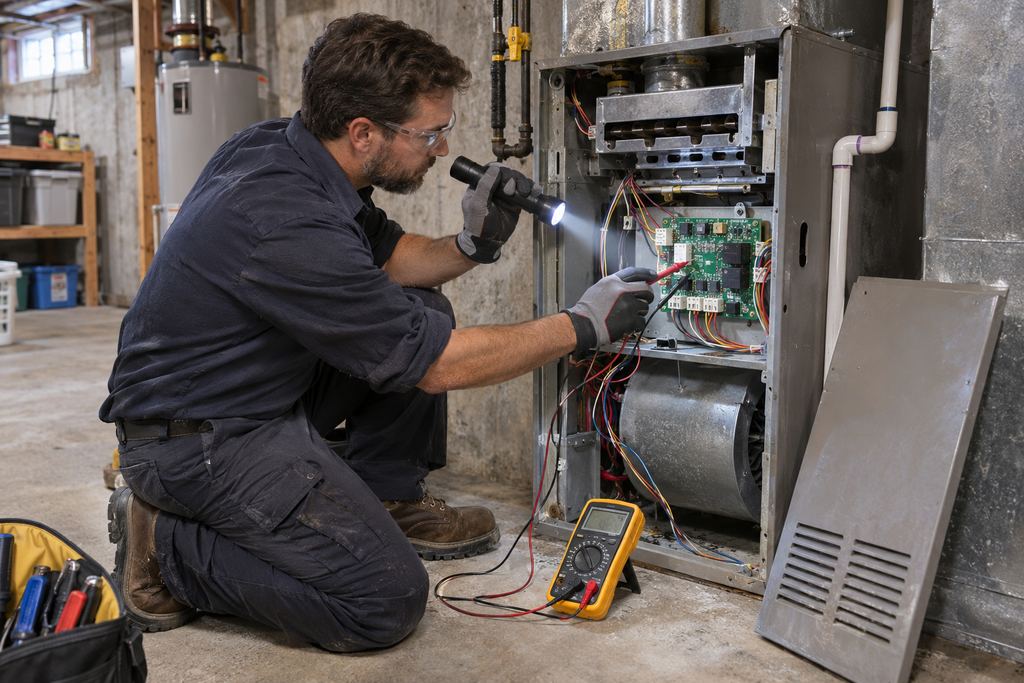
What you can do now
- STEP 1Power offTurn off the furnace switch and breaker. Mop up the water and move stored items away.
- STEP 2Check the pumpIf there is a condensate pump, see whether its tank is full and whether it is plugged in. A full tank with a silent pump usually means it failed.
- STEP 3Look at the tubingFollow the clear or white tubing from the furnace to the drain or pump. Kinks, cracks or disconnected ends are visible.
- STEP 4HumidifierIf water is coming from the humidifier, close the small water supply valve feeding it, if you can find it.
- STEP 5Outdoor pipesOn high-efficiency furnaces, make sure the outdoor intake and exhaust are not blocked by snow or ice.
- STEP 6Do not open sealed panelsLeave the burner compartment, inducer and heat exchanger to a technician.
What the technician will do
Expect the technician to flush the trap and lines, test the pump, check the pressure switch hoses for water, and look at the vent pipe slope. If the leak is from a metal flue on an older furnace, they will look at the venting and chimney, because condensation there can mean poor draft. On a condensing furnace with rust inside the cabinet, they may inspect the secondary heat exchanger.
The price depends on what failed: a clean-out is quick, a new pump is a modest part, and heat exchanger findings change the repair or replace question. When you request furnace repair, say where the water appeared and whether the furnace is still heating. The furnace repair cost guide explains other factors. If the furnace also stopped heating, read furnace not heating.
Keeping drains clear
Related services and guides
Pages that continue this topic.
Questions
What is the PVC pipe coming off my furnace?
On a high-efficiency furnace, white PVC pipes carry combustion air in and exhaust out, usually through a side wall or the roof. Smaller tubing carries condensate water to a drain or pump. Keep the outdoor ends clear and do not cut or move them.
Can I still run my furnace if it is leaking water?
If the leak is small and you have shut off and restored power safely, running briefly to find the source is fine. If water reaches wiring, the furnace keeps shutting off, or the source is unclear, leave it off and call for service.
How much does it cost to fix a leaking furnace?
It depends on the cause. Clearing a drain is a short visit, a condensate pump is a moderate part, and heat exchanger problems can lead to replacement. Get a written diagnosis and price.
Is a furnace leaking water dangerous?
The water can damage floors and electrical parts. In some cases it signals a venting problem, which is a CO concern. Keep CO alarms working and have the source found.
Why is my furnace leaking water when the AC is running?
In cooling season, the AC coil above the furnace produces water. If its pan or drain is blocked, it overflows onto the furnace.