Home AC Not Cooling the House
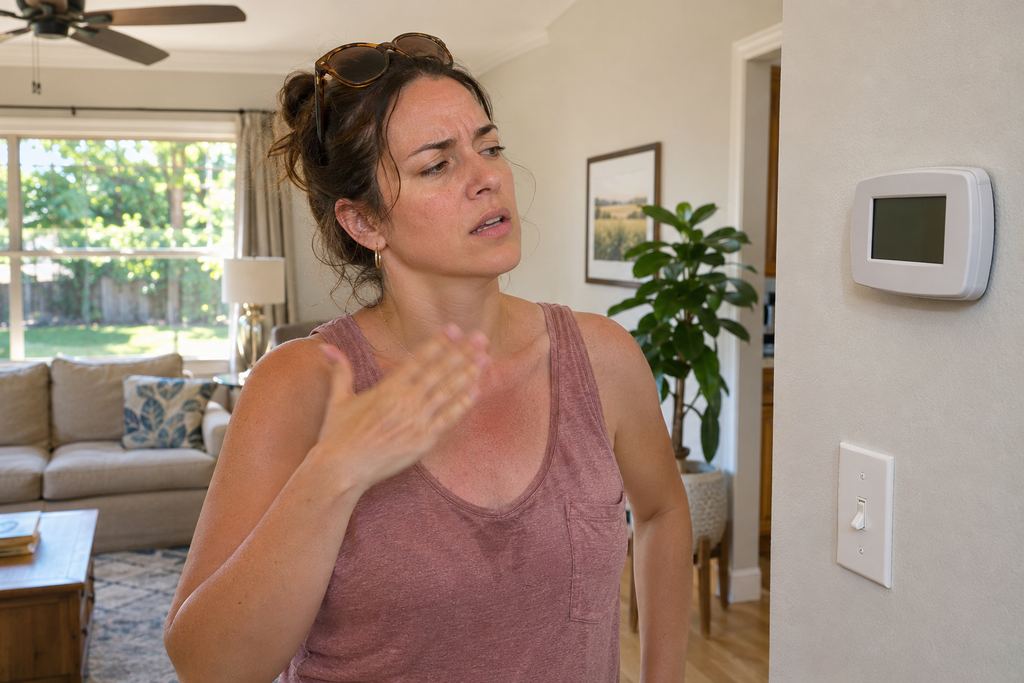
A home AC not cooling falls into one of three groups: nothing runs, the system runs but the air is not cold, or the air is cold but the house never gets comfortable. Figure out which one you have before you touch anything, because each group has different checks and different likely causes.
Leave the building first
A gas smell is not a repair request. Stop here and do this now:
A carbon monoxide alarm is not a repair request. Stop here and do this now:
- Get everyone out of the house, pets too, and leave the door open behind you.
- Do not switch lights, appliances or the thermostat on or off, and do not use a lighter, a match or a phone inside.
- From outside, call your gas utility's emergency line or 911.
- Stay outside until the utility or the fire department says it is safe to go back in.
After the home is cleared, a licensed technician can check the furnace, boiler or water heater. You can come back to this form then.
Nothing was sent. This form does not handle gas or carbon monoxide emergencies.
Sending your request
Please keep this page open. The form is locked so the request is not sent twice.
Your request was received
We passed it to a contractor in your area. If one accepts, they contact you using the phone number or email you gave. We cannot say how soon, and you are not required to hire anyone.
No reply after a few days? Check your spam folder, then use the contact page.
We could not send your request
Nothing was sent to a contractor. Your answers are still on this page. Try again in a moment.Online requests are not connected yet
The request form is not linked to a contractor network yet. Nothing you typed was sent or saved. Please call instead, or try again later.Stop if you smell gas
Short answer
Check the thermostat, filter, breakers and outdoor unit first. If those are fine and the house still will not cool, turn the system off if you see ice or hear the outdoor unit struggling, and book a diagnosis.
Sort the problem by what you observe
| What you see | Where to look first | Usually needs |
|---|---|---|
| No air from vents, outdoor unit silent | Thermostat display, both breakers, furnace or air handler switch | Often a homeowner fix; see HVAC not turning on |
| Air blows but is not cold | Thermostat mode, filter, outdoor fan, ice on lines | Often a technician; see home AC blowing warm air |
| Cold air, house still hot | Filter, closed registers, sun load, run time | Sometimes nothing is broken; sizing or duct issues |
| Cools, then shuts off and restarts | Filter, thermostat location, outdoor coil | Technician; see AC short cycling |
Safe checks, in order
- STEP 1Confirm the thermostat is calling for coolingMode on Cool, setpoint at least three degrees below the room reading, fresh batteries if the screen is faint. On a smart thermostat, look for a schedule or eco mode that overrides your setting.
- STEP 2Look at the filterA gray, matted filter is a frequent reason an otherwise healthy system cannot keep up. Replace it with the same size and do not run the system without one.
- STEP 3Open the registers and returnsFurniture over a return grille starves the system of air. Closing registers in empty rooms does not save much and can make the coil ice up.
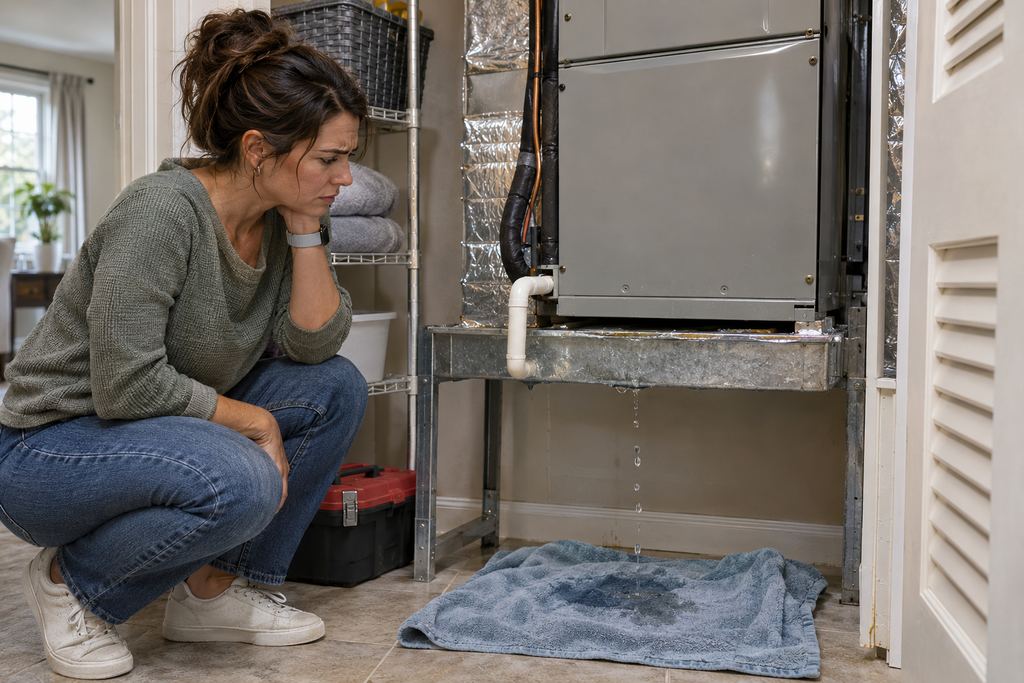
- STEP 4Check the condensate safety switchMany air handlers in attics and closets have a float switch that shuts cooling off when the drain backs up. If the pan is full of water, that is your clue; see AC leaking water.
- STEP 5Watch the outdoor unit for two minutesThe fan should spin steadily and the unit should hum without loud buzzing or clanking. Clear plants and debris around it.
- STEP 6Thaw any ice before anything elseIf the copper line or indoor coil is frosted, switch to fan only. A full thaw can take several hours, and a technician cannot diagnose a frozen coil accurately anyway.
Common causes a technician looks for
- Refrigerant leakSystems are sealed, so low charge means a leak somewhere. Signs include ice on the suction line and long run times. Leak search and repair need an EPA-certified technician.
- Weak capacitor or contactorThe outdoor fan or compressor struggles to start. Common after heat waves and in older units.
- Dirty condenser coilThe outdoor coil cannot reject heat on a hot day, so pressures climb and cooling drops off in the afternoon.
- Failing compressorLoud hum, breaker trips on start, or warm air even with the outdoor fan running. Confirmed only by testing, not by sound alone.
- Duct leaksCold air lost into an attic or crawl space. Rooms at the end of long runs suffer most.
- Undersized or aging systemA unit that kept up years ago may lose ground after additions, new windows facing west, or simply wear.
Your system type changes the checks
A central split system has an outdoor condenser and an indoor coil on top of a furnace or inside an air handler. A heat pump looks the same outside but also heats in winter, and its reversing valve adds a possible failure point. A packaged unit puts everything in one cabinet on the ground or roof, so there is no indoor coil to check, only the filter and the supply registers. Ductless mini-splits have their own filters inside each wall head that need regular rinsing; a blinking light on the head usually means the unit has logged a fault the installer can read.
If yours is a heat pump, the heat pump repair page explains what is different about its diagnosis.
When nothing is broken
Central AC is designed for a certain temperature difference between outside and inside. On a 100 degree afternoon, many systems can only hold the house around 75 to 78 even when every part is working, and the unit will run for long stretches. That is not a fault. A system that runs all day and still loses ground as evening comes, or that cannot pull the house down overnight, is a different story and worth a visit.
Attic heat, unshaded west windows and leaky ducts all add load. A technician can measure the temperature drop across the coil and the airflow to tell the difference between a capacity problem and a repair.
Before you approve a refrigerant top-off
Related services and guides
Pages that continue this topic.
Questions
Should I turn the AC off if it is not cooling?
Yes, if you see ice, hear grinding or loud buzzing, smell burning, or the breaker trips. Running it in those states can damage the compressor. If none of those apply, you can leave it running with a clean filter while you wait for a technician, but switch to fan only if ice appears.
How cool should my house be if it's 100 outside?
Many central systems are sized to keep the inside roughly 20 degrees cooler than the outside on the hottest days, so mid to upper 70s is a realistic target. If you are well above that with the system running constantly, have it checked.
What are signs of a failing AC compressor?
Clues include a loud hum or clunk at start-up, the breaker tripping when the compressor tries to run, the outdoor fan spinning while the air stays warm, and rising run times. A weak capacitor or contactor can cause the same clues, which is why testing comes before any compressor verdict.
Is the 3 minute rule real for a home AC?
People use it to describe waiting a few minutes before turning a central AC back on after it shuts off, giving refrigerant pressures time to settle. Many thermostats and outdoor units enforce this delay on their own.
Why does my AC cool at night but not in the afternoon?
A dirty outdoor coil, a marginal refrigerant charge or an undersized system shows up first in afternoon heat. It is a useful clue to give the technician.