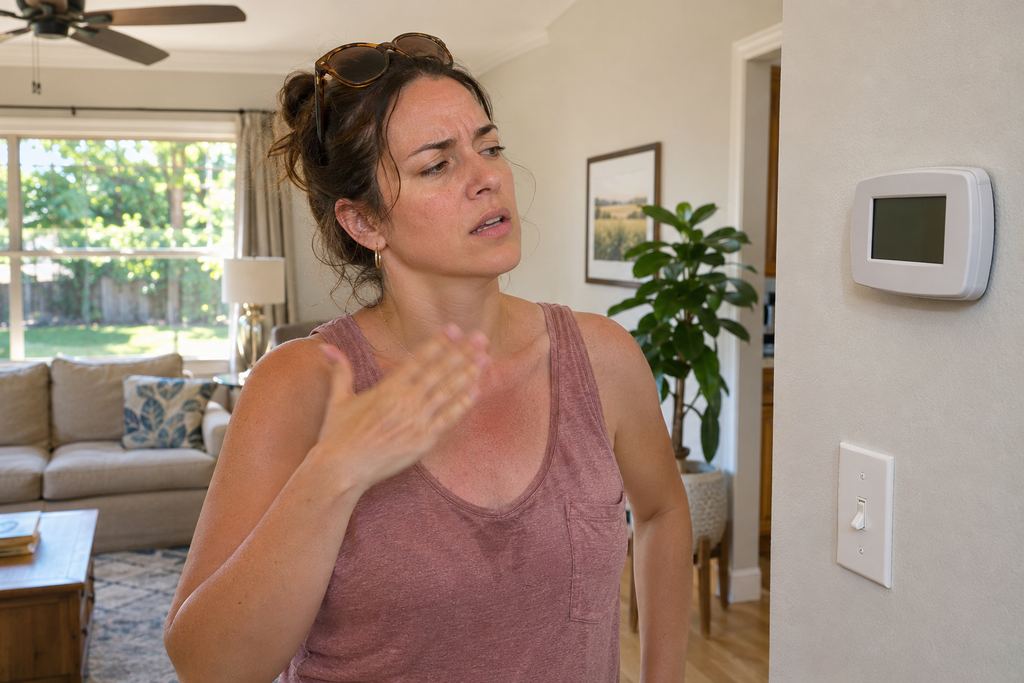
Home AC Blowing Warm Air
When a home AC is blowing warm air, start with the thermostat mode, the air filter and the outdoor unit. If the thermostat reads Cool, the filter is clean and the outside fan is not spinning or the coil is icing up, the fix is a repair visit, not a reset.
Leave the building first
A gas smell is not a repair request. Stop here and do this now:
A carbon monoxide alarm is not a repair request. Stop here and do this now:
- Get everyone out of the house, pets too, and leave the door open behind you.
- Do not switch lights, appliances or the thermostat on or off, and do not use a lighter, a match or a phone inside.
- From outside, call your gas utility's emergency line or 911.
- Stay outside until the utility or the fire department says it is safe to go back in.
After the home is cleared, a licensed technician can check the furnace, boiler or water heater. You can come back to this form then.
Nothing was sent. This form does not handle gas or carbon monoxide emergencies.
Sending your request
Please keep this page open. The form is locked so the request is not sent twice.
Your request was received
We passed it to a contractor in your area. If one accepts, they contact you using the phone number or email you gave. We cannot say how soon, and you are not required to hire anyone.
No reply after a few days? Check your spam folder, then use the contact page.
We could not send your request
Nothing was sent to a contractor. Your answers are still on this page. Try again in a moment.Online requests are not connected yet
The request form is not linked to a contractor network yet. Nothing you typed was sent or saved. Please call instead, or try again later.Stop if you smell gas or see smoke
Short answer
Lukewarm air usually means the system is moving air but not removing heat. The common reasons are a thermostat on Fan or Heat, a clogged filter, a frozen indoor coil, an outdoor unit without power, or low refrigerant from a leak. Only the first three are things you can check yourself.
Five checks before you call anyone
These take about ten minutes and need no tools or panel removal.
- Thermostat mode and fan settingIt should read Cool, not Heat or Auto changeover, with the setpoint a few degrees below room temperature. A fan set to On instead of Auto keeps the blower running between cooling cycles, so the vents blow room-temperature air for minutes at a time.
- Air filterPull it out and hold it to a light. If you cannot see through it, replace it. A choked filter cuts airflow across the indoor coil, which can make the coil freeze and the air go warm.
- Breakers for both unitsCentral systems usually have one breaker for the indoor air handler or furnace and a separate, larger one for the outdoor condenser. Reset a tripped breaker once. A second trip means leave it off and call.
- Outdoor unitWith cooling on, the top fan should spin and you should hear the compressor hum. Clear leaves, grass clippings and anything stacked against the sides, keeping about two feet of open space.
- Ice on the copper linesFrost on the larger insulated line or on the indoor coil means turn cooling off and run the fan only for a few hours so it thaws. Running it frozen can damage the compressor.
What the clue usually points to
Treat these as leads for the technician. Several faults can look the same from the hallway.
- Outdoor fan still, unit hummingOften a failed run capacitor or fan motor, sometimes a stuck contactor. A technician tests these with power isolated; see AC capacitor replacement.
- Outdoor unit completely silentPower is not reaching it: a breaker, the outdoor disconnect, a blown fuse in the disconnect, or a low-voltage signal problem from the thermostat or a tripped condensate switch.
- Air is cool for a while, then warmA coil that freezes and thaws, a dirty condenser coil on a hot afternoon, or a compressor overheating and shutting off on its internal protector.
- Warm air plus hissing or oily spotsPossible refrigerant leak. A recharge with no leak repair is temporary. Read about refrigerant leak repair.
- Some rooms warm, others fineClosed or blocked registers, a disconnected duct in the attic or crawl space, or a system that is undersized for the hottest rooms.
- Warm air right after a power outageSome outdoor units wait a few minutes before restarting to protect the compressor. Give it ten minutes before deciding it failed.
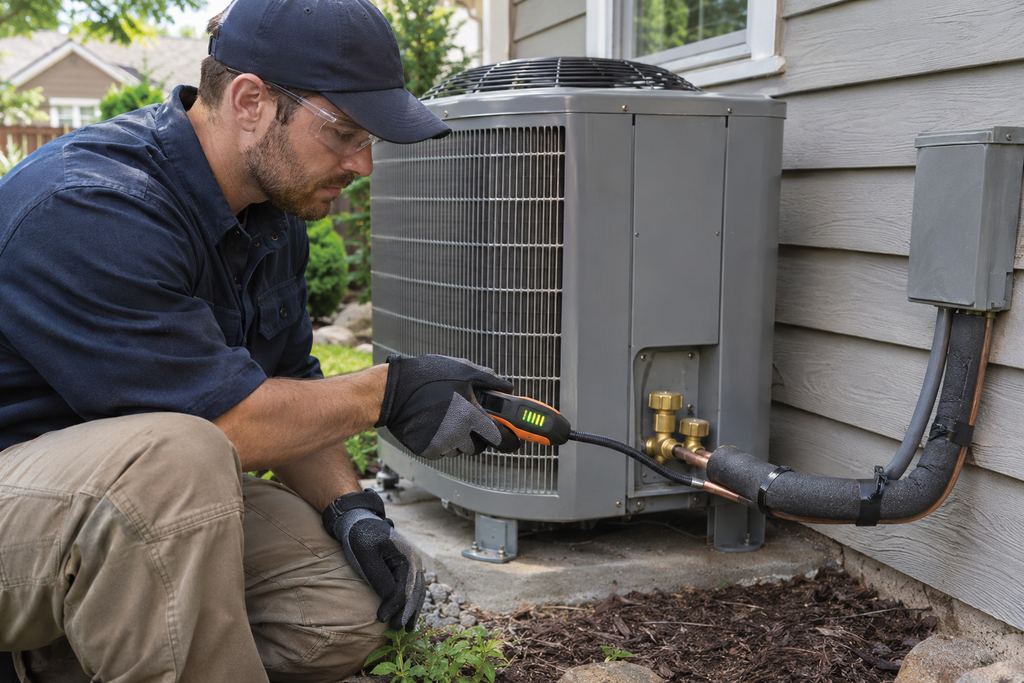
What you can do and what needs a technician
Safe checks you can do
Only checks from the owner's manual that need no tools and no opening of panels.
- Set the thermostat to Cool and the fan to Auto
- Replace the filter with the size printed on the old one
- Reset a tripped breaker one time
- Hose loose debris off the outside of the condenser fins with the system switched off
- Thaw a frozen coil by running the fan only
- Check that the condensate drain pan is not full and the float switch has not tripped
Leave these to a professional
Gas valves, burners, venting, refrigerant, capacitors and electrical circuits need a qualified, licensed technician.
- Testing or replacing capacitors and contactors (they hold a charge after power is off)
- Measuring refrigerant pressures and finding leaks (EPA Section 608 certification required)
- Diagnosing the compressor or outdoor fan motor
- Repairing disconnected or crushed ductwork
- Cleaning the indoor evaporator coil
Heat pump homes see a different pattern
If your outdoor unit is a heat pump, warm air in summer can mean the reversing valve is stuck in heating mode or the thermostat is wired or set up for the wrong valve position after a thermostat swap. That is a diagnosis for a technician. The heat pump not cooling guide covers that case in more detail.
Window and portable units are a separate category. This page is about central and ducted split systems in a house, where the problem can sit indoors, outdoors or in the ducts between them.
Keeping it from happening again
Most warm-air calls in mid-summer trace back to airflow or heat rejection: a filter left too long, a condenser coil coated with cottonwood fluff or dryer lint, or plants grown into the unit. A spring tune-up that includes coil cleaning and an electrical check catches weak capacitors before the first heat wave. ENERGY STAR suggests checking the filter monthly during heavy use.
If the system is old and uses R-22, a leak repair costs more because that refrigerant has not been produced or imported since 2020. Ask the technician which refrigerant your unit uses before approving a recharge. For a wider look at a system that will not cool at all, see home AC not cooling, and for price ranges see AC repair cost.
Hot house, vulnerable people
Related services and guides
Pages that continue this topic.
Questions
Why is my AC blowing out lukewarm air?
The blower is moving air across a coil that is not cold enough. The cause can be as simple as the thermostat fan set to On or a dirty filter, or as serious as a failed outdoor fan, a frozen coil or a refrigerant leak. If the filter and thermostat check out, the outdoor unit needs a look.
What does the 3 minute rule for air conditioners mean?
It is an informal name for the short delay many systems build in before the compressor restarts, so pressures can equalize. If you switch the AC off and back on, wait a few minutes before judging whether it is cooling. Flipping it on and off repeatedly does not help and can stress the compressor.
Is keeping AC at 72 good?
72 is a common comfort setting, but on very hot days a central system may not hold it, especially if it was sized for a smaller temperature difference. If the system runs nonstop and still cannot reach 72, raise the setpoint a few degrees and have the system checked.
Can a dirty filter really make the air warm?
Yes. Low airflow lets the indoor coil get too cold, frost over and then stop absorbing heat, so the air coming out goes from cold to barely cool. Replace the filter, let any ice melt with the fan on, and see whether cooling returns.
Should I keep running the AC while it blows warm?
Turn cooling off if you see ice, hear grinding or buzzing outside, or the outdoor fan is not turning. Running a compressor that cannot shed heat can turn a capacitor repair into a compressor replacement.