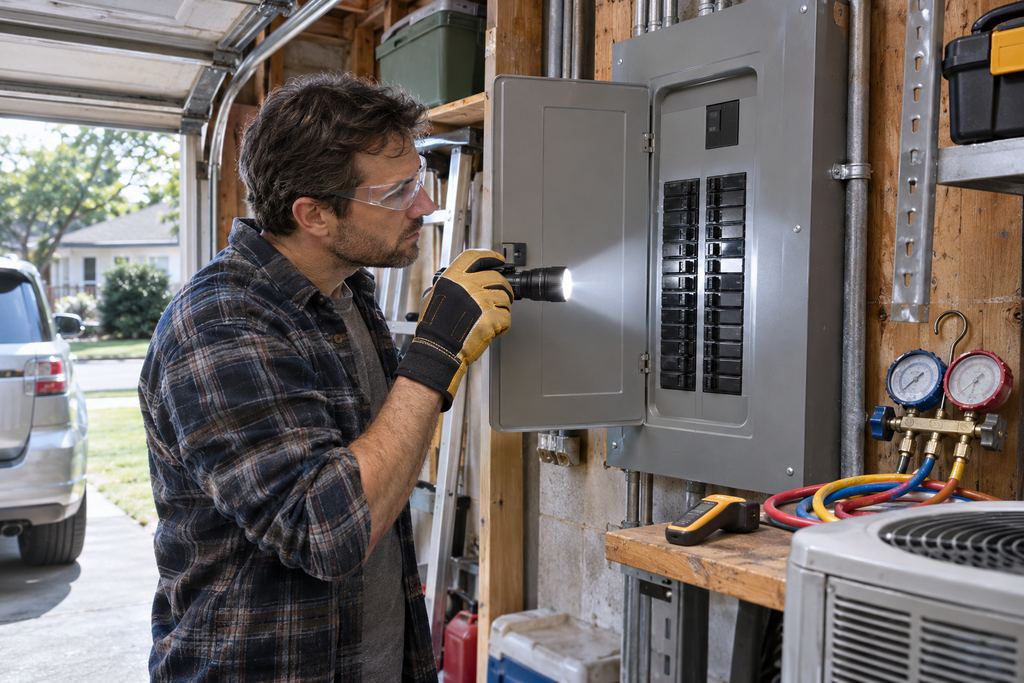
AC Burning Smell
If your AC has a burning smell, turn the system off at the thermostat now and switch off its breaker if you can reach the panel safely. A faint dusty odor that fades within minutes is common at first startup. A smell of hot plastic, rubber or wiring that keeps going is a reason to leave the system off until a technician has looked at it.
Leave the building first
A gas smell is not a repair request. Stop here and do this now:
A carbon monoxide alarm is not a repair request. Stop here and do this now:
- Get everyone out of the house, pets too, and leave the door open behind you.
- Do not switch lights, appliances or the thermostat on or off, and do not use a lighter, a match or a phone inside.
- From outside, call your gas utility's emergency line or 911.
- Stay outside until the utility or the fire department says it is safe to go back in.
After the home is cleared, a licensed technician can check the furnace, boiler or water heater. You can come back to this form then.
Nothing was sent. This form does not handle gas or carbon monoxide emergencies.
Sending your request
Please keep this page open. The form is locked so the request is not sent twice.
Your request was received
We passed it to a contractor in your area. If one accepts, they contact you using the phone number or email you gave. We cannot say how soon, and you are not required to hire anyone.
No reply after a few days? Check your spam folder, then use the contact page.
We could not send your request
Nothing was sent to a contractor. Your answers are still on this page. Try again in a moment.Online requests are not connected yet
The request form is not linked to a contractor network yet. Nothing you typed was sent or saved. Please call instead, or try again later.Smoke, sparks or a strong electrical smell
Short answer
Electrical and motor smells are the ones to take seriously: hot plastic, melting insulation or a sharp ozone odor. Dust burning off a heat strip or a seldom used system is usually brief. When in doubt, keep the AC off.
What the smell may be telling you
These are clues, not a diagnosis. Several faults can produce the same odor.
| Smell | Often linked to | What to do |
|---|---|---|
| Dusty, like a toaster, for a few minutes | Dust on electric heat strips or a furnace burner after months of no use | Watch it. If it fades within an hour and does not return, it is usually harmless. |
| Hot plastic or melting insulation | Overheating wiring, a failing motor, a burnt control board or capacitor | Turn the system off and keep it off. Request service. |
| Burning rubber | A slipping blower belt on older equipment, or an overheated motor | Turn it off and have the blower checked. |
| Sharp, metallic or ozone odor | Electrical arcing or a motor near failure | Turn it off at the breaker. Do not keep resetting it. |
| Smoky or sooty | Something caught in the unit, or a fuel-burning appliance problem | Turn it off. If a CO alarm sounds or people feel ill, go outside and call 911. |
| Rotten eggs | Natural gas added odorant, not an AC smell | Get out of the house first and make the call to the gas utility or 911 once outdoors. |
Parts that tend to cause burning odors
- Blower motorThe indoor fan motor can overheat when its bearings wear or when a clogged filter makes it work harder. The smell comes through every vent.
- Outdoor fan and compressorOverheating parts outside can send an odor through the house when windows are open or through a nearby intake.
- Capacitor and wiringA failing capacitor or a loose wire connection gets hot. These hold voltage even after power is off, so only a technician should open the panel.
- Control boardA shorted relay or board component can scorch and give off a sharp plastic smell.
- Debris in the unitLeaves, a nest or a small animal near a motor or heat strip can scorch. The smell is often strong and unpleasant.
- Electric heat stripsIn heat pump and electric furnace air handlers, strips collect dust over the summer and smell briefly when heat first runs in fall.
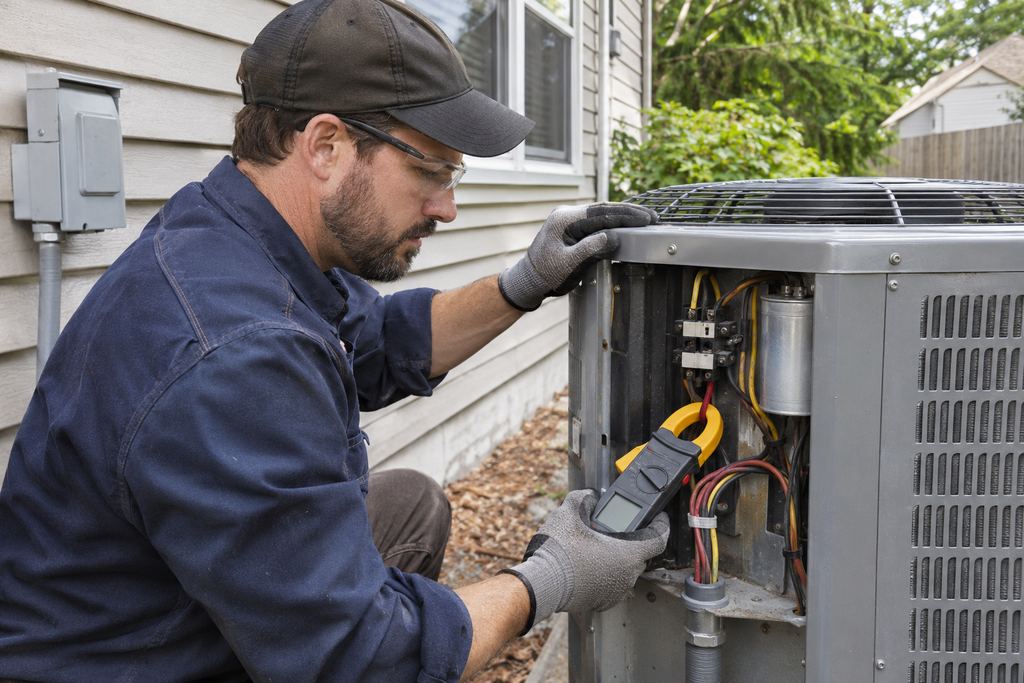
Owner steps and technician work
Safe checks you can do
Only checks from the owner's manual that need no tools and no opening of panels.
- Turn the system off at the thermostat and the breaker
- Note which vents carry the smell and whether it started with cooling, heat or the fan alone
- Check the air filter and replace it if it is clogged
- Look at the outdoor unit from a distance for smoke, scorch marks or a stopped fan
- Test smoke and CO alarms so they are working while the system is off
Leave these to a professional
Gas valves, burners, venting, refrigerant, capacitors and electrical circuits need a qualified, licensed technician.
- Opening electrical compartments and testing wiring
- Capacitor, contactor and relay testing or replacement
- Motor amperage and bearing checks
- Control board diagnosis
- Inspecting fuel-burning equipment and venting
What a technician looks at
Expect the technician to ask when the smell started and what was running. With power off, they inspect wiring connections, the capacitor, the contactor and the motors for heat damage, then test motor current with the system running if it is safe to do so. On a split system with a furnace, they may also check the furnace side, since one blower serves both heating and cooling.
Ask for a written explanation of what was found and a price before parts are replaced. If a part has scorched, ask whether nearby wiring needs repair too. The AC repair page explains the request process, and the AC repair cost guide lists what affects the bill, such as after-hours rates and part availability. If the smell started with a breaker trip, see AC keeps tripping the breaker.
Keeping it from happening again
A clean filter keeps the blower from overheating. Clear debris from around the outdoor unit and keep the area free of nests in spring. Seasonal maintenance lets a technician spot a swelling capacitor or a discolored wire before it fails. If a burning smell appears at the same time the cooling stops, also read AC not cooling.
Related services and guides
Pages that continue this topic.
Questions
Why does it smell burnt when I turn my AC on?
If it is a brief dusty smell after the system sat unused, dust burning off is the likely reason and it should fade. A smell of hot plastic or rubber that continues suggests an overheating motor, wire or electrical part. Turn the system off and request service.
Does carbon monoxide smell like burnt plastic?
No. Carbon monoxide has no smell, which is why CO alarms matter. A burning plastic smell is usually electrical. If a CO alarm sounds or people have headaches, dizziness or nausea, go outside and call 911.
How do I know if my AC is going to catch fire?
No one can predict it, but warning signs include a persistent electrical smell, smoke, buzzing, scorch marks and breakers that trip repeatedly. Any of these means turning the system off and leaving it off until it is inspected.
Can I run the AC if the burning smell went away?
If it was a short dusty smell at startup, yes, but watch it. If it was a plastic or electrical smell, keep the system off even if the odor fades, because the part that overheated has not been fixed.
Is a burning smell from the furnace vents the same issue?
The same blower and ducts serve both, so the source can be in either part. Describe whether it happens in heating, cooling or with the fan alone.