AC Keeps Tripping the Breaker
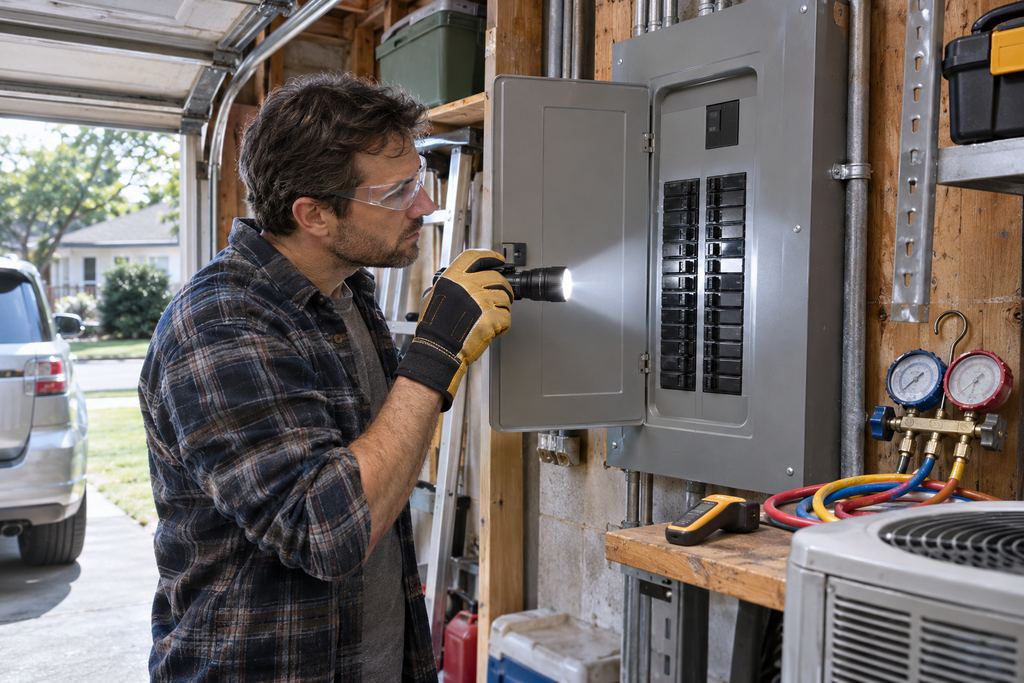
When the AC keeps tripping the breaker, reset it one time, wait for the system to restart, and if it trips again, leave the breaker off. A breaker that keeps tripping is protecting the wiring from too much current. The cause is usually in the air conditioner itself, sometimes in the circuit, and either way it needs testing with meters.
Leave the building first
A gas smell is not a repair request. Stop here and do this now:
A carbon monoxide alarm is not a repair request. Stop here and do this now:
- Get everyone out of the house, pets too, and leave the door open behind you.
- Do not switch lights, appliances or the thermostat on or off, and do not use a lighter, a match or a phone inside.
- From outside, call your gas utility's emergency line or 911.
- Stay outside until the utility or the fire department says it is safe to go back in.
After the home is cleared, a licensed technician can check the furnace, boiler or water heater. You can come back to this form then.
Nothing was sent. This form does not handle gas or carbon monoxide emergencies.
Sending your request
Please keep this page open. The form is locked so the request is not sent twice.
Your request was received
We passed it to a contractor in your area. If one accepts, they contact you using the phone number or email you gave. We cannot say how soon, and you are not required to hire anyone.
No reply after a few days? Check your spam folder, then use the contact page.
We could not send your request
Nothing was sent to a contractor. Your answers are still on this page. Try again in a moment.Online requests are not connected yet
The request form is not linked to a contractor network yet. Nothing you typed was sent or saved. Please call instead, or try again later.Leave it off if any of these happen
Short answer
A repeat trip is a warning, not a nuisance. Common causes include a failing capacitor, a compressor drawing too much current, a shorted fan motor, loose wiring or a worn breaker. Check the filter and outdoor unit, then call for service.
How to reset the AC breaker once
Only if the panel is dry, the cover is on and nothing smells hot.
- STEP 1Turn the thermostat offThat way the compressor does not try to start the moment power returns.
- STEP 2Find the AC breakerUsually a double-pole breaker labeled AC, condenser or heat pump. A tripped breaker sits in the middle or off position.
- STEP 3Push it fully off, then onA tripped breaker has to go to off before it will latch on again. Stand to the side of the panel and use one hand.
- STEP 4Wait before coolingGive it about five minutes, then set the thermostat to cool. Many units have a built-in delay before the compressor starts.
- STEP 5Watch and listenIf it trips again within minutes or hours, stop. Note how long it ran and what you heard. That timing helps the technician.
What makes an air conditioner trip its breaker
The timing of the trip is a clue. Instant trips point one way, trips after an hour of running point another.
- Hard-starting compressorAn aging compressor or a weak start capacitor can draw a surge of current at startup. Trips right as the unit kicks on are typical.
- Failing capacitorWhen a capacitor weakens, motors struggle to start and pull more current. It is one of the more common outdoor unit repairs.
- Shorted or grounded motorA compressor or fan motor with damaged windings can trip the breaker instantly. That often means a major repair decision.
- Dirty coil or filterPoor airflow or a matted condenser coil raises pressures, and the compressor draws more current the longer it runs on a hot day.
- Loose or corroded wiringConnections at the disconnect, contactor or breaker can heat up and cause trips, sometimes with a burning smell.
- Worn breaker or undersized circuitBreakers weaken with age, and some circuits were never matched to the equipment. That part may need an electrician.
How a technician tracks down the trip
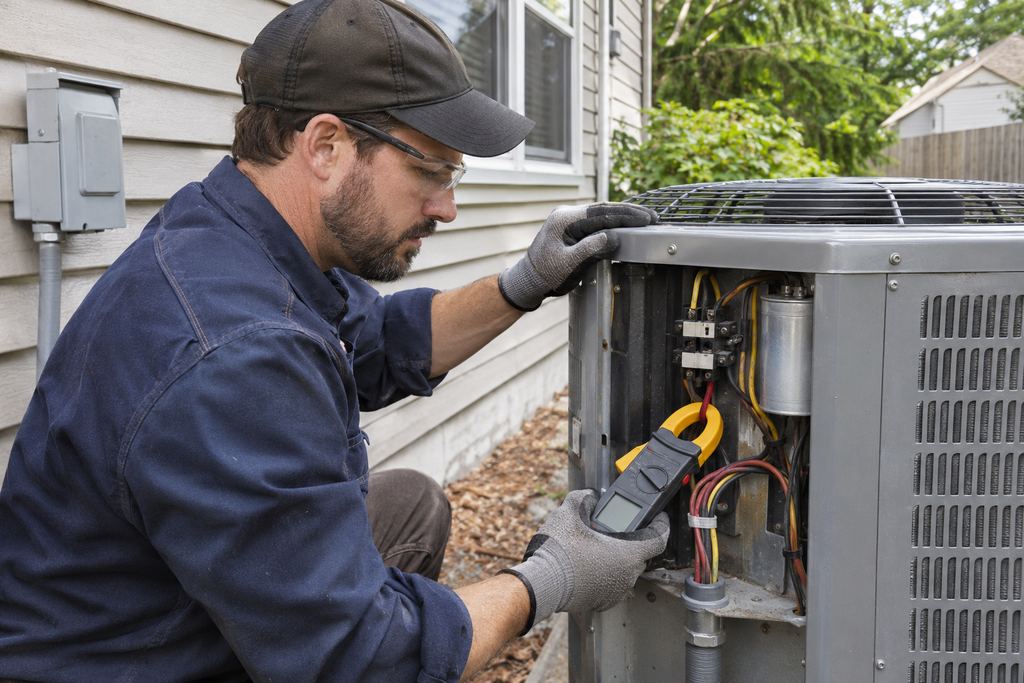
A careful visit starts with questions: how long the unit runs before the trip, whether it happens on mild days too, and whether anything else is on the same circuit. With power off, the technician inspects the disconnect, contactor and wiring for heat damage and tests the capacitor. Then they check the compressor and fan motor windings for shorts to ground, and measure the current the unit draws at startup and while running, compared with the nameplate.
The result usually lands in one of three places: an inexpensive part such as a capacitor or contactor, a compressor or motor problem that raises the question of repair or replacement, or a circuit problem for an electrician. Ask which one it is in writing. For the outdoor part repairs, see AC capacitor replacement and AC compressor repair. Pricing factors are on the AC repair cost guide.
Habits that reduce trips
- Change the filter on scheduleRestricted airflow makes the whole system run hotter.
- Keep the condenser clearTrim plants and keep at least two feet of open space around the outdoor unit.
- Book a pre-season checkA technician can test the capacitor and look for burnt connections before peak heat.
- Avoid stacking loadsA space heater, dehumidifier or shop tool on the AC circuit should not be there. Ask an electrician if you are unsure.
- Do not short cycle itTurning the system off and on repeatedly makes the compressor start more often. Pick a setpoint and leave it.
Breaker still tripping? Request AC repair and mention how long the unit runs before it trips.
Related services and guides
Pages that continue this topic.
Questions
How to reset an AC circuit breaker?
Turn the thermostat off, push the AC breaker firmly to off, then back to on. Wait about five minutes and turn cooling back on. If it trips again, leave it off and call for service.
How to tell if the AC circuit breaker is bad?
A worn breaker can trip below its rating, feel warm, or refuse to stay latched. You cannot tell from the outside whether the breaker or the AC is at fault. A technician or electrician measures the current draw and checks the breaker under load.
How much does it cost to replace an AC breaker?
It depends on the breaker type, the panel brand and local labor rates, and whether the real problem is in the AC. Ask for the diagnosis first and a written price for the breaker and any wiring work.
Why wait 3 minutes before restarting the AC?
It refers to waiting a few minutes after the compressor stops before it starts again. Restarting against high pressure is hard on the compressor and can trip a breaker. Many thermostats and units enforce this delay on their own.
Is it dangerous if my AC keeps tripping the breaker?
Repeated trips mean something is drawing too much current or a connection is overheating. Resetting over and over can damage the compressor or wiring and creates a fire risk. Leave it off and have it tested.