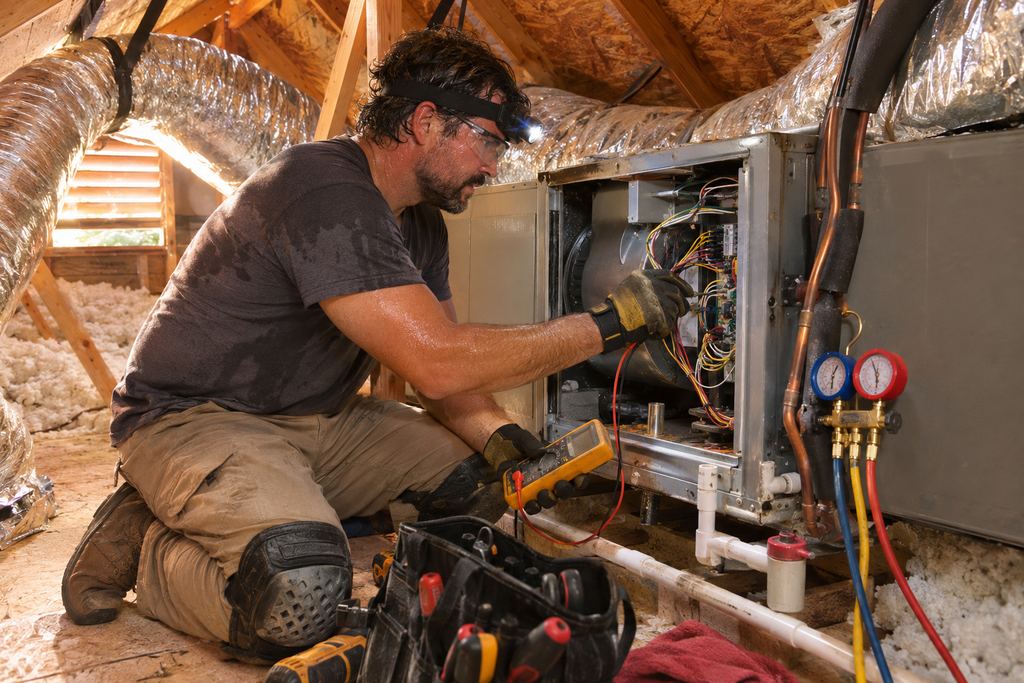
Furnace Repair in San Antonio, Texas
Furnace repair in San Antonio is usually a small fix on a furnace that runs only a few weeks a year: a dirty flame sensor, a worn ignitor, a weak inducer motor. Describe what the heat is doing and add your ZIP code, and an independent heating contractor in the San Antonio area can follow up.
Leave the building first
A gas smell is not a repair request. Stop here and do this now:
A carbon monoxide alarm is not a repair request. Stop here and do this now:
- Get everyone out of the house, pets too, and leave the door open behind you.
- Do not switch lights, appliances or the thermostat on or off, and do not use a lighter, a match or a phone inside.
- From outside, call your gas utility's emergency line or 911.
- Stay outside until the utility or the fire department says it is safe to go back in.
After the home is cleared, a licensed technician can check the furnace, boiler or water heater. You can come back to this form then.
Nothing was sent. This form does not handle gas or carbon monoxide emergencies.
Sending your request
Please keep this page open. The form is locked so the request is not sent twice.
Your request was received
We passed it to a contractor in your area. If one accepts, they contact you using the phone number or email you gave. We cannot say how soon, and you are not required to hire anyone.
No reply after a few days? Check your spam folder, then use the contact page.
We could not send your request
Nothing was sent to a contractor. Your answers are still on this page. Try again in a moment.Online requests are not connected yet
The request form is not linked to a contractor network yet. Nothing you typed was sent or saved. Please call instead, or try again later.Gas smell or a carbon monoxide alarm
Heating in a cooling city
San Antonio winters are short and usually mild, but a few hard freezes a year are normal and a long one, like February 2021, can catch a neglected furnace. CPS Energy supplies both gas and electricity in the city, so homes here heat with either a gas furnace or an electric furnace or heat pump, often depending on the age of the neighborhood. Older houses may have a gas furnace in a hall closet or attic, and some still use a floor furnace or wall heater. Many newer homes pair the furnace with a large AC in the attic.
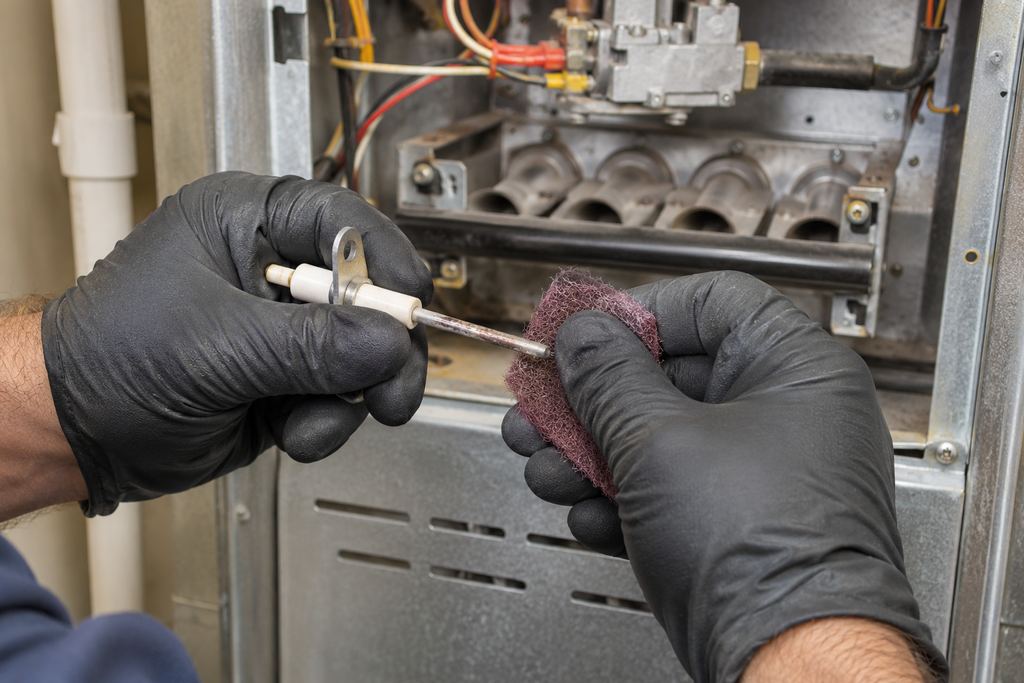
Because the furnace sits idle most of the year, the common faults are age and dust related, not wear from run time. Spiders and dust in the burner area, a corroded flame sensor and a cracked ignitor are typical first-cold-night calls.
Symptoms worth a service call
| Symptom | Possible causes | Your safe step |
|---|---|---|
| No heat, clicking | Ignitor, pressure switch, inducer, board | Check thermostat and breaker, then call |
| Lights, then quits | Flame sensor, gas supply, venting | Note how many seconds it runs |
| Cold air blowing | Ignition failure, limit, fan set to On | Set fan to Auto and check filter |
| Burning smell beyond a short time | Wiring, motor, debris | Turn off at thermostat and breaker |
| Yellow, lazy flame | Combustion or venting problem | Turn off and call; keep CO alarms on |
Sizing matters more in a mild climate
A furnace that is too big for the house heats it in short bursts, then shuts off. Those short cycles stress the ignitor and heat exchanger and leave rooms uneven. In San Antonio, where heating load is small, oversizing is common, especially in homes where the furnace was picked to match a large AC blower. If a contractor recommends replacement, ask whether they ran a load calculation (often called Manual J) for your house rather than copying the old size from the label. A smaller or two-stage furnace may fit better.
Efficiency: when a high efficiency furnace pays
Higher AFUE furnaces burn less gas per unit of heat, but with a short heating season the payback here is slower than in Chicago or Denver. They also need PVC venting and a condensate drain, which adds cost in some attics. For many San Antonio homes a standard efficiency furnace or a heat pump with gas backup is a sensible choice. Ask for the operating cost difference in numbers, not adjectives, and check CPS Energy for any current rebates before you sign.
Checking a San Antonio heating contractor
- 1TDLR license numberTexas licenses HVAC contractors through the Texas Department of Licensing and Regulation; look the number up.
- 2What the quote coversPart, labor, permit if needed, haul-away and the labor warranty, all in writing.
- 3Diagnostic and after-hours feesAsk both amounts and whether the diagnostic fee is credited.
- 4Heat exchanger findingsIf they say it is cracked, ask to see photos or a camera image and the test they used.
Other San Antonio pages
For cooling see AC repair in San Antonio, and for problems on both sides see San Antonio HVAC repair. The San Antonio hub lists every local page, and the furnace repair cost guide explains price factors.
What happens with a request in San Antonio
- You enter a ZIP code and the service you need.
- You add contact details and a short description.
- A contractor who accepts the ZIP code contacts you to arrange a visit. When depends on their schedule.
- You compare what you are told and any written estimate. You do not have to hire anyone.
Furnace repair in nearby cities
Only cities with a published page for this service.
Questions
Can a furnace be repaired?
Usually. Ignitors, flame sensors, inducer motors, pressure switches, limits, boards and blower motors are all replaceable. Replacement becomes the stronger option with a confirmed cracked heat exchanger or repeated costly failures on an old unit.
What is the $5000 rule for furnace?
An informal rule of thumb: multiply the furnace's age by the repair quote. If the result tops 5,000, get a replacement quote to compare. It is a prompt, not a rule.
Is it worth replacing a furnace heat exchanger?
It can be when the furnace is still fairly new and the heat exchanger carries a parts warranty. On an older furnace the labor often makes replacement of the whole unit the better value. Ask for both prices.
What is the most common furnace problem here?
In San Antonio, a dirty flame sensor or failed ignitor after months of sitting idle is one of the most frequent. Clogged filters causing overheating shutdowns are another.
What should I do if the heat goes out during a freeze?
Gather in one warm room with a space heater set well away from bedding and curtains, never heat with an oven or grill, and drip faucets on exterior walls. Call 211 or 311 about warming centers if someone is vulnerable.