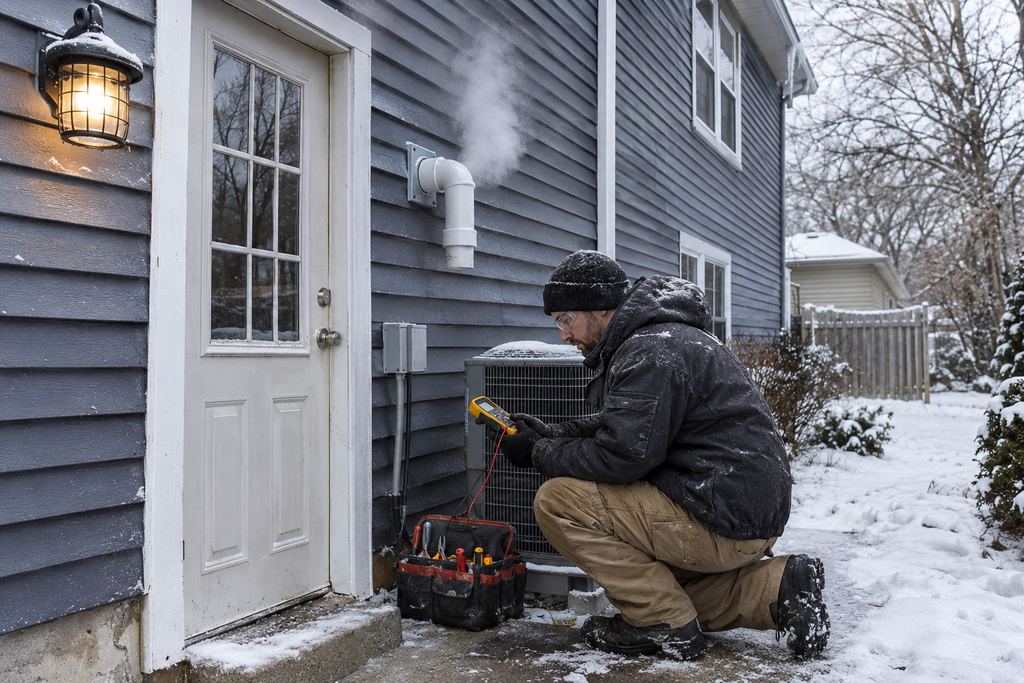
Furnace Repair in Columbus, Ohio
Need furnace repair in Columbus, Ohio? Most central Ohio homes heat with a natural gas furnace, so start with the gas safety box, then match what you are seeing to the signs below. When you send a request, a contractor who serves your ZIP code calls back to set up a diagnosis.
Leave the building first
A gas smell is not a repair request. Stop here and do this now:
A carbon monoxide alarm is not a repair request. Stop here and do this now:
- Get everyone out of the house, pets too, and leave the door open behind you.
- Do not switch lights, appliances or the thermostat on or off, and do not use a lighter, a match or a phone inside.
- From outside, call your gas utility's emergency line or 911.
- Stay outside until the utility or the fire department says it is safe to go back in.
After the home is cleared, a licensed technician can check the furnace, boiler or water heater. You can come back to this form then.
Nothing was sent. This form does not handle gas or carbon monoxide emergencies.
Sending your request
Please keep this page open. The form is locked so the request is not sent twice.
Your request was received
We passed it to a contractor in your area. If one accepts, they contact you using the phone number or email you gave. We cannot say how soon, and you are not required to hire anyone.
No reply after a few days? Check your spam folder, then use the contact page.
We could not send your request
Nothing was sent to a contractor. Your answers are still on this page. Try again in a moment.Online requests are not connected yet
The request form is not linked to a contractor network yet. Nothing you typed was sent or saved. Please call instead, or try again later.What happens with a request in Columbus
- You enter a ZIP code and the service you need.
- You add contact details and a short description.
- A contractor who accepts the ZIP code contacts you to arrange a visit. When depends on their schedule.
- You compare what you are told and any written estimate. You do not have to hire anyone.
Rotten-egg smell, hissing or a CO alarm
Signs your furnace needs a technician
- Clicking but no flameCould be the igniter, the gas valve not opening, or a safety switch that never closed.
- Burners light, then go outA dirty flame sensor is a frequent cause, but venting and gas pressure problems look similar.
- Blower runs, air is coldThe burners may be locked out, or the furnace may be overheating and shutting down on its limit switch.
- Short cyclingStarts and stops every few minutes. Airflow, thermostat placement and sensors are common suspects.
- New noisesSquealing, grinding or banging at startup. Note when it happens to tell the technician.
- Yellow, flickering flame or sootTurn the furnace off and call. Combustion problems need a professional look.
Central Ohio winters and furnace wear
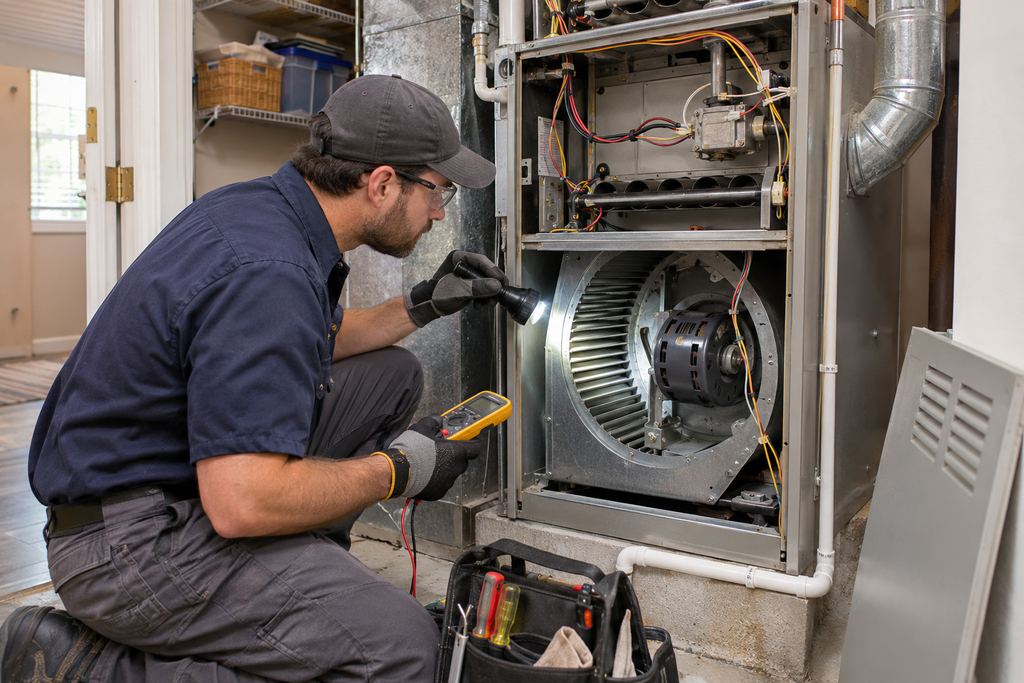
Columbus gets fewer lake-effect storms than Cleveland but plenty of freezing nights, ice and cold snaps that send temperatures into the single digits. A furnace that runs nonstop during those spells shows its weak points: igniters that crack, inducer motors with worn bearings, and pressure switches that stick. Many homes in the area were built from the 1980s on with basement furnaces that are now well past their second decade, which is when control boards and blower motors start to fail more often.
If you are trying to work out what is wrong before calling, the furnace not heating guide lists clues by symptom. It cannot replace a technician's test, but it helps you describe the problem.
How the repair usually goes
- STEP 1RequestYou send your ZIP code and a short description. Mention the furnace brand and age if you know them.
- STEP 2Call backA contractor who covers the area contacts you. When they can come depends on their schedule and the weather.
- STEP 3DiagnosisThe technician runs the furnace, reads any fault code and tests the suspect parts.
- STEP 4Written priceYou get the repair price before work starts and can decide, or ask for a second opinion.
How to pick a Columbus furnace contractor
Claims of trust are easy to make. These checks take a few minutes and do not depend on anyone's word.
- 1License or registrationOhio's Construction Industry Licensing Board licenses commercial HVAC contractors; the City of Columbus and many suburbs register contractors for residential work. Ask for the number and look it up.
- 2InsuranceAsk for proof of liability insurance before work on gas equipment.
- 3Written diagnosisA clear note of what failed and why, not just a part name.
- 4FeesDiagnostic fee, after-hours or weekend rate, and whether parts carry a warranty.
Maintenance between repairs
A yearly heating check in early fall lets a technician clean the flame sensor, check the igniter and inspect venting before you need heat every night. At home, change the filter on schedule, keep paint cans and storage away from the furnace, and test carbon monoxide alarms. For the cooling side or a whole-system problem, see AC repair in Columbus and HVAC repair in Columbus.
Furnace repair in nearby cities
Only cities with a published page for this service.
Questions
How much should furnace repair cost?
There is no single number. Small parts such as a flame sensor cost far less than a control board or blower motor, and after-hours visits often cost more. The furnace repair cost guide explains what moves the price; for your furnace, ask for a written quote.
What is the $5000 rule for furnace?
An informal shortcut: multiply the furnace's age by the repair quote. A result above 5,000 suggests pricing a replacement too. It is not a rule any manufacturer or agency sets.
What is the most common furnace failure?
Dirty filters and ignition problems, such as a worn igniter or dirty flame sensor, are among the most frequent causes of no-heat calls. Your furnace may have a different fault, which is what the diagnosis is for.
What is the average lifespan of a furnace?
Gas furnaces often last around 15 to 20 years with maintenance, though some run longer. Age alone does not mean replacement; repair cost, efficiency and safety findings matter more.