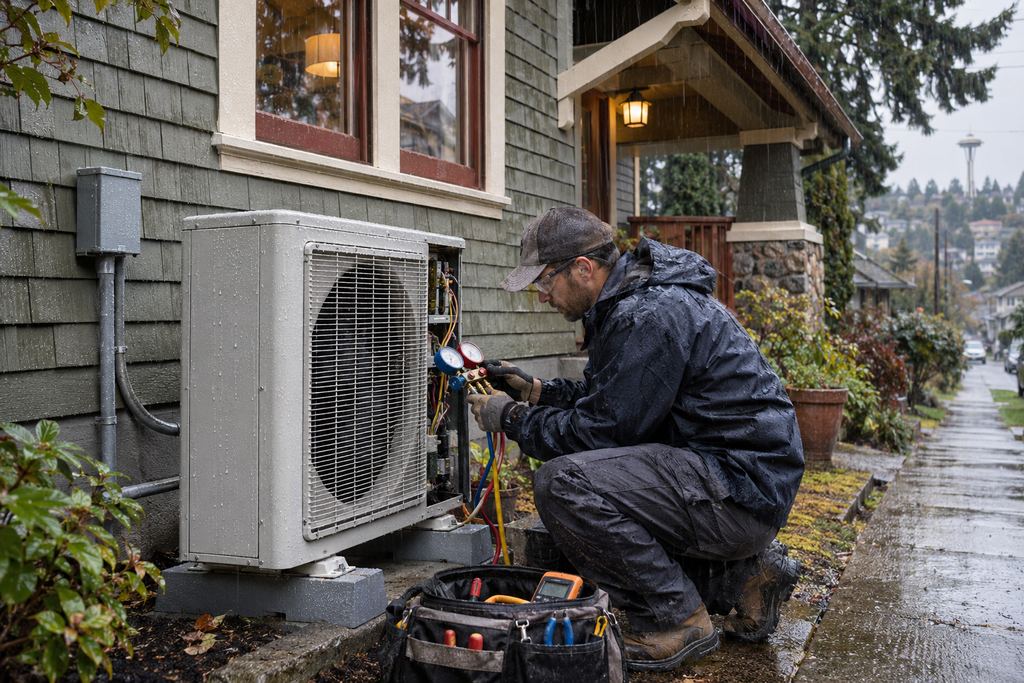
Furnace Repair in Oregon
When an Oregon furnace stops heating, start with the thermostat, the filter and the power switch, then call a contractor with a current CCB license if the burners still will not light. Most Oregon furnaces burn natural gas, but older homes may still have oil, and many newer ones pair a furnace with a heat pump.
Leave the building first
A gas smell is not a repair request. Stop here and do this now:
A carbon monoxide alarm is not a repair request. Stop here and do this now:
- Get everyone out of the house, pets too, and leave the door open behind you.
- Do not switch lights, appliances or the thermostat on or off, and do not use a lighter, a match or a phone inside.
- From outside, call your gas utility's emergency line or 911.
- Stay outside until the utility or the fire department says it is safe to go back in.
After the home is cleared, a licensed technician can check the furnace, boiler or water heater. You can come back to this form then.
Nothing was sent. This form does not handle gas or carbon monoxide emergencies.
Sending your request
Please keep this page open. The form is locked so the request is not sent twice.
Your request was received
We passed it to a contractor in your area. If one accepts, they contact you using the phone number or email you gave. We cannot say how soon, and you are not required to hire anyone.
No reply after a few days? Check your spam folder, then use the contact page.
We could not send your request
Nothing was sent to a contractor. Your answers are still on this page. Try again in a moment.Online requests are not connected yet
The request form is not linked to a contractor network yet. Nothing you typed was sent or saved. Please call instead, or try again later.Gas smell or a carbon monoxide alarm
No furnace troubleshooting until the utility or fire department says the home is safe.
- 1Leave firstDo not flip switches, use a phone or light anything indoors. Get everyone out.
- 2Call from outsideCall your gas utility's emergency line (NW Natural, Avista or Cascade Natural Gas, depending on where you live) or 911.
- 3CO alarm or symptomsHeadache, dizziness or nausea in several people or pets means fresh air now and a 911 call. Leave the alarm alone and stay outdoors until responders arrive.
What you can check and what stays with the technician
Safe checks you can do
Only checks from the owner's manual that need no tools and no opening of panels.
- Thermostat on Heat with a setpoint above the room reading and good batteries
- Furnace power switch on and the breaker not tripped (reset once only)
- Filter not clogged; replace it if you cannot see light through it
- Front door panel fully seated so the safety switch closes
- Condensate drain on a high-efficiency furnace not blocked or kinked
Leave these to a professional
Gas valves, burners, venting, refrigerant, capacitors and electrical circuits need a qualified, licensed technician.
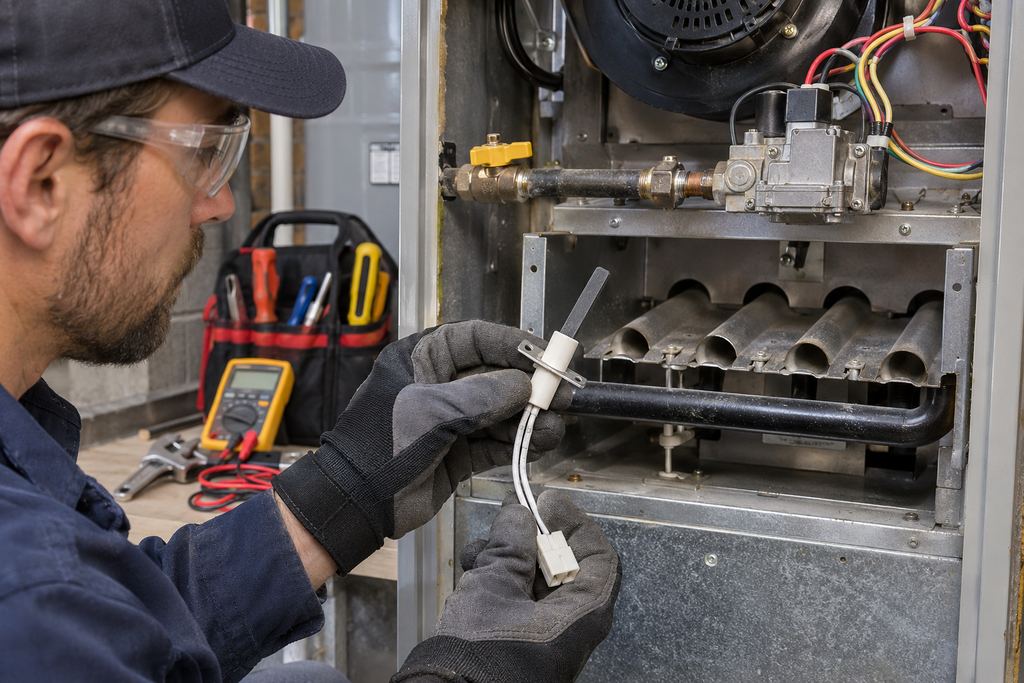
- Ignitor, flame sensor and gas valve diagnosis
- Inducer motor, pressure switch and limit switch testing
- Burner, heat exchanger and venting inspection
- Control board and blower motor repair
- Oil burner nozzle, filter and pump service
Heating systems found in Oregon homes
- Gas forced airThe most common furnace type in Portland, Salem and Eugene neighborhoods built after the 1950s. Often in a garage, crawl space or basement.
- Oil furnaceStill found in older homes; many owners have converted to gas or a heat pump. Oil systems need yearly nozzle and filter service.
- Furnace plus heat pumpA dual fuel setup lets the heat pump carry mild days and the furnace take over in a cold snap. See heat pump repair in Oregon.
How a furnace repair request usually goes
- STEP 1Describe the symptomNote any error light blink code on the furnace, what the thermostat shows and whether you hear the inducer or ignitor.
- STEP 2Confirm the feeAsk for the diagnostic or trip fee and any evening or weekend rate before the visit is booked.
- STEP 3Diagnosis on siteThe technician tests the safety sequence from thermostat call to flame and blower, then explains the fault.
- STEP 4Written priceYou approve the repair in writing. Parts not on the truck can add days.
When Oregon furnaces tend to fail
The first cold, rainy week in October or November brings a wave of no-heat calls, because that is the first long run after summer. Dust burning off the heat exchanger smells for a few minutes and is normal; a smell that lasts, or any rotten-egg odor, is not. East of the Cascades, Bend and Klamath Falls see longer stretches below freezing, and a failed furnace there can put pipes at risk within a night.
If you lose heat in freezing weather, keep a few faucets dripping, open cabinet doors under sinks and gather people in one warm room. A gas oven or outdoor grill must never be used to heat the house. Common symptoms are covered in furnace not heating.
Repair or replace an older Oregon furnace
No single number decides it. A technician's findings matter most: a cracked heat exchanger is a safety issue that only an inspection can confirm, while a failed ignitor or flame sensor is a routine part. Age, how often it has broken down and the price of the repair all factor in. Many Oregon owners compare a furnace replacement with a heat pump, since Energy Trust of Oregon and some utilities have offered incentives for heat pumps. Check current program rules before you decide.
The furnace repair cost guide lists what drives price, and the Oregon AC repair page covers the cooling side if the same blower serves both.
Questions to ask before you book
- 1What is your Construction Contractors Board number?Look it up on the CCB site to see whether the license is active and bonded.
- 2Do you work on my fuel type?Not every company services oil burners.
- 3Is a permit needed for this work?Replacing a furnace or gas line typically needs a mechanical permit from the local building department; a part swap usually does not.
Check your ZIP code
- You enter a ZIP code and the service you need.
- You add contact details and a short description.
- A contractor who accepts the ZIP code contacts you to arrange a visit. When depends on their schedule.
- You compare what you are told and any written estimate. You do not have to hire anyone.
General guides that apply in Oregon
Oregon cities
Only cities with a published page are listed. The list grows as pages are approved.
Questions
How much do furnace repairs cost in Oregon?
It depends on the part, the time of the visit and travel. Ask for the diagnostic fee and a written price for the repair before work starts. The cost guide explains the main factors.
What is the $5,000 rule?
It is an informal rule of thumb, not a standard: multiply the equipment's age by the repair price, and if the result tops 5,000, compare replacement quotes. Safety findings and fuel costs can matter more.
Can I relight the pilot myself?
Only if there is no gas smell and the manufacturer's label on the furnace describes the steps. Most modern furnaces have electronic ignition and no standing pilot. If it will not stay lit, call a technician.
Is heat pump or furnace heat more common in Oregon?
Both are common. Gas furnaces dominate many older neighborhoods, while heat pumps are widespread in newer construction and in homes without gas service.
Can I get help with heating bills or repairs?
211info lists local energy assistance in Oregon, and community action agencies run bill assistance programs. Funds are limited and open at set times, so call early in the season.