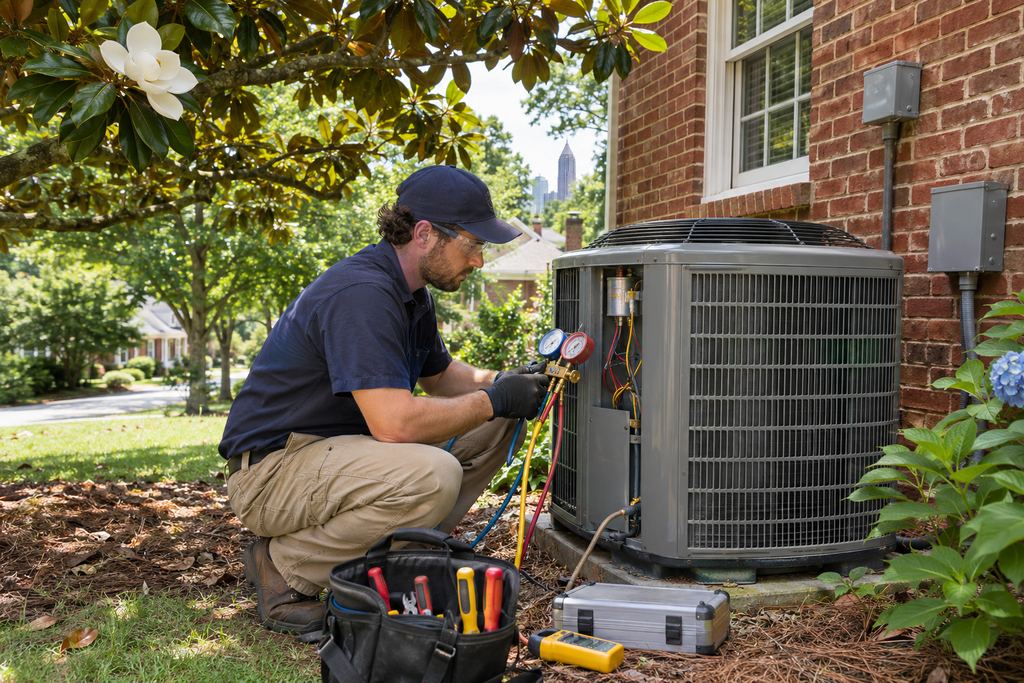
HVAC Repair in Columbia, SC
If you are not sure whether the problem is the AC, the heat pump or the furnace, start here. HVAC repair in Columbia covers all three, and most homes in the area use a heat pump or a split system with a gas furnace.
Leave the building first
A gas smell is not a repair request. Stop here and do this now:
A carbon monoxide alarm is not a repair request. Stop here and do this now:
- Get everyone out of the house, pets too, and leave the door open behind you.
- Do not switch lights, appliances or the thermostat on or off, and do not use a lighter, a match or a phone inside.
- From outside, call your gas utility's emergency line or 911.
- Stay outside until the utility or the fire department says it is safe to go back in.
After the home is cleared, a licensed technician can check the furnace, boiler or water heater. You can come back to this form then.
Nothing was sent. This form does not handle gas or carbon monoxide emergencies.
Sending your request
Please keep this page open. The form is locked so the request is not sent twice.
Your request was received
We passed it to a contractor in your area. If one accepts, they contact you using the phone number or email you gave. We cannot say how soon, and you are not required to hire anyone.
No reply after a few days? Check your spam folder, then use the contact page.
We could not send your request
Nothing was sent to a contractor. Your answers are still on this page. Try again in a moment.Online requests are not connected yet
The request form is not linked to a contractor network yet. Nothing you typed was sent or saved. Please call instead, or try again later.What happens with a request in Columbia
- You enter a ZIP code and the service you need.
- You add contact details and a short description.
- A contractor who accepts the ZIP code contacts you to arrange a visit. When depends on their schedule.
- You compare what you are told and any written estimate. You do not have to hire anyone.
Which system do you have?
A quick way to describe your equipment on the phone.
| What you see | Likely system | Ask for |
|---|---|---|
| Outdoor unit runs in winter too, no gas line | Heat pump with electric backup | Heat pump repair |
| Outdoor unit in summer only, gas meter and a flue pipe | Central AC plus gas furnace | AC or furnace repair |
| Outdoor unit runs year round, gas furnace inside | Dual fuel system | HVAC repair |
| Wall-mounted indoor heads, no ducts | Ductless mini-split | Heat pump repair |
What Columbia's climate does to equipment
The city's long, humid summers mean cooling runs for months at a stretch, and the short winter puts a sudden load on heat pumps and furnaces that sat unused. In practice that shapes the calls: weak capacitors, overflowing drain pans and frozen coils in summer, then defrost faults, failed heat strips and ignition problems on the first cold mornings.
Housing adds detail. Brick ranch homes from the 1960s and 1970s often have ductwork in a crawl space that sweats in humid weather. Newer subdivisions toward Lexington, Irmo and Blythewood tend to put the air handler in the attic, where heat makes summer repairs slower. Student rentals near the University of South Carolina and military households near Fort Jackson add renters to the mix, and a renter usually needs the landlord's approval before a repair. Whether a contractor serves a given street depends on their area, so enter your ZIP code rather than assuming.
A typical HVAC repair visit includes
- Symptom reviewWhat the system is doing, since when, and any codes on the thermostat or control board.
- Electrical testsCapacitors, contactors, fuses and motors checked with a meter by the technician.
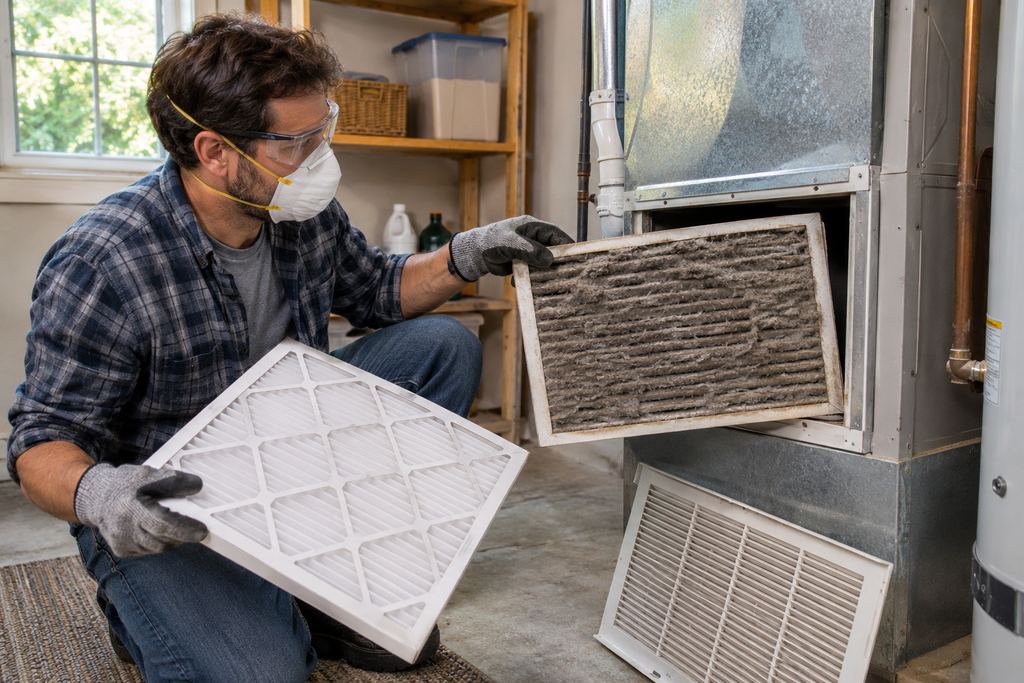
- Airflow checkFilter, blower and coil condition, which affect both cooling and heating.
- Refrigerant checkPressures and a leak search where readings point to one. Requires EPA Section 608 certification.
- Drain and safetiesCondensate line, float switch and, on gas furnaces, flame and pressure safeties.
- Written findingsThe cause found, the part needed and an estimate before work starts.
Your part and the technician's part
Safe checks you can do
Only checks from the owner's manual that need no tools and no opening of panels.
- Set the thermostat mode correctly and replace its batteries.
- Reset a tripped breaker once.
- Replace a dirty filter.
- Clear leaves and clippings from around the outdoor unit.
- Turn cooling off and run the fan if you see ice.
Leave these to a professional
Gas valves, burners, venting, refrigerant, capacitors and electrical circuits need a qualified, licensed technician.
- Anything behind the electrical panels of the indoor or outdoor unit.
- Capacitors, which hold a charge after power is off.
- Refrigerant work and leak repair.
- Gas valve, burner and venting work on the furnace.
Vetting a Columbia contractor
Ask for the company's South Carolina license number and check it with LLR. Ask whether they carry liability insurance and whether the estimate is written. If two companies give very different diagnoses, a second opinion is reasonable before a large repair. For specific symptoms, see Columbia AC repair or Columbia furnace repair, and the HVAC repair cost guide for what drives price. All local pages are listed on the Columbia locations page.
Safety before repairs
Questions
Will an HVAC company fix my air conditioner?
Yes, air conditioning is the AC in HVAC. In Columbia most HVAC companies spend the summer on cooling calls and also handle heat pumps and furnaces.
How do I pick an HVAC company in Columbia?
Check the state license on the LLR site, ask about insurance, get the diagnosis and price in writing, and ask about after-hours rates before booking. We do not rank companies.
What is the $5,000 rule for AC units?
An informal guide that multiplies age by repair cost; above roughly 5,000, compare a replacement quote. Refrigerant type matters too: an R-22 system faces costly refrigerant since production ended in 2020.
What maintenance keeps a Columbia system running?
Regular filter changes, a clear outdoor unit, and a seasonal check of the drain line, coil and electrical parts before summer. A heat pump benefits from a check before winter as well.