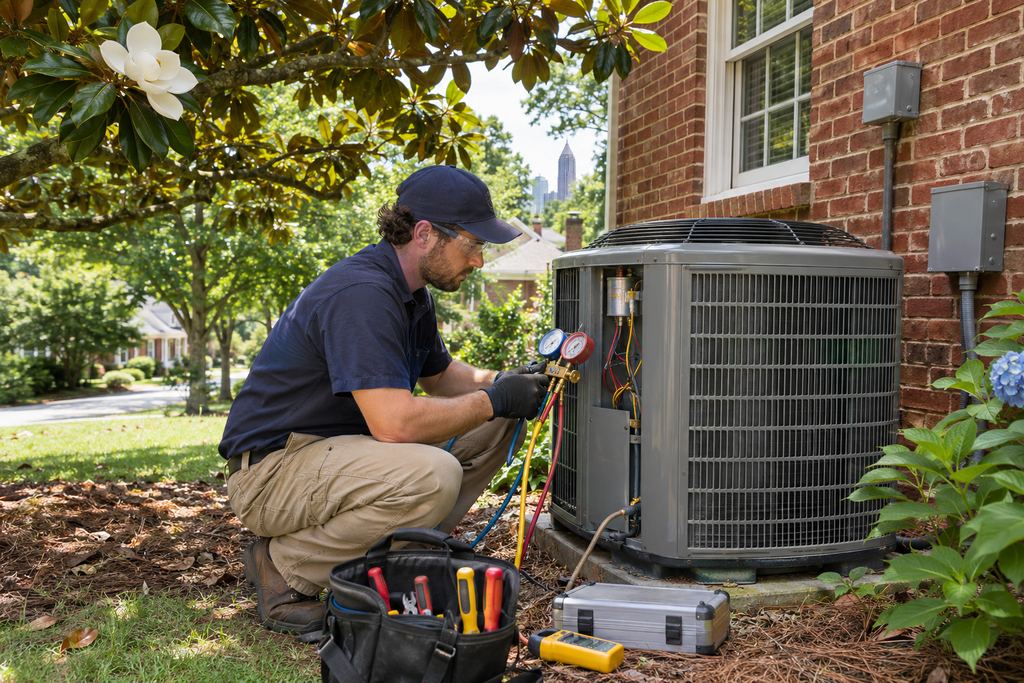
Chesapeake HVAC Repair
HVAC repair in Chesapeake mostly means heat pumps and split systems, since many homes here heat and cool with the same outdoor unit. If that unit stops, you lose both. Enter your ZIP code and describe the problem, and the request goes to an independent HVAC contractor near you.
Leave the building first
A gas smell is not a repair request. Stop here and do this now:
A carbon monoxide alarm is not a repair request. Stop here and do this now:
- Get everyone out of the house, pets too, and leave the door open behind you.
- Do not switch lights, appliances or the thermostat on or off, and do not use a lighter, a match or a phone inside.
- From outside, call your gas utility's emergency line or 911.
- Stay outside until the utility or the fire department says it is safe to go back in.
After the home is cleared, a licensed technician can check the furnace, boiler or water heater. You can come back to this form then.
Nothing was sent. This form does not handle gas or carbon monoxide emergencies.
Sending your request
Please keep this page open. The form is locked so the request is not sent twice.
Your request was received
We passed it to a contractor in your area. If one accepts, they contact you using the phone number or email you gave. We cannot say how soon, and you are not required to hire anyone.
No reply after a few days? Check your spam folder, then use the contact page.
We could not send your request
Nothing was sent to a contractor. Your answers are still on this page. Try again in a moment.Online requests are not connected yet
The request form is not linked to a contractor network yet. Nothing you typed was sent or saved. Please call instead, or try again later.Short answer
Check the thermostat, breakers and filter. If the system still is not working, request a technician and ask for the diagnostic fee up front.
Safety comes before any repair
Systems found in Chesapeake
- Heat pump split systemOutdoor unit plus an air handler with backup strips. One failure can stop both heat and cooling.
- Gas furnace and ACIn homes on gas service. The furnace blower also serves the AC coil.
- Ductless mini-splitsBonus rooms over garages, sunrooms and additions.
- Packaged unitsAll-in-one outdoor units on some homes and small commercial buildings.
Crawl spaces, garages and humidity
A lot of Chesapeake houses sit on crawl spaces, and ducts or even the air handler may run through them. Damp crawl spaces sweat in summer, ducts can lose insulation or come loose, and condensate lines can sag and clog. Garage air handlers are easier to reach but get hot in July. When a technician says the equipment is fine but the house stays humid, crawl-space moisture and leaky ducts are worth a look.
Storms are the other local factor. Surge damage to boards and capacitors, flooded outdoor units and debris in the fins all show up after heavy weather. Leave a flooded system off at the breaker until it has been inspected.
What an HVAC repair visit includes
- ConversationThe technician asks what changed and when, and what you already tried.
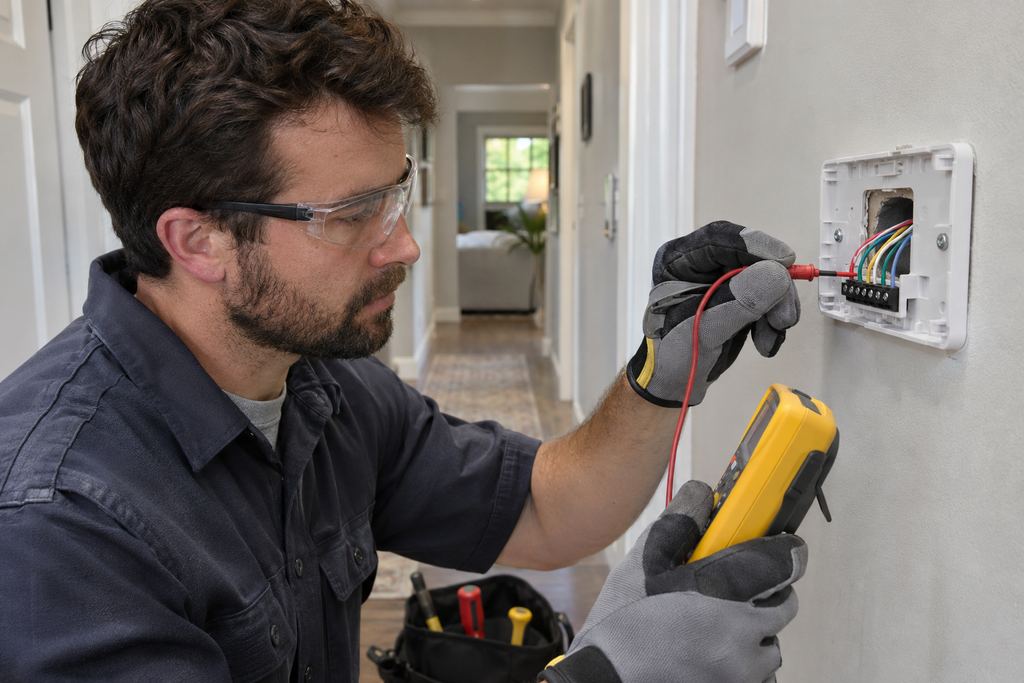
- TestingThermostat signal, electrical parts, airflow, refrigerant pressures and, on gas equipment, combustion and venting.
- Findings and priceA clear explanation and a written price before any work starts.
- Repair and test runThe system runs through a full cycle to confirm the fix.
Brands you will see
Carrier, Trane, Lennox, Goodman, Rheem, Bryant, American Standard and York equipment all turn up in Chesapeake homes, along with many others. Most independent contractors service several brands; ask if parts are stocked locally for yours. Brand guides: Carrier HVAC repair, Trane HVAC repair and Lennox HVAC repair. This site is independent and not affiliated with any manufacturer.
Maintenance that fits the local climate
- STEP 1Two checkups for heat pumpsSpring for cooling and fall for heating, because the same unit runs most of the year.
- STEP 2Drain line careHave the condensate line flushed during the spring visit; algae grows fast in humid months.
- STEP 3Outdoor coil rinseAsk the technician to clean it; salt and pollen build up.
- STEP 4Filter scheduleEvery one to three months, more often during spring pollen.
What happens with a request in Chesapeake
- You enter a ZIP code and the service you need.
- You add contact details and a short description.
- A contractor who accepts the ZIP code contacts you to arrange a visit. When depends on their schedule.
- You compare what you are told and any written estimate. You do not have to hire anyone.
How to vet a contractor
- 1Can I see your Virginia license?Virginia DPOR shows license class, specialty and status online.
- 2Do you carry insurance?Ask for a certificate for attic or crawl-space work.
- 3What is the diagnostic fee and the labor rate?Get both in writing.
- 4Do you handle my brand and refrigerant?Newer systems may use A2L refrigerants such as R-454B or R-32, which need updated tools and training.
Chesapeake pages by system
AC repair in Chesapeake covers cooling problems and furnace repair in Chesapeake covers heat. The Chesapeake page lists every local guide, and the HVAC repair cost guide explains price factors.
HVAC repair in nearby cities
Only cities with a published page for this service.
Questions
Does an HVAC company fix air conditioning?
Yes. HVAC contractors repair cooling, heating and ventilation equipment. Some focus on residential systems, others on commercial units, so describe your system when you call.
Who are the top 5 HVAC manufacturers?
There is no single official ranking. Carrier, Trane, Lennox, Goodman, Rheem and Daikin are among the large brands sold in the US. Installation quality and local parts support matter as much as the name.
Why does HVAC repair cost so much?
The bill covers a trained technician's time, a truck stocked with parts, refrigerant that is regulated and costly, and testing equipment. Parts such as compressors and inverter boards are expensive, and after-hours calls carry higher rates.
Is HVAC the same as AC?
AC is the cooling part. HVAC covers heating, ventilation and air conditioning together. In Chesapeake many homes use a heat pump, which handles both.