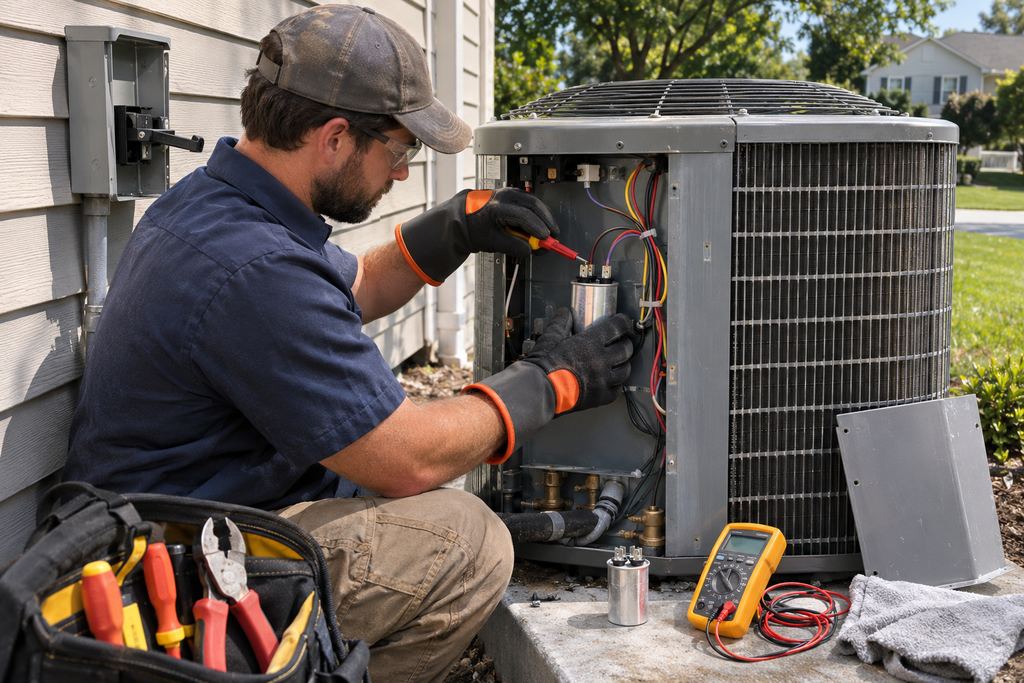
Carrier AC repair
Carrier AC repair almost always starts with the same short list: power to the outdoor unit, the capacitor and contactor, airflow through the filter and coil, and the refrigerant charge. Carrier's own dealer pages fill most search results, but independent HVAC contractors repair Carrier systems every day.
Leave the building first
A gas smell is not a repair request. Stop here and do this now:
A carbon monoxide alarm is not a repair request. Stop here and do this now:
- Get everyone out of the house, pets too, and leave the door open behind you.
- Do not switch lights, appliances or the thermostat on or off, and do not use a lighter, a match or a phone inside.
- From outside, call your gas utility's emergency line or 911.
- Stay outside until the utility or the fire department says it is safe to go back in.
After the home is cleared, a licensed technician can check the furnace, boiler or water heater. You can come back to this form then.
Nothing was sent. This form does not handle gas or carbon monoxide emergencies.
Sending your request
Please keep this page open. The form is locked so the request is not sent twice.
Your request was received
We passed it to a contractor in your area. If one accepts, they contact you using the phone number or email you gave. We cannot say how soon, and you are not required to hire anyone.
No reply after a few days? Check your spam folder, then use the contact page.
We could not send your request
Nothing was sent to a contractor. Your answers are still on this page. Try again in a moment.Online requests are not connected yet
The request form is not linked to a contractor network yet. Nothing you typed was sent or saved. Please call instead, or try again later.Short answer
We are independent of Carrier. This site is not a Carrier Factory Authorized Dealer and does not speak for Carrier Global.
Why a Carrier AC stops working
Carrier units fail for the same reasons as other central air systems. In midsummer the leading suspects are a failed run capacitor or contactor, a burned-out condenser fan motor and a dirty outdoor coil that lets head pressure climb. Indoors, a clogged filter or a blocked condensate drain can stop cooling or trip a float switch. Slow refrigerant leaks show up as longer run times and weaker cooling over weeks.
Carrier's communicating Infinity systems add another layer: the wall control shows fault messages, and a technician familiar with them can read them faster. Write down any code you see.
Safe checks before you book
- Thermostat or wall controlCool mode, setpoint below room temperature, no active schedule overriding you.
- Both breakersThe indoor air handler or furnace and the outdoor disconnect. Reset a tripped one once only.
- FilterA clogged filter can freeze the coil and stop the airflow.
- Outdoor unitRemove covers, leaves and grass clippings from the sides.
- Ice on the copper lineSwitch to Fan only and wait for it to melt; then report it.
Hands off the capacitor and refrigerant
How the repair visit works
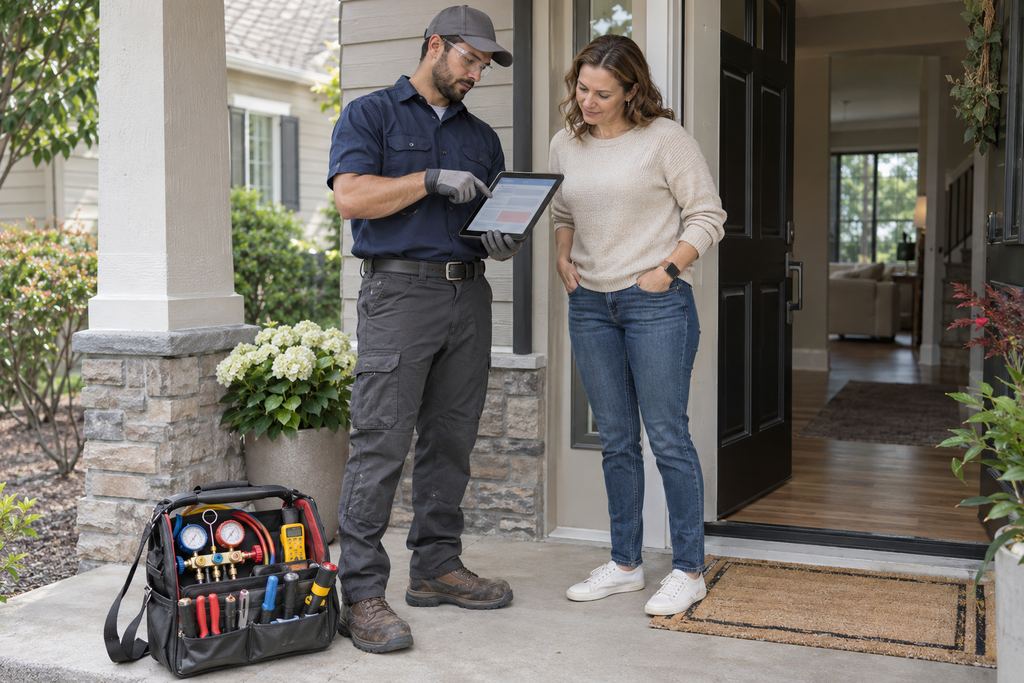
- STEP 1Describe the symptomWarm air, no outdoor fan, a hum, ice, water. Mention the model number and roughly when it was installed.
- STEP 2Diagnostic checkVoltage, capacitor values, amp draw on the motors, pressures and temperatures across the coil.
- STEP 3EstimateParts, labor, refrigerant by type and pounds, and any after-hours charge in writing.
- STEP 4Repair and confirmThe technician runs the system and checks cooling before leaving.
How to tell if a Carrier AC needs refrigerant
Clues include air that is cool but not cold, frost on the larger copper line, a hissing or bubbling sound near the coil and a system that runs much longer than it used to. None of these proves low charge on its own; a dirty coil or weak blower can look the same. A technician measures pressures and searches for the leak. Topping off without a leak repair is a short-term fix, and older units on R-22 cost more to recharge because new production ended in 2020. See refrigerant leak repair for the full picture.
Maintenance that keeps a Carrier running
A yearly cooling check usually includes coil cleaning, capacitor testing, tightening electrical connections and flushing the drain. Many Carrier owners pair it with a heating check in the fall, especially with a Carrier furnace or heat pump; the Carrier HVAC repair page covers whole-system problems. Keep the warranty papers with the model and serial numbers, because Carrier warranty terms depend on registration and installation date.
Related pages
Service and cost pages for this brand.
Questions
Why is my Carrier AC not working?
Common causes are a tripped breaker, a thermostat setting, a clogged filter, a failed capacitor or contactor, a frozen coil or a refrigerant leak. Rule out the simple ones, then request AC repair help.
What is the job title of someone who fixes a Carrier AC?
An HVAC technician or air conditioning service technician, working for a contractor licensed in your state.
How do I register a Carrier AC warranty?
Carrier's website has a product registration and warranty lookup section. Registration deadlines apply after installation, so check the terms for your unit soon after it goes in.
Do I have to use a Carrier dealer?
No, but read your warranty terms. Carrier dealers are one option; independent contractors who service Carrier equipment are another.
What affects the cost of a Carrier AC repair?
The part, labor time, refrigerant type and amount, access to the equipment and whether the call is after hours. The AC repair cost guide explains each factor.