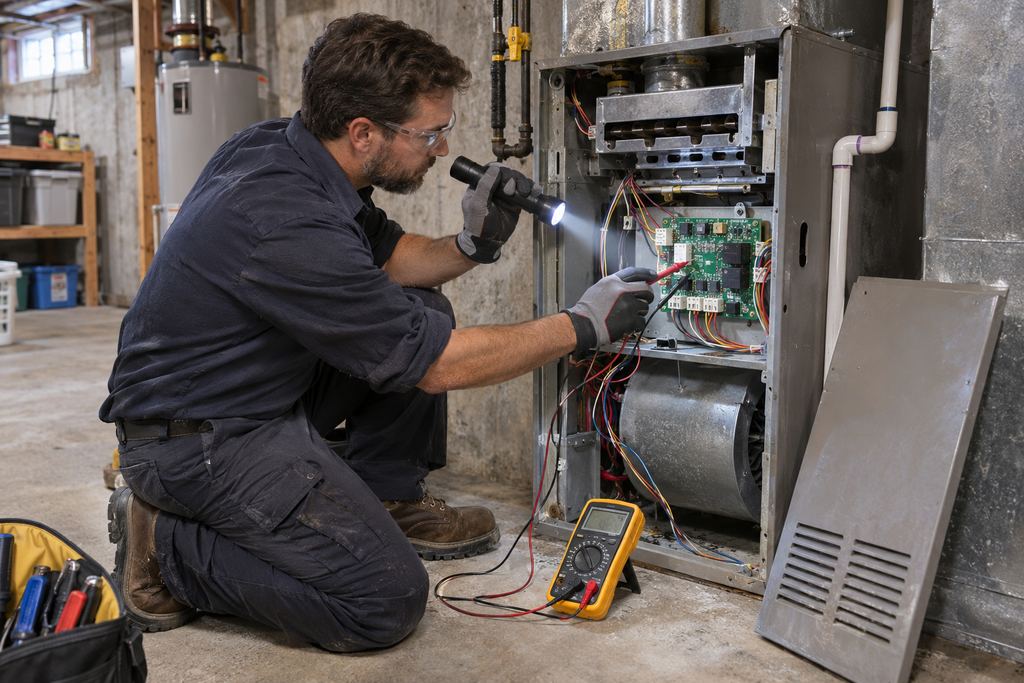
Carrier furnace repair
Most Carrier furnace repair calls come down to ignition, airflow or a safety switch that keeps shutting the burners off. A technician can usually find the fault in one visit, and many parts are stocked by Carrier distributors. Safety comes before any troubleshooting.
Leave the building first
A gas smell is not a repair request. Stop here and do this now:
A carbon monoxide alarm is not a repair request. Stop here and do this now:
- Get everyone out of the house, pets too, and leave the door open behind you.
- Do not switch lights, appliances or the thermostat on or off, and do not use a lighter, a match or a phone inside.
- From outside, call your gas utility's emergency line or 911.
- Stay outside until the utility or the fire department says it is safe to go back in.
After the home is cleared, a licensed technician can check the furnace, boiler or water heater. You can come back to this form then.
Nothing was sent. This form does not handle gas or carbon monoxide emergencies.
Sending your request
Please keep this page open. The form is locked so the request is not sent twice.
Your request was received
We passed it to a contractor in your area. If one accepts, they contact you using the phone number or email you gave. We cannot say how soon, and you are not required to hire anyone.
No reply after a few days? Check your spam folder, then use the contact page.
We could not send your request
Nothing was sent to a contractor. Your answers are still on this page. Try again in a moment.Online requests are not connected yet
The request form is not linked to a contractor network yet. Nothing you typed was sent or saved. Please call instead, or try again later.Short answer
This page is independent. We are not part of Carrier, not a Carrier dealer and not authorized by Carrier to speak about its products.
Stop if you smell gas or a CO alarm sounds
Owner checks versus technician work on a Carrier
Safe checks you can do
Only checks from the owner's manual that need no tools and no opening of panels.
- Thermostat set to Heat, setpoint above room temperature, batteries fresh
- Furnace power switch on and breaker not tripped
- Filter clean and facing the right way
- Blower door seated so its safety switch is closed
- Outdoor intake and exhaust pipes on high-efficiency models clear of snow or leaves
- Status light blink pattern noted through the viewing window
Leave these to a professional
Gas valves, burners, venting, refrigerant, capacitors and electrical circuits need a qualified, licensed technician.
- Gas valve, burners and manifold pressure
- Flame sensor cleaning and ignitor testing
- Pressure switch, inducer motor and venting
- High-limit and rollout switch faults
- Control board and blower motor diagnosis
- Heat exchanger inspection and combustion testing
Reading the status light
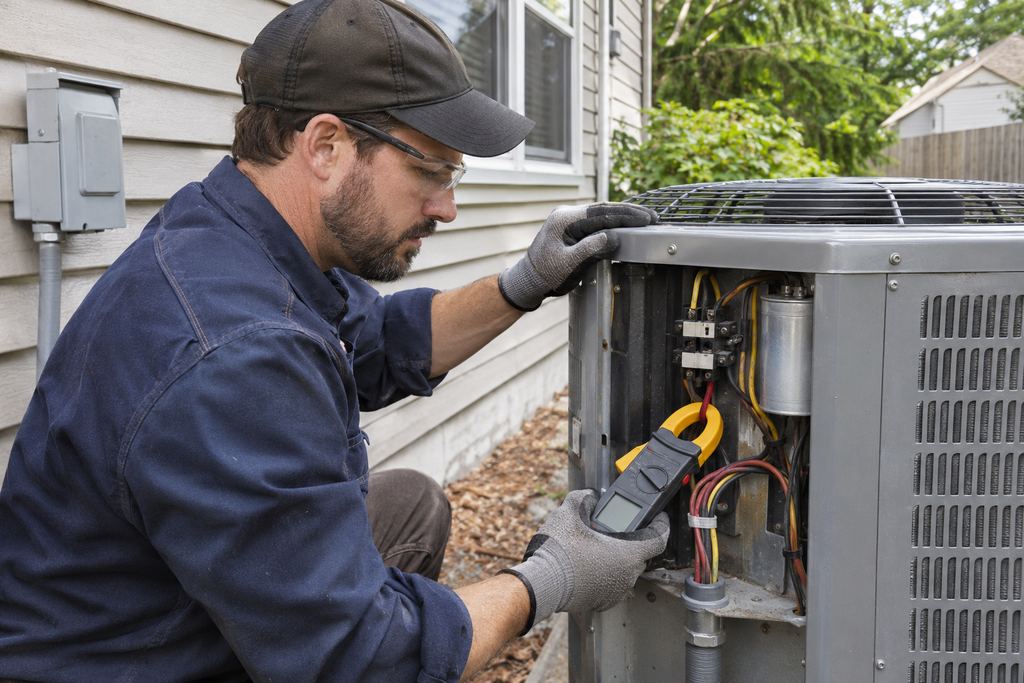
Carrier furnaces, like most modern gas furnaces, flash a fault code from an LED on the control board. A chart on the inside of the door usually explains the pattern. You do not need to open the furnace to use it: note the flashes through the sight window and pass them on. A code points the technician in a direction, but it does not replace testing, because one code can have several causes.
Repairs Carrier furnaces often need
- Flame sensorBurners light and drop out after a few seconds. Often cleaned, sometimes replaced.
- Hot surface ignitorInducer runs, no glow, no flame. Ignitors are fragile and wear out.
- Pressure switch or inducerFault codes tied to venting or draft. Blocked drains on condensing models can trigger them too.
- Blower motor or capacitorBurners run but little air moves, or the furnace overheats and trips the limit.
- Control boardErratic operation or no response; usually replaced after other causes are ruled out.
- Condensate trap and drainWater near the base of a 90 percent or higher efficiency model.
What to expect from the visit
- STEP 1Call and describe itTell the company what the furnace does, any code and whether you smelled gas at any point.
- STEP 2Safety and diagnostic checkGas pressure, ignition sequence, venting, airflow and a look at the heat exchanger where accessible.
- STEP 3Written optionsThe repair price, and a replacement price if the furnace is old or unsafe.
- STEP 4Repair and test runThe technician runs a full heat cycle before leaving.
Repair or replace a Carrier furnace
No fixed rule applies. Weigh these together, and see the furnace repair cost guide for the price side.
Keeping it running
A fall tune-up gives the technician a chance to clean the flame sensor, test the ignitor, check the drain and measure combustion before the first cold night. If your home also has a Carrier air conditioner, scheduling both checks a season apart spreads the cost; see Carrier AC repair for the cooling side.
Related pages
Service and cost pages for this brand.
Questions
Can a furnace be repaired?
Usually, yes. Most failures are a single part such as an ignitor, sensor, switch or motor. Replacement is worth pricing when the heat exchanger is cracked or repairs keep returning on an old unit.
What is the $5,000 rule?
A rule of thumb some contractors use: the unit's age times the repair cost. Above 5,000, they suggest comparing a replacement quote. It leaves out safety and efficiency, so do not rely on it alone.
How long do Carrier gas furnaces last?
There is no single number. Many gas furnaces run for well over a decade, and lifespan depends on installation, maintenance, sizing and how hard winters are where you live.
How do I troubleshoot my Carrier gas furnace?
Check the thermostat, the power switch and breaker, the filter and that the door is closed. Note the status light pattern. Anything past that, such as gas parts or switches, belongs to a technician. Start with our furnace not turning on guide.