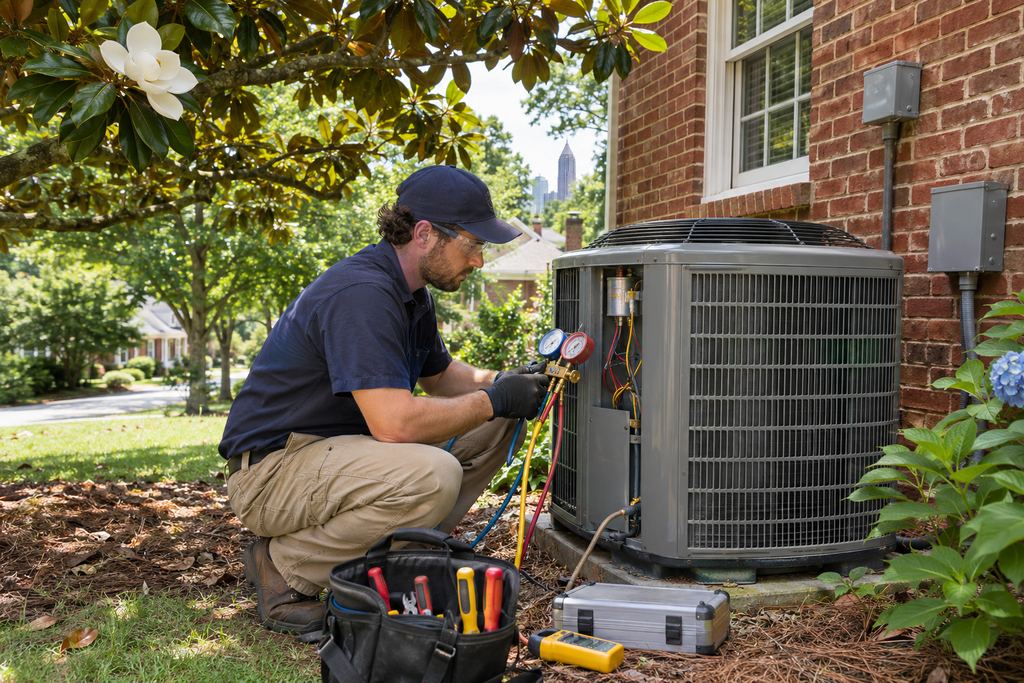
Heat Pump Repair in New Orleans
Heat pump repair in New Orleans is mostly cooling repair, because the system spends far more of the year cooling than heating. When it breaks in July the house heats up fast; when it breaks during a January cold front, the backup electric heat runs and the Entergy bill climbs. Here is what usually goes wrong, what you can check, and how to request a contractor who serves your ZIP code.
Leave the building first
A gas smell is not a repair request. Stop here and do this now:
A carbon monoxide alarm is not a repair request. Stop here and do this now:
- Get everyone out of the house, pets too, and leave the door open behind you.
- Do not switch lights, appliances or the thermostat on or off, and do not use a lighter, a match or a phone inside.
- From outside, call your gas utility's emergency line or 911.
- Stay outside until the utility or the fire department says it is safe to go back in.
After the home is cleared, a licensed technician can check the furnace, boiler or water heater. You can come back to this form then.
Nothing was sent. This form does not handle gas or carbon monoxide emergencies.
Sending your request
Please keep this page open. The form is locked so the request is not sent twice.
Your request was received
We passed it to a contractor in your area. If one accepts, they contact you using the phone number or email you gave. We cannot say how soon, and you are not required to hire anyone.
No reply after a few days? Check your spam folder, then use the contact page.
We could not send your request
Nothing was sent to a contractor. Your answers are still on this page. Try again in a moment.Online requests are not connected yet
The request form is not linked to a contractor network yet. Nothing you typed was sent or saved. Please call instead, or try again later.What happens with a request in New Orleans
- You enter a ZIP code and the service you need.
- You add contact details and a short description.
- A contractor who accepts the ZIP code contacts you to arrange a visit. When depends on their schedule.
- You compare what you are told and any written estimate. You do not have to hire anyone.
Stop and call for help
Why so many New Orleans homes use heat pumps
Winters here are short and mild, so a heat pump can cover nearly all heating needs efficiently, with electric strips as backup on the few cold nights. The same outdoor unit does the heavy work of summer cooling. That means a heat pump in New Orleans logs many more hours per year than one in a northern city, and the wear shows up on the parts that run the most.
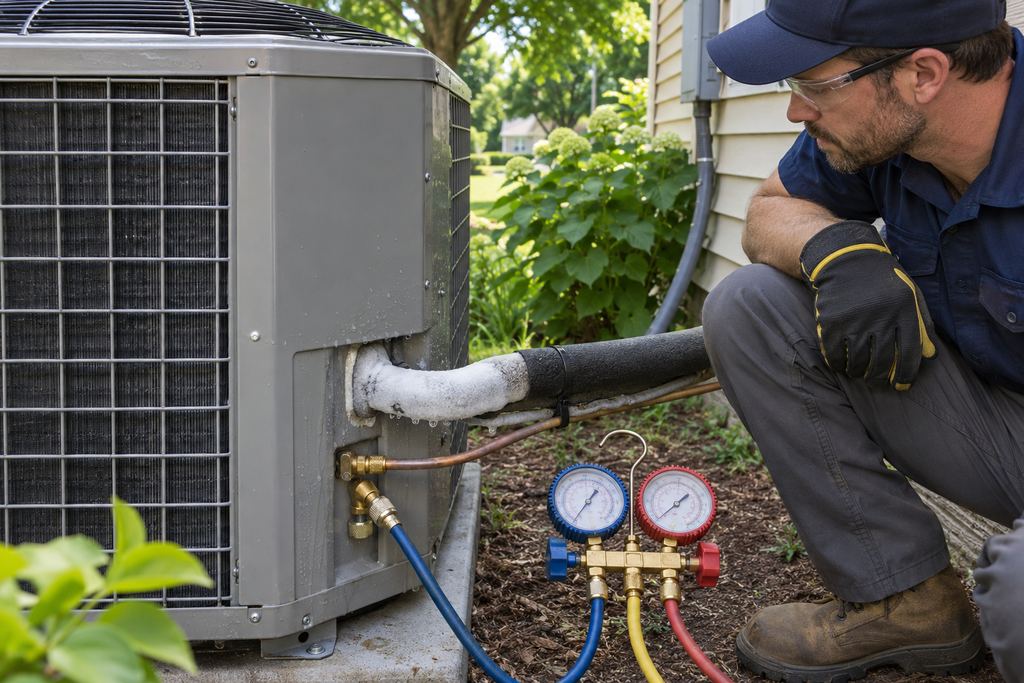
Common causes of heat pump trouble here
These are possibilities a technician tests for, not a diagnosis.
- Capacitor or contactor failureThe outdoor fan or compressor will not start, often after a storm surge or a long heat wave.
- Refrigerant leaksCorrosion from constant humidity can open small leaks in coils and line sets. A leak should be found and repaired, not just topped off.
- Reversing valve problemsThe system heats when it should cool, or the reverse. See heat pump not cooling.
- Clogged condensate drainsThe indoor unit stops cooling or leaks into the ceiling or under the house.
- Defrost faults in winterRare cold snaps reveal defrost sensors or controls that never get tested in mild weather.
- Thermostat setupA thermostat stuck in Emergency Heat or set for the wrong system type causes poor comfort and high bills.
What you can check, and what the technician handles
Safe checks you can do
Only checks from the owner's manual that need no tools and no opening of panels.
- Mode and setpoint on the thermostat, and whether Emergency Heat was left on by mistake
- Air filter, which loads up quickly in summer
- Indoor and outdoor breakers, reset once only
- Leaves, vines and storm debris cleared from around the outdoor unit
- Indoor drain pan and float switch, if you can see them safely
Leave these to a professional
Gas valves, burners, venting, refrigerant, capacitors and electrical circuits need a qualified, licensed technician.
- Electrical testing, capacitors and contactors (a capacitor can shock even with power off)
- Refrigerant leak search, repair and charge, under EPA Section 608
- Reversing valve, defrost control and sensor diagnosis
- Compressor and fan motor replacement
- Inspection after a flood before the system is restarted
What a repair visit covers
Expect the technician to run the system in both cooling and heating, read electrical values at the compressor and fan, check refrigerant pressures and temperatures, inspect coils for corrosion, and clear the drain. You should get a written price before work starts. Ask whether they service ductless mini-split heat pumps if that is what you have; older New Orleans houses often do.
Cost and replacement
Published national estimates are in the heat pump repair cost guide.
Upkeep and local contractor checks
Twice-yearly service suits a heat pump that works year round: a spring visit before peak cooling and a fall check of heating and defrost. Rinse loose debris off the outdoor coil from outside with a garden hose, with the breaker off, and keep plants a couple of feet back. When you hire, verify the company with the Louisiana State Licensing Board for Contractors and ask about Section 608 certification. Other local guides: New Orleans AC repair, furnace repair and the New Orleans page.
Questions
Why is my electric bill so high in winter with a heat pump?
On cold nights, backup electric strips may run, which cost more than the heat pump itself. If backup heat runs on mild days, or Emergency Heat was left on, have the system checked.
Does constant humidity damage a heat pump?
Constant humidity speeds corrosion on coils and fittings, which can lead to leaks over time. Regular cleaning and inspection help catch it early.
Should I run my heat pump after a flood?
No. Keep it off until a technician inspects the outdoor unit, any equipment under the house and the wiring.
How long does a heat pump last in New Orleans?
It varies with maintenance, installation and run time. Because heat pumps here run most of the year, they may wear faster than in cooler climates.