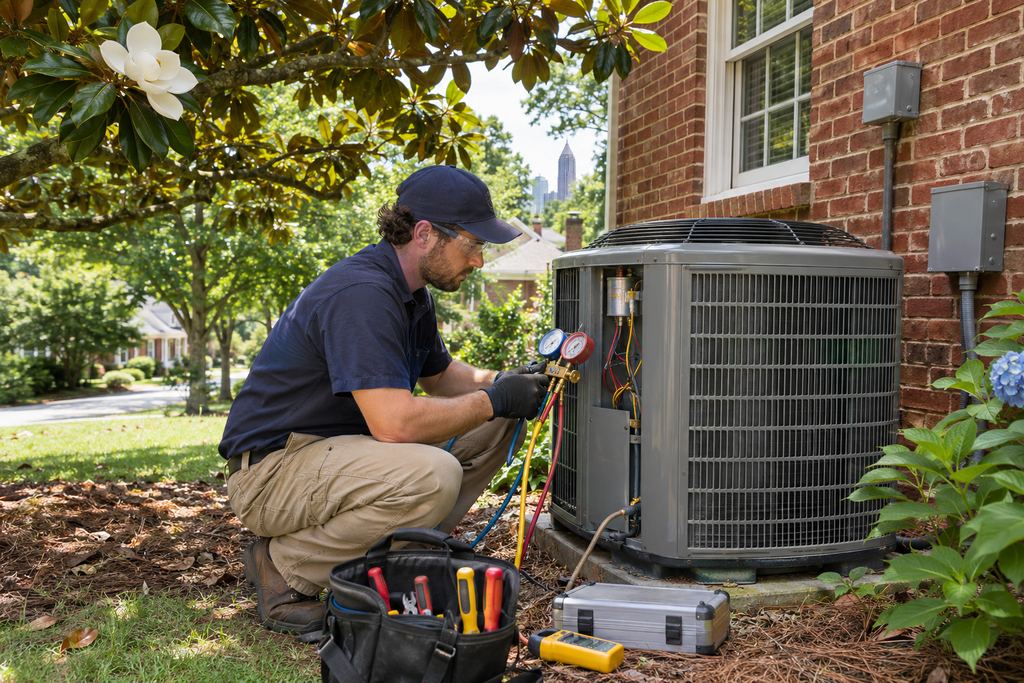
HVAC Repair in South Carolina
Most HVAC repair calls in South Carolina come during the long cooling season, when air conditioners and heat pumps run for months with few breaks. This page explains the failures that pattern causes, what you can safely check, and how to confirm a contractor with the state's licensing agency.
Leave the building first
A gas smell is not a repair request. Stop here and do this now:
A carbon monoxide alarm is not a repair request. Stop here and do this now:
- Get everyone out of the house, pets too, and leave the door open behind you.
- Do not switch lights, appliances or the thermostat on or off, and do not use a lighter, a match or a phone inside.
- From outside, call your gas utility's emergency line or 911.
- Stay outside until the utility or the fire department says it is safe to go back in.
After the home is cleared, a licensed technician can check the furnace, boiler or water heater. You can come back to this form then.
Nothing was sent. This form does not handle gas or carbon monoxide emergencies.
Sending your request
Please keep this page open. The form is locked so the request is not sent twice.
Your request was received
We passed it to a contractor in your area. If one accepts, they contact you using the phone number or email you gave. We cannot say how soon, and you are not required to hire anyone.
No reply after a few days? Check your spam folder, then use the contact page.
We could not send your request
Nothing was sent to a contractor. Your answers are still on this page. Try again in a moment.Online requests are not connected yet
The request form is not linked to a contractor network yet. Nothing you typed was sent or saved. Please call instead, or try again later.Short answer
A heat pump or AC that runs but does not cool, a water leak at the indoor unit and a system that will not start are the usual South Carolina calls. Try the checks below, then send a request; a local contractor decides whether they can take it.
What happens with a request in South Carolina
- You enter a ZIP code and the service you need.
- You add contact details and a short description.
- A contractor who accepts the ZIP code contacts you to arrange a visit. When depends on their schedule.
- You compare what you are told and any written estimate. You do not have to hire anyone.
Why systems fail here
South Carolina's climate is hot and humid for a large part of the year, so cooling equipment carries a heavier load than in most of the country. Long run times wear on capacitors, contactors and fan motors, and the moisture an air conditioner pulls out of the air has to drain somewhere. Clogged condensate lines and full drain pans are a steady source of summer calls, especially where the air handler sits in an attic above a finished ceiling.
Winters are milder, which is why heat pumps are so common in the state. When a cold snap arrives, those systems lean on backup electric heat strips, and problems with defrost or auxiliary heat show up all at once. In the Upstate, around Greenville and Spartanburg, nights below freezing are more frequent than on the coast, and many homes pair a heat pump with a gas furnace.
Along the coast, from Myrtle Beach to Charleston and Beaufort, salt air corrodes outdoor coils, fins and wiring. Hurricane season adds another pattern: power surges and flooding that reach outdoor units. Have a technician inspect any unit that sat in floodwater before it runs again.
Checks you can do before calling
- ThermostatMode set to cool or heat, setpoint a few degrees past room temperature, fresh batteries if it has them.
- Breakers and switchesReset a tripped breaker once. If it trips again, leave it off and tell the technician.
- Air filterA clogged filter cuts airflow and can lead to a frozen coil. Hold it to a light; if almost none passes, swap it.
- Drain lineIf the indoor unit has a float switch that shut the system down, water in the pan is the clue. Many manuals allow clearing the line at the access cap.
- Ice on the coil or linesTurn cooling off and run the fan only until it melts, then report it. Ice points to an airflow or refrigerant problem.
Stop and get help
Checking a South Carolina contractor
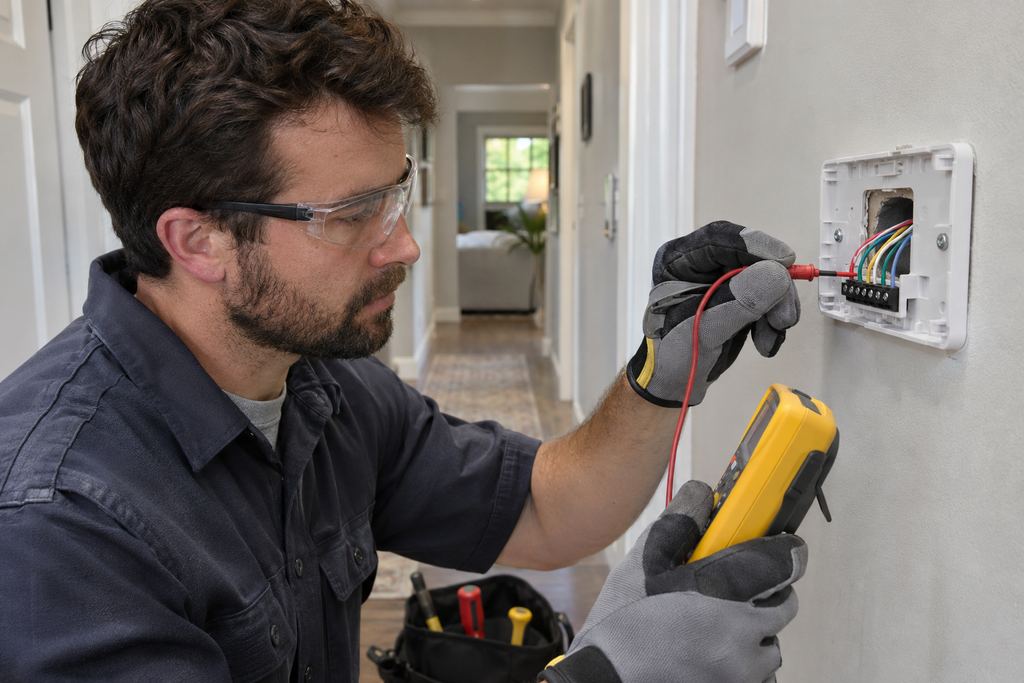
The South Carolina Department of Labor, Licensing and Regulation (LLR) licenses contractors and offers an online license lookup. Residential work and larger commercial mechanical work fall under different boards within LLR, so ask the company which license covers a repair at your address and look the number up. Technicians who open refrigerant lines also need EPA Section 608 certification.
A sound quote separates the diagnostic fee from the repair and names the part. For older systems that still use R-22, expect refrigerant to cost more: production and import ended in 2020, so repairs depend on reclaimed supply. Topping off a leaking system with no leak search holds only until the refrigerant leaks out again.
South Carolina city pages
Local pages explain the climate and housing in each city. See all areas on the South Carolina locations page.
When the house gets dangerously hot
General guides that apply in South Carolina
South Carolina cities
Only cities with a published page are listed. The list grows as pages are approved.
Questions
Does HVAC repair include air conditioning?
It does. In South Carolina most HVAC calls are about cooling, and the same companies usually service heat pumps, which both heat and cool. If you also have a gas furnace, mention it.
How long does HVAC equipment last in South Carolina?
There is no fixed number. Heavy summer use, humidity and coastal salt air can shorten life compared with milder areas, while regular maintenance helps. Age is one factor in a repair or replace decision along with refrigerant type, repair cost and efficiency.
How do you get an HVAC license in South Carolina?
Licensing runs through LLR, and the requirements depend on whether the work is residential or commercial and on project value. The LLR website lists exam and application steps. For homeowners, the useful step is looking up the license number a company gives you.
Why does HVAC repair cost so much?
You pay for diagnostic time, travel, the part and labor, and summer demand can stretch schedules. After-hours and weekend visits often cost more. Ask for a written estimate before the repair starts.