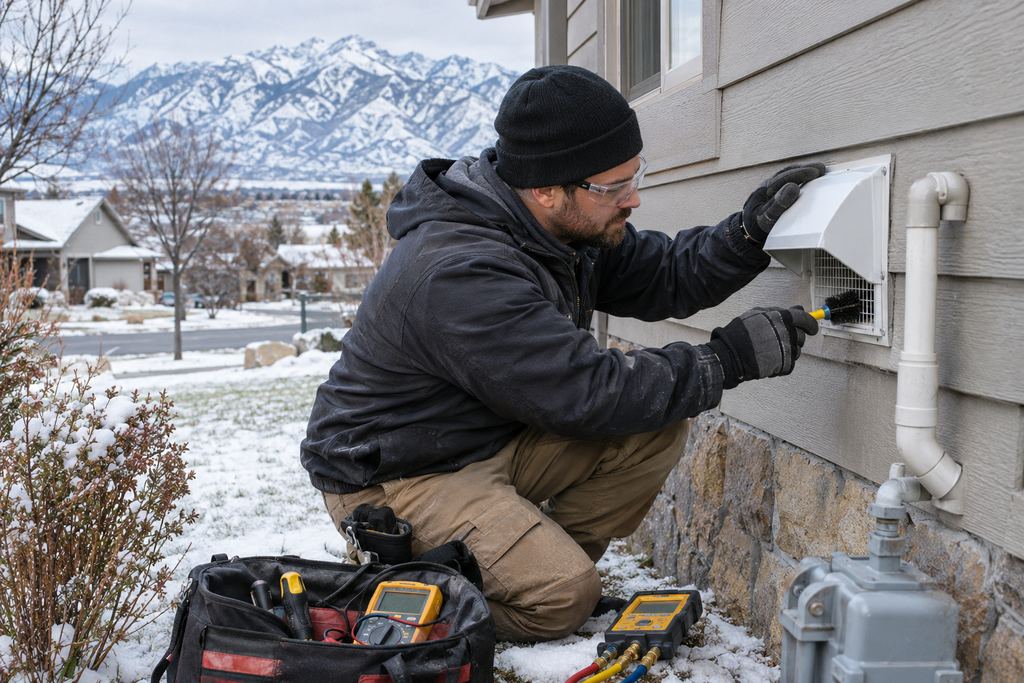
Salt Lake City HVAC Repair
HVAC repair in Salt Lake City covers two hard seasons on one set of equipment: a furnace that runs through cold, smoggy inversion weeks and an air conditioner or evaporative cooler that works through dry July heat. Send the symptom and your ZIP code, and the request goes to an independent local contractor who handles that kind of system.
Leave the building first
A gas smell is not a repair request. Stop here and do this now:
A carbon monoxide alarm is not a repair request. Stop here and do this now:
- Get everyone out of the house, pets too, and leave the door open behind you.
- Do not switch lights, appliances or the thermostat on or off, and do not use a lighter, a match or a phone inside.
- From outside, call your gas utility's emergency line or 911.
- Stay outside until the utility or the fire department says it is safe to go back in.
After the home is cleared, a licensed technician can check the furnace, boiler or water heater. You can come back to this form then.
Nothing was sent. This form does not handle gas or carbon monoxide emergencies.
Sending your request
Please keep this page open. The form is locked so the request is not sent twice.
Your request was received
We passed it to a contractor in your area. If one accepts, they contact you using the phone number or email you gave. We cannot say how soon, and you are not required to hire anyone.
No reply after a few days? Check your spam folder, then use the contact page.
We could not send your request
Nothing was sent to a contractor. Your answers are still on this page. Try again in a moment.Online requests are not connected yet
The request form is not linked to a contractor network yet. Nothing you typed was sent or saved. Please call instead, or try again later.Short answer
Start with the thermostat, the breaker and the filter. If those are fine and the house is still too hot or too cold, a technician needs to test the equipment. Ask for the diagnostic fee before the visit.
Gas smell, CO alarm or smoke
What Salt Lake weather does to equipment
The valley sits around 4,200 feet, and the air is dry most of the year. Summer afternoons regularly climb into the upper 90s, with some days past 100, so an AC condenser or swamp cooler runs long cycles for weeks. Winter brings cold snaps and inversions, when smoggy air settles over the valley for days. Furnaces run hard in those stretches, and filters load up faster than the calendar suggests.
Elevation matters for gas appliances too. Furnaces at this altitude are supposed to be set up following the manufacturer's high-altitude instructions, so a technician checking burner operation should know local practice. That is one reason to hire someone who works in the valley regularly.
Systems you find in Salt Lake City homes
- Gas furnaceThe main heat source in most houses, often in a basement. Ignition, flame sensing, inducer motors and pressure switches are frequent repair items.
- Central air conditioningUsually a condenser outside and a coil on top of the furnace. Capacitors, contactors, fan motors and refrigerant leaks top the summer list.
- Evaporative coolerCommon on older homes in the dry climate. Pads, pumps, belts, float valves and water lines wear out, and the unit needs a winter shutdown.
- Heat pump or ductlessMore common in additions, remodels and newer builds. Defrost controls, reversing valves and backup heat come up on cold mornings.
What a repair visit usually covers
- Symptom checkThe technician asks what happened, when it started and what you already tried.
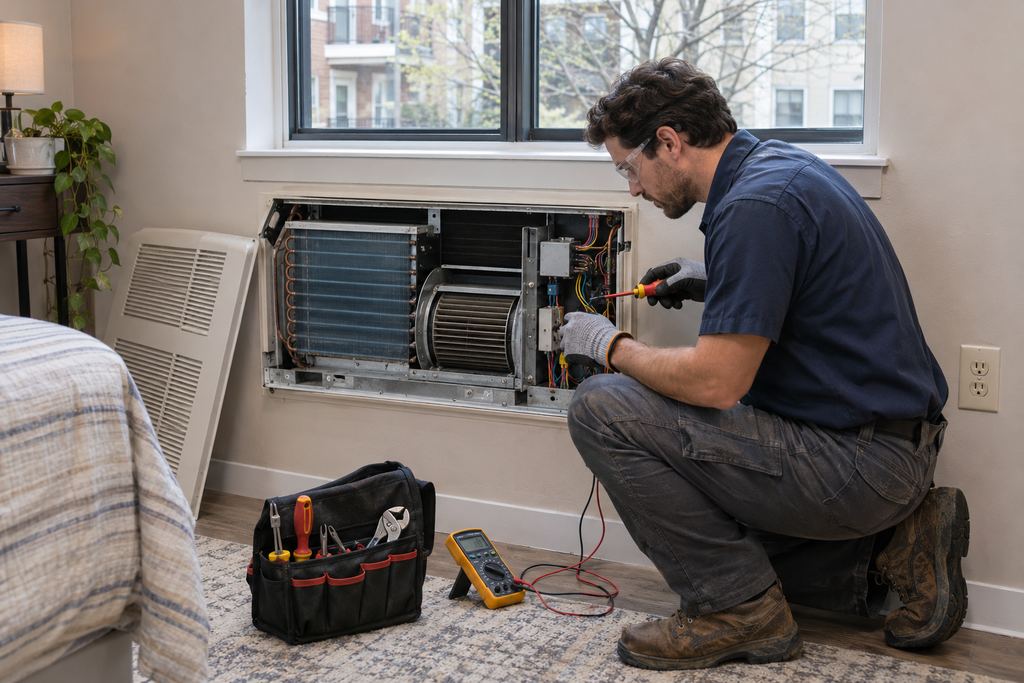
- Electrical and control testsThermostat signal, safety switches, capacitors, relays and the control board are tested with meters.
- Airflow reviewFilter, blower, coil and duct restrictions are looked at, since low airflow causes many shutdowns.
- Combustion and venting on gas unitsFlame, venting and the heat exchanger area get checked when a furnace is involved.
- Written findingsA clear explanation of the cause, the repair price and any options before work starts.
Before you call, and what to leave alone
Safe checks you can do
Only checks from the owner's manual that need no tools and no opening of panels.
- Thermostat set to the right mode with fresh batteries
- Breaker and furnace power switch on
- New filter, especially after inversion weeks
- Outdoor condenser clear of weeds and cottonwood fluff
- Swamp cooler water supply on and the float not stuck
Leave these to a professional
Gas valves, burners, venting, refrigerant, capacitors and electrical circuits need a qualified, licensed technician.
- Refrigerant work, which requires EPA Section 608 certification
- Capacitors and anything inside electrical panels
- Gas valves, burners and venting
- Heat exchanger inspection
- Control board and motor replacement
How to vet a Salt Lake City contractor
- 1Is your contractor license active with Utah DOPL?The Utah Division of Professional Licensing has a public license lookup. Check the company name before work begins.
- 2Do you carry liability insurance?Ask for a certificate if the job involves the roof, attic or a gas line.
- 3What does the diagnostic visit cost?Get the fee in writing and ask whether it is credited toward the repair.
- 4Do you take after-hours or weekend calls?Availability varies by ZIP code and time of day, and the rate often changes outside business hours.
- 5What warranty comes with the part and the labor?Parts and labor coverage are often different, so ask for both.
What moves the price of a repair
No one can quote a fair price before testing the system. The HVAC repair cost guide covers these factors in more detail.
What happens with a request in Salt Lake City
- You enter a ZIP code and the service you need.
- You add contact details and a short description.
- A contractor who accepts the ZIP code contacts you to arrange a visit. When depends on their schedule.
- You compare what you are told and any written estimate. You do not have to hire anyone.
Other Salt Lake City guides
If you already know which system failed, the single-system pages go deeper: AC repair in Salt Lake City, furnace repair in Salt Lake City and heat pump repair in Salt Lake City. The Salt Lake City page collects every local guide, and the Utah page covers the rest of the state. Contractor availability differs across the valley, so the ZIP code you enter decides who can take the request.
HVAC repair in nearby cities
Only cities with a published page for this service.
Questions
Should I repair or replace an old furnace in Salt Lake City?
There is no fixed rule. Age, the repair price, how often it has failed, efficiency and any safety finding all count. A cracked heat exchanger can only be confirmed by a technician inspection, and that finding usually changes the decision.
Why does my swamp cooler smell musty?
Old pads, stagnant water in the pan or a pump that no longer circulates water are common reasons. Pads and pumps are routine replacements; the unit also needs draining and winter covering.
Can a heat pump heat a Salt Lake City house in January?
Cold-climate models are designed to keep heating in subfreezing weather, and most installs here include backup heat or a furnace. If the house struggles on cold mornings, have the defrost cycle and backup heat checked.
How often should I change the filter during inversion season?
Check it monthly while the furnace runs hard. A one-inch filter can clog quickly in smoky or dusty weeks, and a clogged filter is a common cause of furnace shutdowns.
Who do I call about a gas leak in Salt Lake City?
Leave the home first, then call Enbridge Gas Utah, the natural gas utility for the area, or 911 from outside. The utility emergency number is printed on the gas bill.