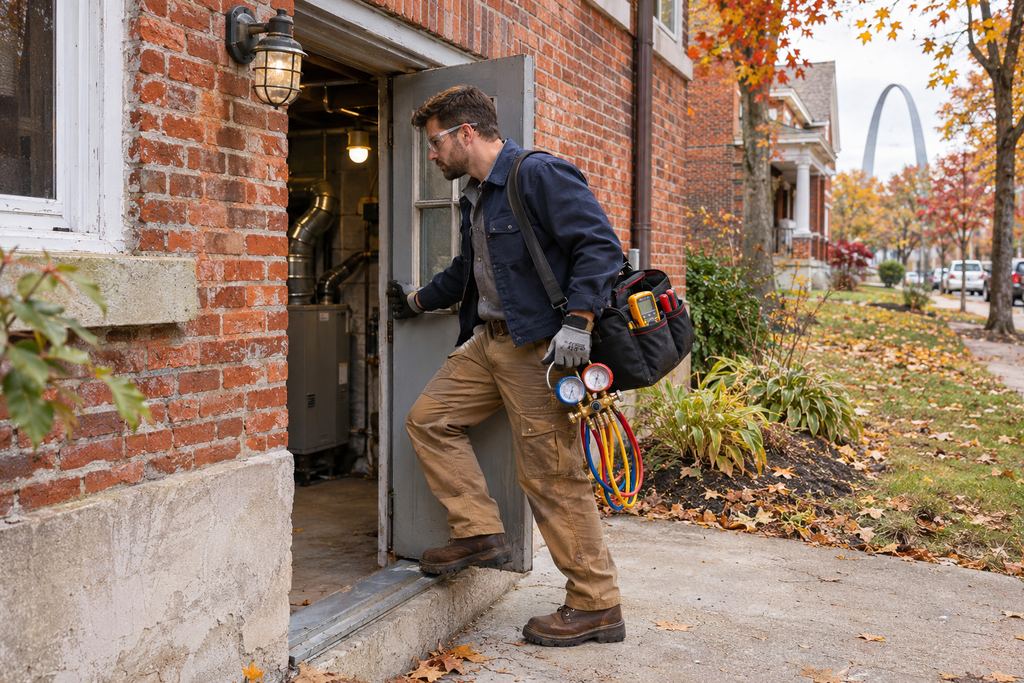
HVAC Repair in Minnesota
In Minnesota the furnace or boiler carries the heavier load, so most pages in this section start with heat. Pick Minneapolis or St. Paul below, or open the statewide Minnesota AC repair guide when cooling is the issue. Every request starts with a ZIP code, because coverage depends on which independent contractors take calls near you.
Leave the building first
A gas smell is not a repair request. Stop here and do this now:
A carbon monoxide alarm is not a repair request. Stop here and do this now:
- Get everyone out of the house, pets too, and leave the door open behind you.
- Do not switch lights, appliances or the thermostat on or off, and do not use a lighter, a match or a phone inside.
- From outside, call your gas utility's emergency line or 911.
- Stay outside until the utility or the fire department says it is safe to go back in.
After the home is cleared, a licensed technician can check the furnace, boiler or water heater. You can come back to this form then.
Nothing was sent. This form does not handle gas or carbon monoxide emergencies.
Sending your request
Please keep this page open. The form is locked so the request is not sent twice.
Your request was received
We passed it to a contractor in your area. If one accepts, they contact you using the phone number or email you gave. We cannot say how soon, and you are not required to hire anyone.
No reply after a few days? Check your spam folder, then use the contact page.
We could not send your request
Nothing was sent to a contractor. Your answers are still on this page. Try again in a moment.Online requests are not connected yet
The request form is not linked to a contractor network yet. Nothing you typed was sent or saved. Please call instead, or try again later.Services and guides for Minnesota
Minnesota cities
Only cities with a published page are listed. The list grows as pages are approved.
What breaks in a Minnesota year
A furnace that quits in January is a different problem from an AC that quits in July. Below-zero nights pull indoor temperatures down fast and put water pipes along outside walls at risk, so a no-heat failure in deep winter is the one to act on first. Summers are shorter, yet humid enough that a dead AC matters for older relatives in upstairs bedrooms.
Much of the housing in the Twin Cities and older towns has a basement furnace feeding ductwork, and a share of older houses and apartment buildings still run hot-water or steam boilers with radiators. Late spring has its own nuisance: cottonwood fluff can mat the outdoor condenser coil and choke airflow right before the first hot week.
Minnesota programs and rules worth knowing
- Cold Weather RuleFrom October 1 to April 30, the Cold Weather Rule limits heat shutoffs for utility customers who set up and keep a payment plan. Call the utility before a disconnection notice turns into a shutoff.
- Energy Assistance ProgramRun by the Minnesota Department of Commerce through local service providers, it helps eligible households with heating bills, and its Energy Related Repair help can pay for furnace repair or replacement for qualifying homeowners.
- Checking a contractorThe Department of Labor and Industry (dli.mn.gov) has a license lookup. Minneapolis and St. Paul also have their own rules for mechanical work, so ask which permit a furnace or boiler replacement needs.
- 211Dial 211 anywhere in the state for warming centers and emergency help with heating costs.
Gas smell or CO alarm in winter
Questions
Which page should I open if my furnace stopped and it is below zero?
Use the Minneapolis or St. Paul city page if you live there, or the general furnace not heating guide anywhere else in the state. While you wait, keep one room warm, let faucets on outside walls drip and open the sink cabinet doors.
My town is not listed. Can I still send a request?
Yes. The list shows only cities that have their own page so far. Enter your ZIP code in the form; whether a contractor answers depends on who takes work in your area.
Does a contractor need a license for furnace work in Minnesota?
Rules are split between the state and individual cities. Ask the contractor which state or city license covers the job and look it up on the DLI site or with the city before work starts.