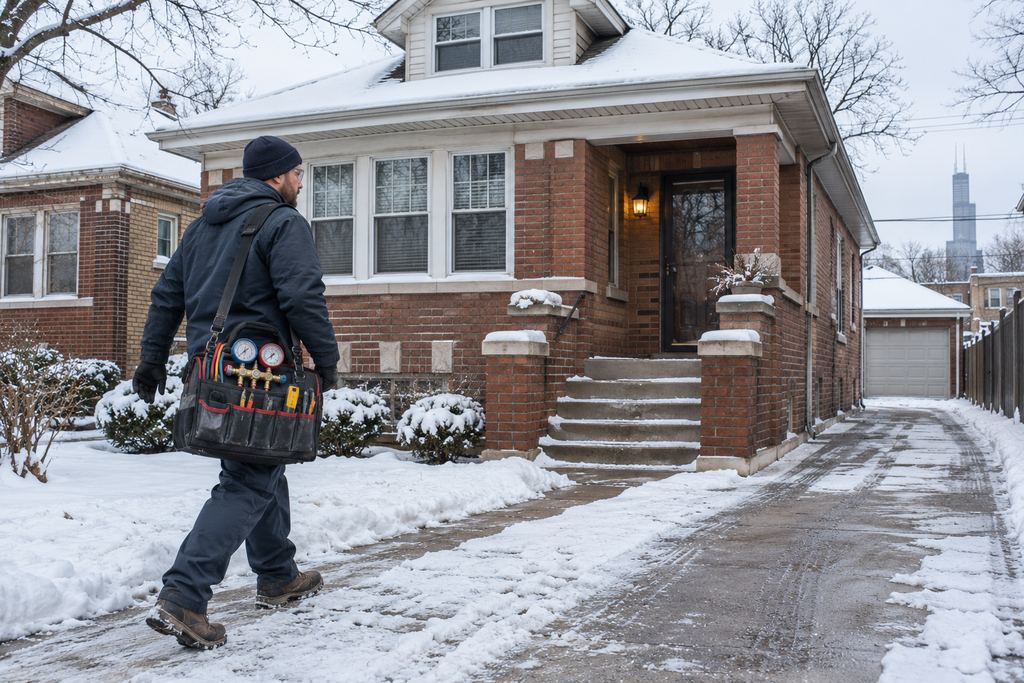
Air Conditioning Repair in St. Paul
For air conditioning repair in St. Paul, start with a few checks you can do safely, then send your ZIP code and a short description through the form. A contractor who works in your part of St. Paul can contact you to set up a visit when their schedule allows.
Leave the building first
A gas smell is not a repair request. Stop here and do this now:
A carbon monoxide alarm is not a repair request. Stop here and do this now:
- Get everyone out of the house, pets too, and leave the door open behind you.
- Do not switch lights, appliances or the thermostat on or off, and do not use a lighter, a match or a phone inside.
- From outside, call your gas utility's emergency line or 911.
- Stay outside until the utility or the fire department says it is safe to go back in.
After the home is cleared, a licensed technician can check the furnace, boiler or water heater. You can come back to this form then.
Nothing was sent. This form does not handle gas or carbon monoxide emergencies.
Sending your request
Please keep this page open. The form is locked so the request is not sent twice.
Your request was received
We passed it to a contractor in your area. If one accepts, they contact you using the phone number or email you gave. We cannot say how soon, and you are not required to hire anyone.
No reply after a few days? Check your spam folder, then use the contact page.
We could not send your request
Nothing was sent to a contractor. Your answers are still on this page. Try again in a moment.Online requests are not connected yet
The request form is not linked to a contractor network yet. Nothing you typed was sent or saved. Please call instead, or try again later.Short answer
Check the thermostat, the breaker, the filter and the outdoor unit. If you see ice on the lines, switch cooling off and run the fan. Anything electrical or involving refrigerant belongs to a technician.
St. Paul summers and the AC
Central air in St. Paul may sit idle from September to May, and the first humid week of June is when many units show problems: a capacitor that weakened over the winter, a drain line clogged with dust, a coil matted with cottonwood fluff or grass clippings. Many homes here are older houses that added central air later, with the indoor coil sitting on top of a basement furnace. Others rely on window units or ductless mini-splits because the house heats with a boiler and has no ducts.
On a hot day without cooling, keep curtains closed, use fans with a window open where it is cooler outside, drink water and check on older neighbors and relatives. Confusion, fainting or hot dry skin are heat illness warning signs; call 911.
Signs the AC needs repair
- Warm air from the ventsThe indoor fan runs but the outdoor unit is silent or its fan does not spin.
- Ice on the copper lines or the indoor coilTurn cooling off and run the fan only. Low airflow or low refrigerant are among the possible causes.
- Water around the furnaceThe coil's drain or pan may be blocked. Shut power off at the breaker before touching anything wet near wiring.
- Humming without startingOften electrical. Do not touch the capacitor; it holds a charge after power is off.
- Breaker trips again after one resetLeave it off and tell the technician.
- Short cyclingOn and off every few minutes, which can come from sizing, a thermostat problem or a failing part.
Safe checks and technician work
Safe checks you can do
Only checks from the owner's manual that need no tools and no opening of panels.
- Thermostat on Cool, setpoint below room temperature, batteries fresh.
- Outdoor disconnect and indoor breaker on; reset once.
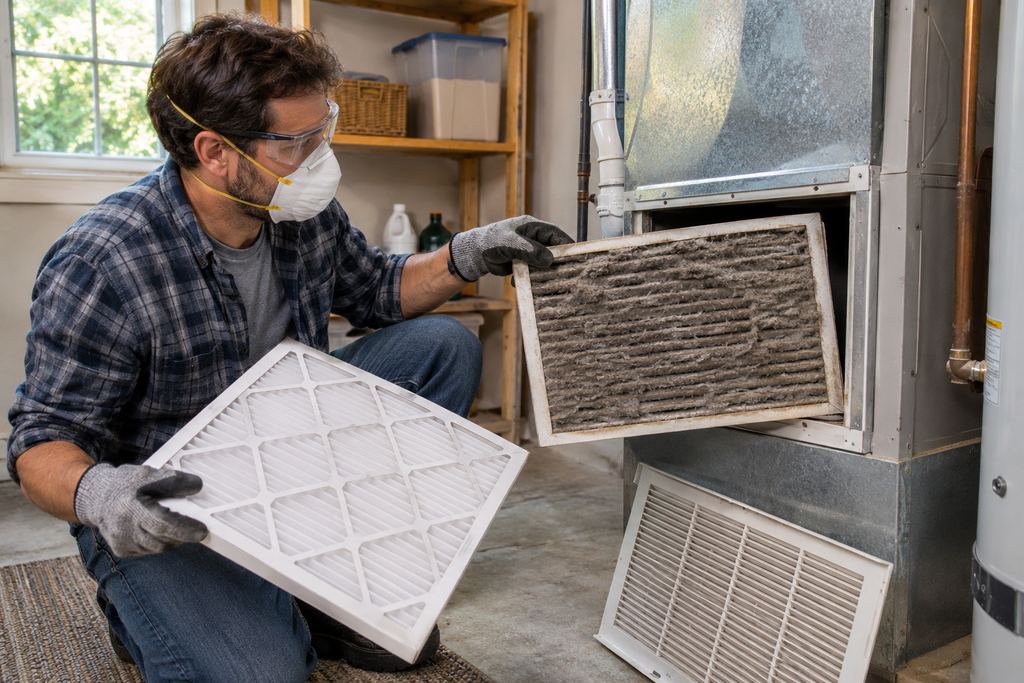
- New filter if the old one is dark or bowed.
- Hose off loose leaves and fluff from the outdoor coil from outside, gently, with the power off at the breaker.
- If you can see a condensate float switch or drain line, check whether the pan is full.
Leave these to a professional
Gas valves, burners, venting, refrigerant, capacitors and electrical circuits need a qualified, licensed technician.
- Capacitors, contactors and wiring.
- Refrigerant leak search and charging, which requires EPA Section 608 certification.
- Compressor and fan motor diagnosis.
- Indoor coil cleaning and drain pan repair.
- Furnace blower faults that stop cooling airflow.
Systems a St. Paul contractor may be asked to repair
- Split central airOutdoor condenser plus an indoor coil on the furnace, the most common setup.
- Ductless mini-splitTypical in boiler-heated homes and additions.
- Heat pumpCools in summer and heats in winter, sometimes paired with a gas furnace.
What happens with a request in St. Paul
- You enter a ZIP code and the service you need.
- You add contact details and a short description.
- A contractor who accepts the ZIP code contacts you to arrange a visit. When depends on their schedule.
- You compare what you are told and any written estimate. You do not have to hire anyone.
What affects the repair price
How to vet a St. Paul AC contractor
- 1Can you show your license number?Check it with the Minnesota Department of Labor and Industry license lookup.
- 2Are you insured?Ask for proof of liability insurance.
- 3What will this cost, in writing?Get the diagnosis and price before work starts.
- 4Should I repair or replace?Ask the technician to explain age, refrigerant and efficiency, then decide yourself. The informal "$5,000 rule" is one rough guide, not a rule.
Related pages
AC repair in nearby cities
Only cities with a published page for this service.
Questions
Why does my AC fail on the first hot week of the year?
Parts that weakened during months of sitting idle, such as a capacitor, often give out under the first heavy load. A spring checkup can find some of these early.
Should I run the AC if there is ice on the lines?
No. Switch to fan only so the ice melts, and replace a dirty filter. If ice comes back, a technician needs to check airflow and refrigerant.
Can a St. Paul home with radiators get central air?
Yes, often through ductless mini-splits or high-velocity small-duct systems. Ask a contractor which works for the house.
How long does AC repair usually take?
Simple electrical repairs may take an hour or two once the technician is there. Ordered parts or a coil or compressor replacement can take longer.